Shopping cart
Your cart empty!


Your cart empty!
Terms of use dolor sit amet consectetur, adipisicing elit. Recusandae provident ullam aperiam quo ad non corrupti sit vel quam repellat ipsa quod sed, repellendus adipisci, ducimus ea modi odio assumenda.
Lorem ipsum dolor sit amet consectetur adipisicing elit. Sequi, cum esse possimus officiis amet ea voluptatibus libero! Dolorum assumenda esse, deserunt ipsum ad iusto! Praesentium error nobis tenetur at, quis nostrum facere excepturi architecto totam.
Lorem ipsum dolor sit amet consectetur adipisicing elit. Inventore, soluta alias eaque modi ipsum sint iusto fugiat vero velit rerum.
Sequi, cum esse possimus officiis amet ea voluptatibus libero! Dolorum assumenda esse, deserunt ipsum ad iusto! Praesentium error nobis tenetur at, quis nostrum facere excepturi architecto totam.
Lorem ipsum dolor sit amet consectetur adipisicing elit. Inventore, soluta alias eaque modi ipsum sint iusto fugiat vero velit rerum.
Dolor sit amet consectetur adipisicing elit. Sequi, cum esse possimus officiis amet ea voluptatibus libero! Dolorum assumenda esse, deserunt ipsum ad iusto! Praesentium error nobis tenetur at, quis nostrum facere excepturi architecto totam.
Lorem ipsum dolor sit amet consectetur adipisicing elit. Inventore, soluta alias eaque modi ipsum sint iusto fugiat vero velit rerum.
Sit amet consectetur adipisicing elit. Sequi, cum esse possimus officiis amet ea voluptatibus libero! Dolorum assumenda esse, deserunt ipsum ad iusto! Praesentium error nobis tenetur at, quis nostrum facere excepturi architecto totam.
Lorem ipsum dolor sit amet consectetur adipisicing elit. Inventore, soluta alias eaque modi ipsum sint iusto fugiat vero velit rerum.
Do you agree to our terms? Sign up

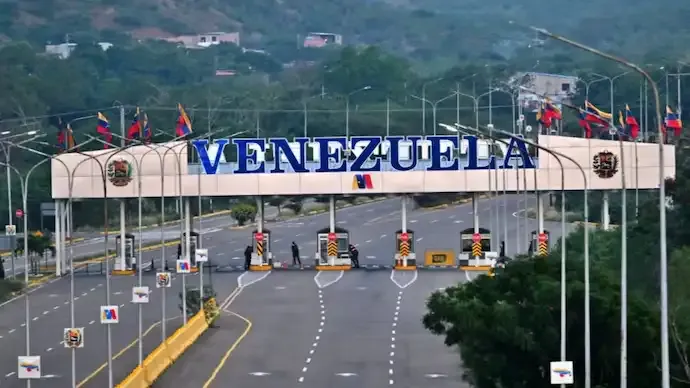
Venezuela’s extraordinary natural wealth has once again placed the country at the centre of global attention. While recent political and military developments have dominated headlines, the deeper story lies beneath its soil. Venezuela possesses the largest proven oil reserves in the world and some of South America’s most significant gold deposits — a combination that has shaped its history, economy, and geopolitical fate.

At the heart of Venezuela’s oil dominance is the Orinoco Belt, a vast hydrocarbon-rich region stretching across eastern Venezuela. Spanning nearly 55,000 square kilometres, the belt contains extra-heavy crude formed over millions of years from organic-rich sediments compressed under intense geological pressure. According to international energy estimates, Venezuela’s total oil reserves exceed 300 billion barrels, surpassing even Saudi Arabia. While much of this oil is difficult to extract due to its viscosity, advances in extraction technology have steadily increased its commercial viability.
Geologically, the Orinoco Belt rests on Miocene-era sedimentary formations such as the Oficina and Merecure layers, which acted as natural traps for hydrocarbons. These formations allowed oil to accumulate in enormous quantities, making Venezuela a long-term energy powerhouse despite economic mismanagement and sanctions.
Equally significant is Venezuela’s gold wealth, concentrated primarily in the Guiana Shield — one of the oldest geological formations on Earth. This Precambrian craton spans southern Venezuela and contains gold-bearing greenstone belts, quartz veins, and alluvial deposits. Experts estimate that over 10,000 tonnes of gold may be commercially exploitable, with thousands more potentially undiscovered.
Key mining regions in Bolívar state, including deposits such as Choco 10, highlight the scale of Venezuela’s mineral riches. These gold reserves have historically attracted foreign interest, legal mining ventures, and illicit extraction alike, further complicating governance and environmental protection.
Analysts argue that Venezuela’s natural resources are inseparable from its geopolitical challenges. Oil and gold have not only funded the state but also drawn external pressure, sanctions, and intervention. Strategic concerns — including energy security and countering rival global influences — have repeatedly placed Venezuela at the centre of international power struggles.
Despite holding immense wealth, Venezuela’s experience underscores a recurring global paradox: natural abundance does not guarantee prosperity. Weak institutions, political instability, and external pressures have prevented resource wealth from translating into broad economic security for its population.
As global demand for energy and critical minerals continues to rise, Venezuela’s geological endowment ensures it will remain strategically important — not just for what lies on its surface, but for what lies beneath.
117
Published: Jan 04, 2026

All India Story is your trusted source for comprehensive and up-to-the-minute news coverage across India. Bringing you the latest on politics, business, technology, entertainment, sports, and more, we are dedicated to keeping you informed with accurate, engaging, and insightful stories from every corner of the nation.