

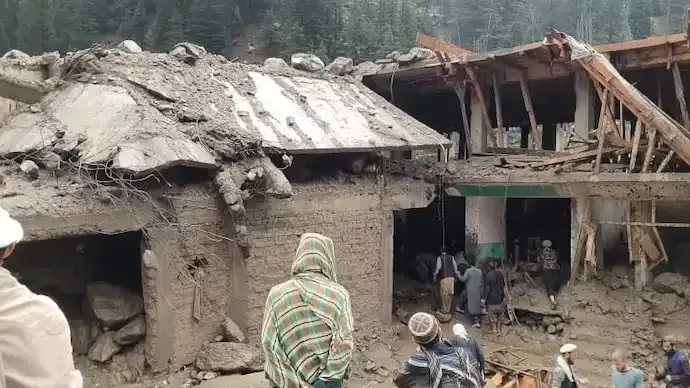

At least 20 people have lost their lives, while more than 100 remain missing, after devastating flash floods swept through Nuristan province in northeastern Afghanistan.
The disaster struck on Monday, causing widespread destruction across the mountainous region. Officials fear the death toll could rise further as rescue teams continue searching for survivors in areas that remain difficult to access.
Parun Worst Affected by Flash Floods
The provincial capital, Parun, suffered the most extensive damage during the flooding.

According to Afghanistan's National Disaster Management Authority, floodwaters destroyed:
- Residential homes
- Shops and commercial buildings
- Public infrastructure
- Roads and transport links
The powerful floods also injured at least 80 people, adding to the humanitarian crisis unfolding in the province.
Mayor Among Those Missing
Authorities confirmed that Parun's mayor is among those reported missing.
His two bodyguards have also not been located since the flooding began, raising concerns as search operations continue.
Officials have not ruled out the possibility that the number of missing persons could increase as communication is restored with isolated communities.
Rescue Operations Face Major Challenges
Emergency response teams have launched search and rescue operations across the affected region.
However, rescue efforts are being hampered by:
- Damaged roads
- Mountainous terrain
- Washed-out access routes
- Difficult weather conditions
Authorities said these obstacles have slowed the delivery of emergency assistance to several affected villages.
The National Disaster Management Authority warned that the floods have caused significant human and financial losses, with damage assessments still underway.
Climate Change Increasing Flood Risks
Afghanistan remains one of the countries most vulnerable to the impacts of climate change.
Experts have warned that increasingly frequent extreme weather events, including heavy rainfall and flash floods, are placing communities at greater risk.
Environmental degradation has also worsened the situation.
Large-scale deforestation in Nuristan and other parts of Afghanistan has reduced the land's ability to absorb rainfall, increasing surface runoff and making flash floods more destructive.
Damage Assessment Continues
Authorities continue to assess the full scale of the disaster while rescue teams search for missing residents.
With many remote areas still inaccessible, officials expect casualty figures and damage estimates to change as more information becomes available.
Key Highlights
- At least 20 people have died in flash floods in Afghanistan's Nuristan province.
- More than 100 people remain missing, including Parun's mayor and two bodyguards.
- Parun was the worst-affected area, suffering extensive damage to homes and infrastructure.
- At least 80 people were injured in the disaster.
- Damaged roads and mountainous terrain are slowing rescue operations.
- Experts say climate change and deforestation have increased Afghanistan's flood vulnerability.
Frequently Asked Questions (FAQs)
Where did the flash floods occur?
The floods struck Nuristan province in northeastern Afghanistan, with Parun being the worst-affected area.
How many people died in the Afghanistan floods?
At least 20 people have been confirmed dead, while more than 100 remain missing.
Who is among the missing?
Authorities said Parun's mayor and his two bodyguards are among those reported missing.
Why are rescue operations difficult?
Damaged roads, washed-out infrastructure, and the mountainous terrain have slowed rescue and relief efforts.
Why is Afghanistan vulnerable to flash floods?
Climate change has increased extreme weather events, while deforestation has reduced the land's ability to absorb heavy rainfall, making floods more severe.
Are rescue operations still ongoing?
Yes. Emergency teams continue searching for survivors and assessing damage across affected communities.




Conversation
Be kind and stay on topic. Comments are moderated; abuse, spam and personal attacks are removed. Report a problem