

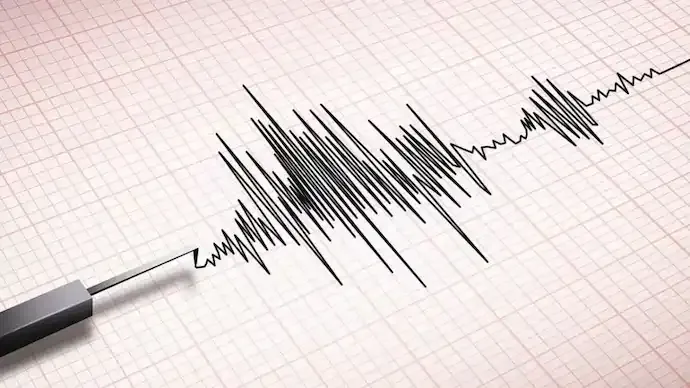

A magnitude 5.5 earthquake struck northeastern Afghanistan on Wednesday, shaking parts of the country's mountainous Badakhshan province. According to the United States Geological Survey (USGS), the earthquake's epicentre was located near Jurm, a region known for frequent seismic activity due to its geological setting.
Authorities said there were no immediate reports of casualties or property damage, although officials continue to monitor the affected region for any delayed impact. The earthquake occurred at a depth of 216.7 kilometres, classifying it as a deep-focus earthquake that generally produces less destructive surface shaking than shallower quakes.
Earthquake Recorded Near Jurm in Badakhshan
The USGS reported that the earthquake occurred near the town of Jurm in Afghanistan's northeastern Badakhshan province.

Key details of the earthquake include:
- Magnitude: 5.5
- Location: Near Jurm, Badakhshan Province
- Depth: 216.7 kilometres
- Region: Northeastern Afghanistan
Because of its considerable depth, the earthquake's energy was distributed over a larger area, allowing tremors to be felt across neighbouring regions while reducing the likelihood of severe local damage.
No Immediate Casualties or Damage
Authorities have not reported any fatalities, injuries, or major structural damage following the earthquake.
Emergency officials continue to assess the situation, particularly in remote mountainous communities where communication and access can be challenging.
As with many earthquakes in the region, assessments may take time due to difficult terrain and limited infrastructure.
Why Does Afghanistan Experience Frequent Earthquakes?
Afghanistan is among the world's most earthquake-prone countries because it lies at the collision zone of the Indian Plate and the Eurasian Plate.
The continuous movement of these tectonic plates generates significant geological stress, leading to frequent earthquakes throughout the region.
The northeastern provinces, particularly Badakhshan, experience regular seismic activity because of their proximity to several active fault systems.
Tremors Often Felt Beyond Afghanistan
Earthquakes occurring in northeastern Afghanistan are frequently felt across neighbouring countries.
Depending on the magnitude and depth, tremors may be experienced in:
- Pakistan
- Tajikistan
- Uzbekistan
- Other parts of Central Asia
Deep-focus earthquakes, such as Wednesday's event, can often be felt across wider geographical areas despite causing limited surface damage.
Understanding Deep Earthquakes
Unlike shallow earthquakes, deep-focus earthquakes originate hundreds of kilometres below the Earth's surface.
Characteristics of deep earthquakes include:
- Wider distribution of seismic waves.
- Reduced surface shaking near the epicentre.
- Lower likelihood of severe structural damage.
- Tremors felt over larger regions.
However, stronger deep earthquakes can still pose risks depending on local geological conditions and infrastructure quality.
Afghanistan's Ongoing Seismic Risk
Afghanistan regularly experiences earthquakes ranging from minor tremors to major destructive events.
Many rural communities remain vulnerable because of:
- Mountainous terrain.
- Older construction methods.
- Limited disaster preparedness.
- Difficult access for emergency responders.
The country's disaster management agencies continue to monitor seismic activity throughout the year.
Safety Measures After an Earthquake
Experts advise residents to remain cautious after an earthquake due to the possibility of aftershocks.
Recommended precautions include:
- Stay away from damaged buildings.
- Follow official safety advisories.
- Keep emergency supplies accessible.
- Monitor updates from local authorities.
- Report damaged infrastructure if safe to do so.
Featured Snippet
A magnitude 5.5 earthquake struck near Jurm in Afghanistan's Badakhshan province at a depth of 216.7 kilometres. The US Geological Survey reported the deep-focus quake, while authorities said there were no immediate reports of casualties or significant damage.
Key Highlights
- A magnitude 5.5 earthquake struck northeastern Afghanistan.
- The epicentre was located near Jurm in Badakhshan province.
- The earthquake occurred at a depth of 216.7 kilometres.
- No immediate casualties or property damage were reported.
- The region lies near the Indian-Eurasian tectonic plate boundary.
- Tremors are commonly felt across Pakistan and Central Asia.
- Authorities continue monitoring the affected area.
- Deep-focus earthquakes generally cause less surface damage.
Conclusion
The magnitude 5.5 earthquake in Afghanistan's Badakhshan province serves as another reminder of the country's high seismic vulnerability. Although no immediate casualties or damage have been reported, authorities continue to assess remote areas while monitoring for possible aftershocks. Given Afghanistan's location along an active tectonic boundary, earthquakes remain a recurring natural hazard that requires ongoing preparedness and rapid emergency response.
FAQs
1. Where did the earthquake occur?
The earthquake struck near Jurm in Afghanistan's Badakhshan province.
2. What was the magnitude of the earthquake?
The US Geological Survey measured the earthquake at magnitude 5.5.
3. Were there any casualties?
No immediate casualties or injuries have been reported.
4. Was there any property damage?
Authorities have not reported any significant damage so far.
5. Why does Afghanistan experience frequent earthquakes?
Afghanistan lies at the collision zone of the Indian and Eurasian tectonic plates, making it highly seismically active.
6. Why was the earthquake considered a deep-focus event?
It occurred at a depth of 216.7 kilometres beneath the Earth's surface.
7. Could neighbouring countries feel the tremors?
Yes. Earthquakes in northeastern Afghanistan are often felt in Pakistan and parts of Central Asia.
8. Who reported the earthquake?
The earthquake was recorded by the United States Geological Survey (USGS).






Conversation
Be kind and stay on topic. Comments are moderated; abuse, spam and personal attacks are removed. Report a problem