

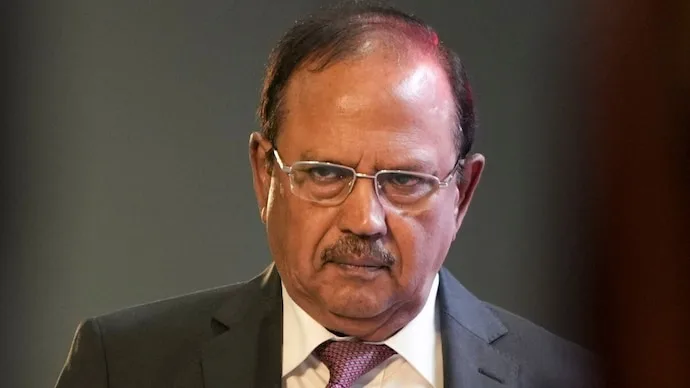

Pakistan’s nuclear adviser, retired Lieutenant General Mazhar Jamil, has accused India of supporting militant organisations and contributing to instability in South Asia. His remarks at an international security workshop in London have renewed debate over nuclear deterrence, missile capabilities and competing security claims between the two countries.
Speaking on October 13 at a Track 1.5 workshop organised by the International Institute for Strategic Studies (IISS), Jamil alleged that India used support for groups such as the Tehreek-e-Taliban Pakistan (TTP) and the Balochistan Liberation Army (BLA) as an instrument of policy. These accusations were presented as claims by the Pakistani official and were not independently established in the supplied account.
BrahMos Missile Claims and Operation Sindoor
Jamil alleged that India used dual-capable BrahMos missiles during Operation Sindoor, suggesting they could carry nuclear as well as conventional warheads. The supplied report disputes this assertion, stating that BrahMos carries conventional warheads and is not part of India’s Strategic Forces Command.

Jamil also described the accidental launch of a BrahMos missile into Pakistan in March 2022 as an intentional attack. The incident occurred when the missile was accidentally launched during a drill and landed in Pakistan’s Punjab province.
The Pakistani official further argued that Operation Sindoor had brought South Asia close to a nuclear catastrophe, claiming that Pakistan’s restraint prevented escalation. These characterisations reflect his account of the events rather than an independently established assessment.
India’s Nuclear Doctrine Under Scrutiny
Jamil questioned India’s declared No First Use (NFU) policy, calling it a diplomatic manoeuvre. India’s publicly released draft nuclear doctrine from 1999 emphasises credible minimum deterrence and retaliation rather than initiating a nuclear strike.
He also referred to former National Security Adviser Shiv Shankar Menon’s 2017 book, which discussed possible first-strike scenarios in the context of nuclear retaliation. The distinction between first use and a first strike is important: discussing a potential disarming strike in a retaliatory scenario does not, by itself, establish a policy of initiating nuclear warfare.
Jamil also raised concerns about India’s sea-based nuclear deterrence capabilities, arguing that submarine-launched missiles and deterrence patrols could increase the risk of miscalculation.
Regional Security and Pakistan’s Defence Arrangements
Jamil cited historical episodes involving India’s role in the 1971 Bangladesh Liberation War, the LTTE in the 1980s and Indian consulates in Afghanistan as part of his argument about regional security. These references were used to support his broader allegations, but they do not independently establish the claims made in his address.
He also described Pakistan’s Makkah Joint Defence Pact with Saudi Arabia and Türkiye as defensive in nature, while avoiding a direct answer about whether those partners would assist Pakistan in a conflict with India.
The debate comes amid continuing regional concerns about nuclear deterrence and military escalation. The competing claims underline the importance of verifiable information, clear communication and diplomatic engagement to reduce the risk of miscalculation between nuclear-armed neighbours.





Conversation
Be kind and stay on topic. Comments are moderated; abuse, spam and personal attacks are removed. Report a problem