

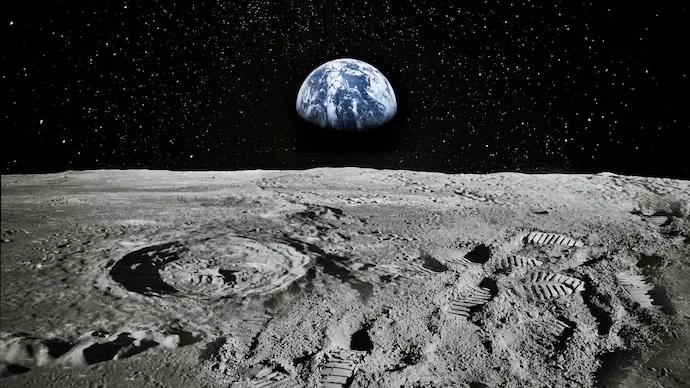

The Artemis II moon flashes were caused by tiny rocky fragments crashing into the lunar surface at extremely high speeds. The astronauts spotted five faint bursts of light while flying around the Moon during the Artemis II mission in April 2026.
The observations were part of a planned scientific experiment. Lunar scientists had specifically asked the crew to watch for impact flashes, but the number and faintness of the flashes made the observations particularly notable.
The space rocks were likely only a couple of inches across. Despite their small size, they were travelling at thousands of miles per hour, releasing enough energy when they hit the Moon to create brief flashes visible to the astronauts.

Unlike Earth, the Moon has virtually no atmosphere. Small space debris entering Earth's atmosphere can burn up before reaching the surface, but the Moon's lack of a substantial atmosphere means even tiny fragments can directly strike its surface.
Why Were the Flashes Visible?
The observations took place while NASA's Orion spacecraft was travelling around the Moon's far side during a planned communications blackout.
The astronauts were also experiencing a nearly hour-long total solar eclipse, with the Moon blocking the Sun. The unusually dark conditions made the faint flashes easier to spot.
NASA astronauts Reid Wiseman and Victor Glover, along with Canadian astronaut Jeremy Hansen, recorded the locations of the flashes on a tablet.
Scientists initially considered other possible explanations, including cosmic rays and reflections from the Orion spacecraft. After examining the observations, the science team confirmed that the flashes were caused by impacts on the lunar surface.
Apollo astronauts had previously reported similar events, but NASA scientists believe the Artemis II crew may have observed some of the faintest lunar impact flashes ever detected by the unaided human eye.
Why Lunar Impact Flashes Matter
The observations could help scientists determine how frequently small space rocks strike the Moon.
That information is increasingly important as NASA prepares for longer-term human activity on the lunar surface through its Artemis programme. Understanding the frequency and energy of these impacts could help engineers assess potential risks to astronauts, lunar habitats, scientific instruments and other infrastructure.
The five tiny flashes therefore offered more than a spectacular view from lunar orbit. They provided scientists with additional evidence about the small but persistent impact hazards future Moon missions will have to account for.







Conversation
Be kind and stay on topic. Comments are moderated; abuse, spam and personal attacks are removed. Report a problem