

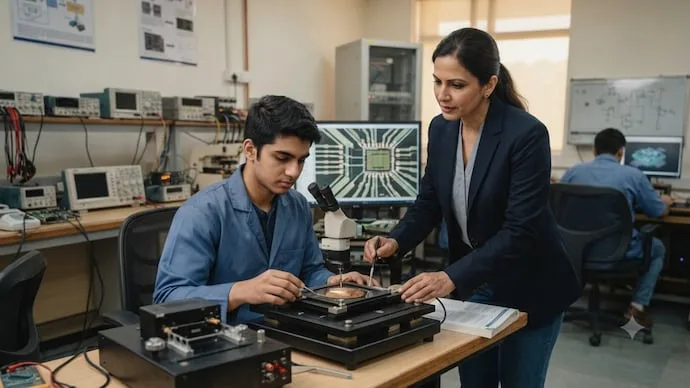

Marvell India chip design programmes are aimed at bridging the gap between academic education and the practical skills required by the semiconductor industry. The company is working with universities to train faculty members and introduce specialised courses that expose students to key areas of chip development.
According to Navin Bishnoi, country manager of Marvell India, the company initially focused on training faculty members to help them understand changing industry requirements and incorporate relevant skills into academic curricula and laboratory programmes.
As part of the initiative, Marvell has started offering co-curricular programmes in specialised areas such as physical design and design-for-test (DFT). These programmes aim to familiarise students with technical disciplines involved in semiconductor development.

Focus on specialised semiconductor training
The initiative comes as India expands its semiconductor education and training ecosystem. With growing industry requirements, engineering graduates need practical exposure to areas such as integrated circuit design, verification, testing and validation.
Physical design involves converting a chip's logical design into a physical layout. Design-for-test, meanwhile, focuses on incorporating testing capabilities into chips to identify manufacturing defects and improve product reliability.
By introducing these subjects through co-curricular programmes, Marvell aims to provide students with exposure to specialised skills that are relevant to semiconductor product development.
Marvell expands its semiconductor presence in India
The training initiative is part of Marvell's broader expansion in India's semiconductor sector.
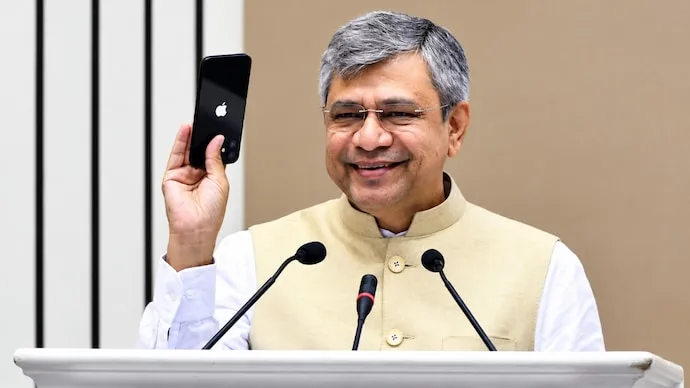
On January 6, 2026, Union Electronics and Information Technology Minister Ashwini Vaishnaw said that Marvell Technology was expanding its presence in India through the design of advanced 2-nanometre (2nm) chips.
In a social media post, the minister also highlighted the company's partnerships with Indian chip design start-ups and universities.
IITs introduce specialised chip design programmes
Several Indian institutions have also introduced specialised courses to strengthen semiconductor-related skills.
IIT Bhubaneswar partnered with MOSart Labs to launch a professional diploma in semiconductor technology and chip design. The programme covers areas including analogue and digital design, design verification, physical and layout design, testing and validation.
IIT Bombay also introduced an 18-month online postgraduate diploma in Integrated Circuits Design in 2025. Its curriculum includes digital and analogue design, mixed signals, wireless communication and system design.
Industry-academia collaboration gains importance
Marvell's initiative highlights the growing role of collaboration between semiconductor companies and educational institutions in developing industry-ready talent.
By training faculty members and introducing specialised co-curricular programmes, the company aims to make academic learning more closely aligned with practical industry requirements.
The focus on faculty development and technical exposure reflects the importance of preparing engineering graduates for opportunities in India's expanding semiconductor ecosystem.







Conversation
Be kind and stay on topic. Comments are moderated; abuse, spam and personal attacks are removed. Report a problem