
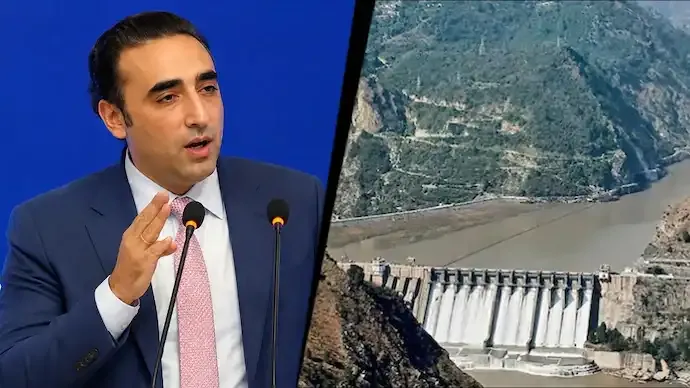
Bilawal Bhutto Zardari has intensified his remarks over the ongoing Indus Waters Treaty dispute, stating that any move to restrict Pakistan's access to Indus river waters should be treated as a national security threat.
The comments come amid continuing tensions between India and Pakistan over the future of the decades-old water-sharing agreement.
Featured Snippet
Bilawal Bhutto-Zardari has warned that any attempt to restrict Pakistan's Indus waters would be viewed as a national security issue, linking the dispute to the country's survival and calling for the protection of its water rights.
Key Highlights
- Bilawal Bhutto described the Indus waters issue as a national security matter.
- He said Pakistan would defend its water rights.
- His remarks come amid ongoing tensions over the Indus Waters Treaty.
- The treaty has been central to India-Pakistan water sharing since 1960.
- The comments have added to the sharp rhetoric surrounding bilateral relations.
Bilawal Bhutto's Remarks
Speaking on the treaty dispute, Bilawal Bhutto said Pakistan considers access to the Indus river system essential to its national interests.
He argued that any attempt to undermine the country's water rights would be viewed as a serious security concern and warned of a strong national response.
His comments linked water security with Pakistan's broader strategic interests.
Why the Indus Waters Treaty Matters
Signed in 1960, the Indus Waters Treaty governs the sharing of river waters between India and Pakistan.
The agreement has long been regarded as one of the few enduring bilateral arrangements between the two countries despite periods of political and military tension.
For Pakistan, the Indus river system is vital for agriculture, irrigation and water security.
Background to the Dispute
The latest disagreement follows India's decision last year to suspend the implementation of aspects of the treaty following the Pahalgam attack.
The move drew strong criticism from Pakistan, which has repeatedly called for continued adherence to the treaty framework.
The issue remains a major point of disagreement between the two neighbours.
Water Security and Regional Stability
The Indus river basin supports millions of people in both countries.
Because of its importance to agriculture, food production and economic activity, developments surrounding the treaty are closely watched across South Asia.
Analysts note that disputes over shared water resources often carry significant diplomatic and strategic implications.
Diplomatic Challenges Ahead
The latest remarks underline the continuing tensions between India and Pakistan over the future of the treaty.
Whether the two countries return to dialogue or pursue other diplomatic mechanisms will likely shape the next phase of the dispute.
Conclusion
Bilawal Bhutto's latest comments have further heightened political rhetoric surrounding the Indus Waters Treaty. While the treaty continues to be a cornerstone of water-sharing arrangements between India and Pakistan, its future remains uncertain amid broader diplomatic tensions and competing national interests.
FAQs
1. What did Bilawal Bhutto say?
He said any attempt to restrict Pakistan's Indus waters should be treated as a national security threat.
2. What is the Indus Waters Treaty?
It is a 1960 agreement governing water sharing between India and Pakistan.
3. Why is the treaty important?
It regulates the use of the Indus river system, which is critical for agriculture and water security in both countries.
4. Why has the dispute intensified?
Tensions increased after India suspended aspects of the treaty following the Pahalgam attack.
5. Why is the Indus river important to Pakistan?
The river system supports a large share of the country's agriculture and irrigation needs.
6. Has the dispute been resolved?
No. The issue remains under diplomatic and political discussion.





Conversation
Be kind and stay on topic. Comments are moderated; abuse, spam and personal attacks are removed. Report a problem