

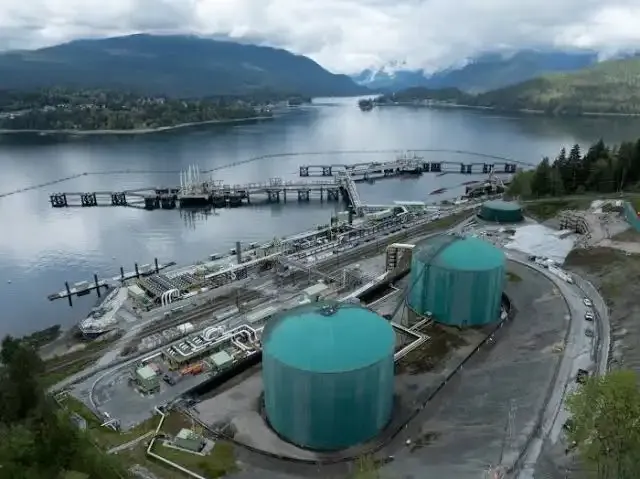

Canada has announced plans to advance a new pipeline connecting Alberta to the Pacific Coast, marking a significant step in its strategy to diversify energy exports and reduce dependence on the United States as its primary oil market.
Prime Minister Mark Carney unveiled the proposed route alongside Alberta Premier Danielle Smith, outlining a southern corridor through British Columbia that would increase access to Asian energy markets while preserving the existing oil tanker ban along northern British Columbia's coastline.
The proposal reflects Canada's broader effort to strengthen export opportunities, support the energy sector and balance economic growth with environmental commitments.

New pipeline aims to open Asian markets
The proposed pipeline would transport crude oil from Alberta to Canada's Pacific Coast, creating additional export capacity for international buyers.
By improving access to overseas markets, Canada hopes to reduce its reliance on the United States, which has historically purchased the majority of the country's oil exports.
Expanding trade with Asian economies is viewed as a key component of Canada's long-term economic and energy strategy.
Government keeps northern tanker ban in place
While announcing the pipeline proposal, the federal government confirmed that the oil tanker ban along northern British Columbia's coastline would remain unchanged.
The decision seeks to balance energy development with environmental protection by allowing new export infrastructure through southern British Columbia while maintaining safeguards for ecologically sensitive northern coastal waters.
Officials say the approach is intended to support both economic and environmental priorities.
Why Canada wants to diversify oil exports
Canada has increasingly focused on expanding trade beyond its traditional export markets.
Greater access to international buyers could help:
- Reduce dependence on a single export destination.
- Improve long-term energy security.
- Strengthen Canada's global competitiveness.
- Increase export revenues.
- Support investment in the energy sector.
- Expand relationships with fast-growing Asian economies.
The strategy aligns with broader efforts to diversify Canada's international trade portfolio over the coming decade.
Alberta seeks higher oil production
Alberta Premier Danielle Smith has consistently advocated for expanding the province's energy industry.
The province has set an ambitious goal of significantly increasing oil production over the next 10 to 15 years, viewing additional pipeline capacity as essential to achieving that target.
Supporters argue that greater export infrastructure could improve market access and increase returns for Canadian energy producers.
Balancing economic growth and environmental protection
Pipeline development has long been one of Canada's most debated policy issues.
Supporters believe new infrastructure can:
- Create employment opportunities.
- Strengthen the national economy.
- Increase export capacity.
- Improve energy competitiveness.
Environmental groups, meanwhile, continue to emphasize the importance of protecting ecosystems, reducing emissions and ensuring rigorous environmental assessments before major projects proceed.
Maintaining the northern tanker ban reflects the government's effort to balance these competing priorities.
What the proposal could mean for Canada's economy
If approved, the Alberta-Pacific pipeline could provide several potential economic benefits:
Increased export opportunities
Greater access to Pacific shipping routes could expand Canada's presence in Asian energy markets.
Higher investment
Major infrastructure projects often encourage additional investment across the energy sector.
Employment generation
Pipeline construction and related industries could support thousands of direct and indirect jobs.
Revenue growth
Expanded exports may contribute to government revenues through taxes and royalties.
Challenges ahead
Although the proposal has political backing from Alberta, several hurdles remain before construction could begin.
These may include:
- Environmental assessments.
- Regulatory approvals.
- Indigenous consultations.
- Engineering studies.
- Financing arrangements.
- Public consultations.
Project timelines will depend on the completion of these processes.
Future outlook
Canada's latest pipeline proposal reflects a broader shift toward expanding global energy partnerships while attempting to maintain environmental safeguards.
The coming months are expected to focus on consultations, regulatory reviews and discussions with stakeholders before any final decisions are made regarding the project's implementation.
Featured Snippet
Canada has announced plans for a new Alberta-Pacific pipeline designed to expand oil exports to Asia through southern British Columbia while maintaining the northern British Columbia oil tanker ban and existing environmental protections.
Key Highlights
- Canada has proposed a new pipeline from Alberta to the Pacific Coast.
- The project aims to diversify oil exports beyond the US.
- The proposed route passes through southern British Columbia.
- The northern British Columbia oil tanker ban will remain in place.
- Alberta supports the proposal as part of plans to increase oil production.
- The project still requires regulatory and environmental approvals.
- The initiative is part of Canada's long-term export diversification strategy.
Conclusion
Canada's proposed Alberta-Pacific pipeline represents a significant step in its efforts to expand energy exports and strengthen access to global markets beyond the United States. While the project promises economic opportunities for the country's energy sector, it also faces environmental, regulatory and consultation processes before moving forward. Balancing economic development with environmental protection is likely to remain central to the debate as the proposal progresses.
FAQs
1. What is the Alberta-Pacific pipeline?
It is a proposed pipeline that would transport oil from Alberta to Canada's Pacific Coast for export to international markets.
2. Why is Canada proposing the new pipeline?
The goal is to diversify oil exports beyond the United States and increase access to Asian markets.
3. Will the northern British Columbia tanker ban be removed?
No. The government has confirmed that the northern oil tanker ban will remain in place.
4. Who announced the proposal?
Prime Minister Mark Carney announced the proposal alongside Alberta Premier Danielle Smith.
5. Why is Alberta supporting the project?
The province wants additional export capacity to support future growth in oil production.
6. What approvals are still required?
The project will need regulatory reviews, environmental assessments and consultations before construction can proceed.
7. How could the pipeline affect Canada's economy?
If approved, it could increase exports, attract investment, create jobs and strengthen Canada's energy sector.







Conversation
Be kind and stay on topic. Comments are moderated; abuse, spam and personal attacks are removed. Report a problem