
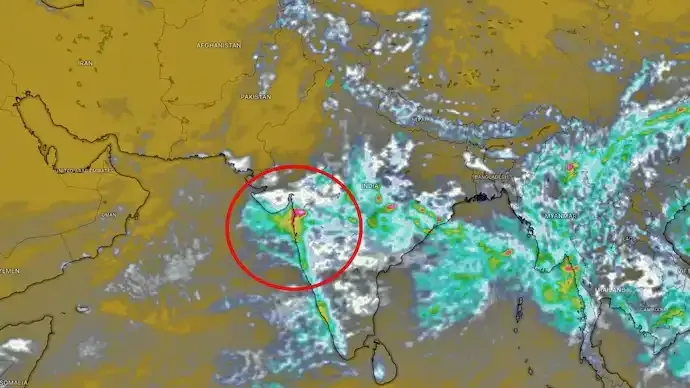
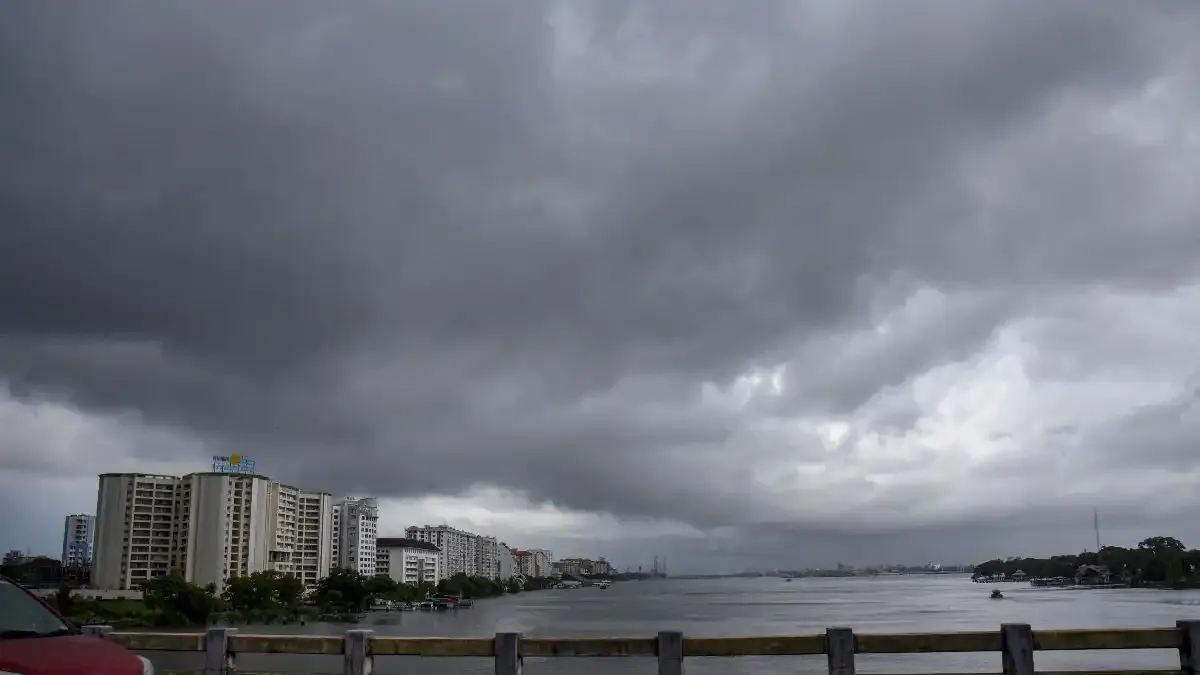
Mumbai is preparing for another round of intense monsoon showers after satellite imagery revealed a vast rain-bearing cloud system advancing from the Arabian Sea towards Maharashtra's coastline. Weather experts expect the developing system to bring heavy to very heavy rainfall across Mumbai and several neighbouring districts over the coming hours.
South Mumbai has already witnessed spells of intense rain, while meteorologists continue to monitor the rapidly evolving cloud formation using Indian and international weather satellites.
Satellite Images Reveal Extensive Cloud Formation
Fresh satellite observations captured on Friday morning show a dense cluster of monsoon clouds covering large parts of the east-central Arabian Sea.
According to meteorological observations, the cloud mass is steadily moving towards Maharashtra's western coast and has the potential to produce widespread rainfall.
The satellite imagery also indicates:
- Thick rain-bearing cloud bands over the Arabian Sea.
- Strong moisture inflow towards the Konkan coast.
- Active thunderstorm development within the cloud system.
- Conditions favourable for prolonged rainfall.
Cold Cloud Tops Indicate Intense Rainfall Potential
Meteorologists say the cloud tops visible in satellite images are extremely cold, a key indicator of powerful vertical cloud development.
Such cloud formations are generally associated with:
- Heavy rainfall.
- Thunderstorms.
- Gusty winds.
- Lightning activity.
- Localised waterlogging.
Deep convective clouds often produce intense rainfall over short periods, increasing the risk of urban flooding in low-lying areas.
Mumbai and Nearby Districts on Alert
The approaching weather system is expected to affect several parts of Maharashtra, particularly coastal districts.
Areas likely to experience heavy rainfall include:
- Mumbai City.
- Mumbai Suburban.
- Thane.
- Palghar.
- Raigad.
- Parts of the Konkan region.
Residents have been advised to stay updated with official weather advisories as rainfall intensity may vary throughout the day.
Monsoon Activity Remains Strong
The southwest monsoon continues to remain active over western India, drawing abundant moisture from the Arabian Sea.
This moisture is interacting with favourable atmospheric conditions, leading to repeated spells of heavy rain across Maharashtra.
Meteorologists say such weather patterns are common during an active phase of the monsoon, when successive cloud systems move inland from the Arabian Sea.
Possible Impact of Heavy Rain
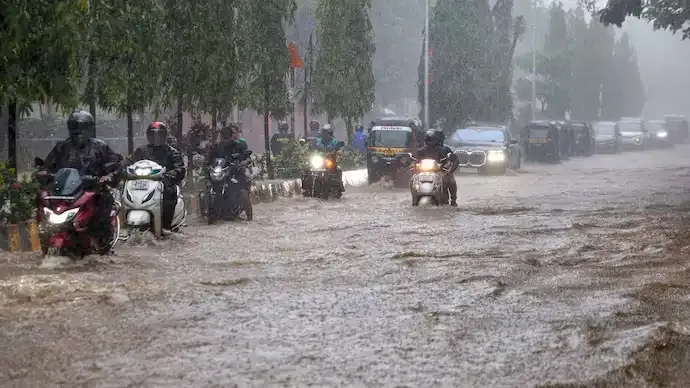
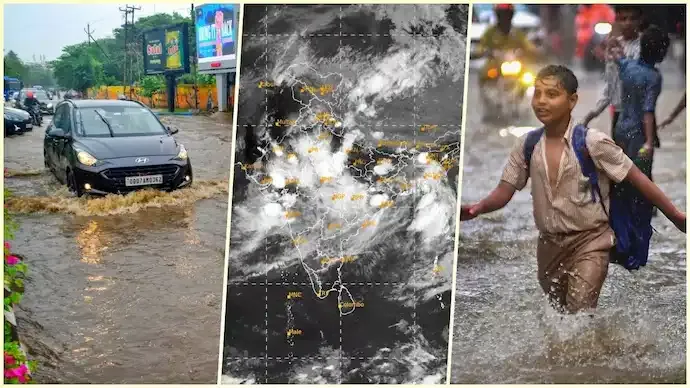
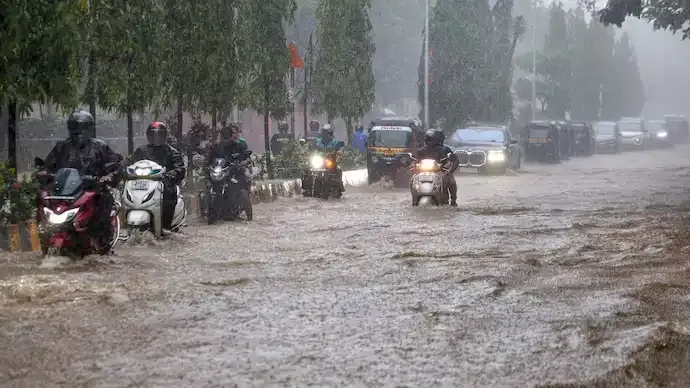
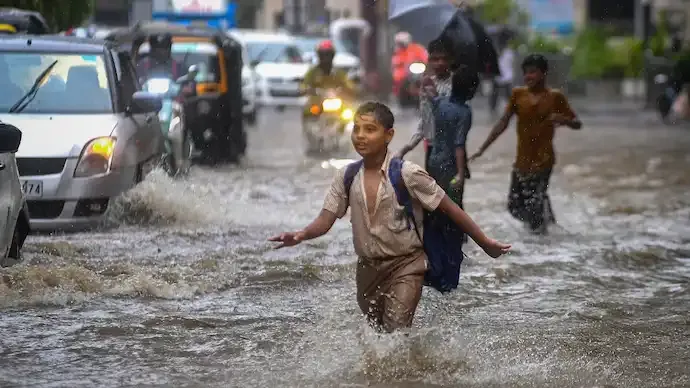
If rainfall intensifies as forecast, Mumbai could witness temporary disruptions similar to previous heavy rain events.
Possible impacts include:
- Waterlogging in low-lying areas.
- Slow-moving traffic.
- Delays in suburban rail services.
- Reduced visibility for motorists.
- Localised flooding.
- Flight schedule disruptions depending on weather conditions.
Authorities remain on alert to respond to any weather-related emergencies.
Safety Advisory for Residents
With heavy rainfall expected, residents are advised to take necessary precautions.
Safety measures include:
- Avoid unnecessary travel during intense rain.
- Stay away from waterlogged roads.
- Follow official weather advisories.
- Keep emergency supplies ready.
- Avoid standing under trees during thunderstorms.
- Drive cautiously with headlights on.
- Monitor local traffic updates before commuting.
People living in flood-prone areas should remain especially vigilant.
How Satellite Monitoring Helps
Modern weather satellites such as INSAT-3DR provide real-time information about cloud movement, rainfall intensity and storm development.
These observations help meteorologists:
- Track cloud systems.
- Estimate rainfall potential.
- Issue early weather warnings.
- Monitor thunderstorm activity.
- Improve short-term forecasts.
Satellite monitoring plays a crucial role in disaster preparedness during the monsoon season.
Featured Snippet
Satellite images have revealed a massive rain-bearing cloud system moving from the Arabian Sea towards Maharashtra. Weather experts expect heavy to very heavy rainfall across Mumbai and nearby districts as deep convective clouds increase the risk of thunderstorms, waterlogging and travel disruptions.
Key Highlights
- Satellite images show a massive cloud system approaching Maharashtra.
- Heavy to very heavy rainfall is expected in Mumbai.
- South Mumbai has already recorded intense showers.
- Cold cloud tops indicate strong thunderstorm activity.
- Several coastal districts may receive widespread rainfall.
- Authorities are monitoring the evolving weather system.
- Residents have been advised to follow official weather alerts.
- Waterlogging and traffic disruptions are possible.
Conclusion
Mumbai remains under the influence of an active monsoon system as a large cloud mass advances from the Arabian Sea towards Maharashtra. With satellite imagery indicating favourable conditions for heavy rainfall and thunderstorms, residents should stay informed through official weather updates and take necessary precautions. As the southwest monsoon continues its active phase, weather agencies are expected to closely monitor rainfall intensity and issue timely advisories to minimise disruption and ensure public safety.
FAQs
1. Why is Mumbai expected to receive heavy rainfall?
A massive rain-bearing cloud system over the Arabian Sea is moving towards Maharashtra, creating favourable conditions for heavy rain.
2. What do the satellite images show?
The images reveal extensive cloud cover with deep convective clouds capable of producing heavy rainfall and thunderstorms.
3. Which areas may be affected?
Mumbai, Thane, Palghar, Raigad and several parts of coastal Maharashtra are likely to receive heavy rainfall.
4. What are cold cloud tops?
Cold cloud tops indicate strong vertical cloud development and are commonly associated with intense thunderstorms and heavy rain.
5. Can heavy rain disrupt transport?
Yes. Waterlogging, traffic congestion, railway delays and possible flight disruptions may occur depending on rainfall intensity.
6. Which satellite is monitoring the weather?
INSAT-3DR, along with global weather satellites, is tracking the cloud movement and rainfall activity.
7. What precautions should residents take?
People should avoid unnecessary travel, monitor official advisories and stay away from waterlogged areas during heavy rainfall.
8. Is this part of the active southwest monsoon?
Yes. The approaching cloud system is associated with the active southwest monsoon over western India.

Conversation
Be kind and stay on topic. Comments are moderated; abuse, spam and personal attacks are removed. Report a problem