
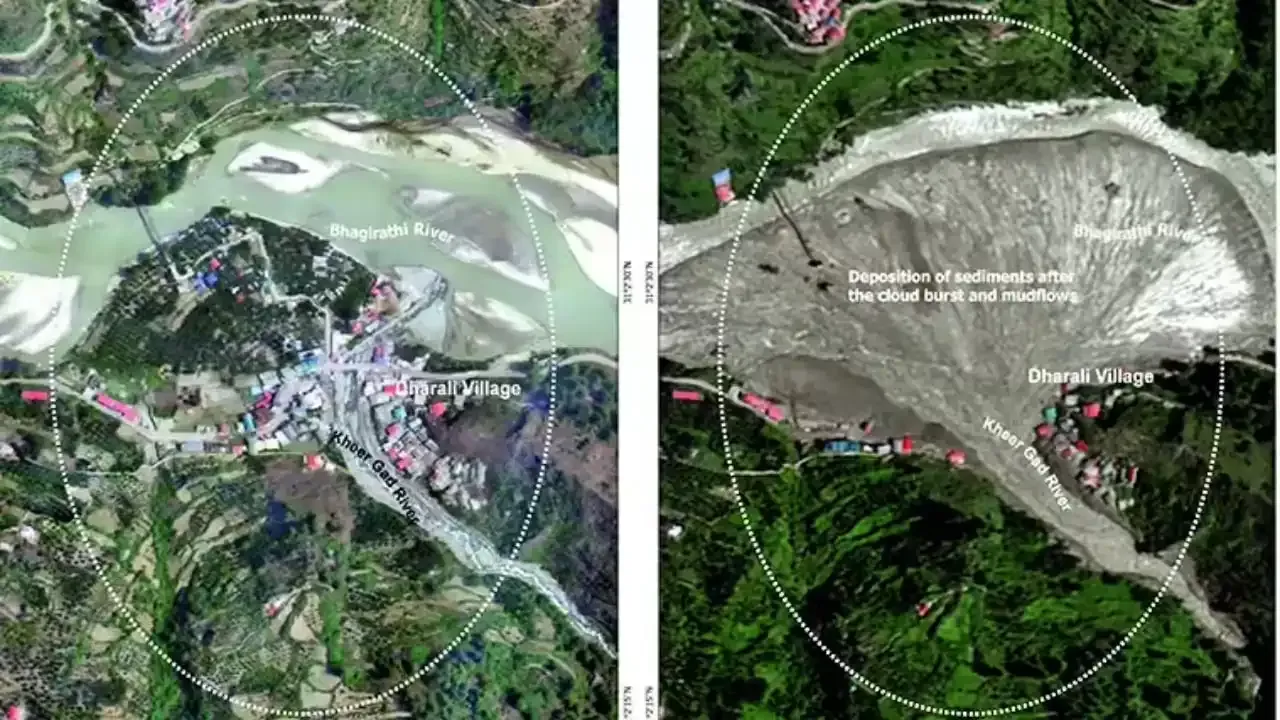
Fresh satellite imagery has revealed the formation of a temporary water pool upstream of the Dharali-Harsil stretch in Uttarkashi district, nearly a year after devastating mudflows dramatically altered the landscape of the Bhagirathi Valley. The latest development has sparked renewed concerns among local residents as the monsoon intensifies and river levels continue to rise.
Communities living along the Bhagirathi River have reported increasing river erosion, with swelling waters eating into riverbanks and threatening homes, public buildings, and essential infrastructure. The appearance of a water body behind debris deposited during the 2025 disaster has heightened fears of potential flooding if the temporary obstruction fails.
Satellite Images Highlight Changing Landscape
Recent satellite images captured over the Dharali-Harsil region show a newly formed water pool behind debris left by the massive mudflows that struck the valley in August 2025. The images indicate that water has begun accumulating upstream, suggesting that debris deposited during last year's disaster continues to influence the river's natural flow.
Experts often monitor such temporary water bodies closely because they can increase pressure on natural debris barriers. If these barriers weaken or collapse suddenly, downstream areas may experience rapid flooding.
Although the formation of temporary pools is not uncommon in mountainous terrain after landslides or mudflows, continuous monitoring becomes essential during the monsoon season when heavy rainfall can significantly increase water volume.
Bhagirathi River Levels Continue to Rise
Residents in Harsil and nearby villages have reported noticeable changes in the Bhagirathi River over recent weeks. The river has expanded in several sections, gradually eroding its banks and moving closer to residential areas.
Several locations along the river corridor are witnessing accelerated erosion, raising concerns about the safety of nearby houses, roads, government facilities, and public utilities.
Local communities remain particularly cautious because many areas are still recovering from the destruction caused by last year's disaster.
Remembering the 2025 Dharali Mudflow
On August 5, 2025, intense mudflows originating from the Tel Gad and Kheer Gad streams swept through the Harshil-Dharali region in Uttarkashi.
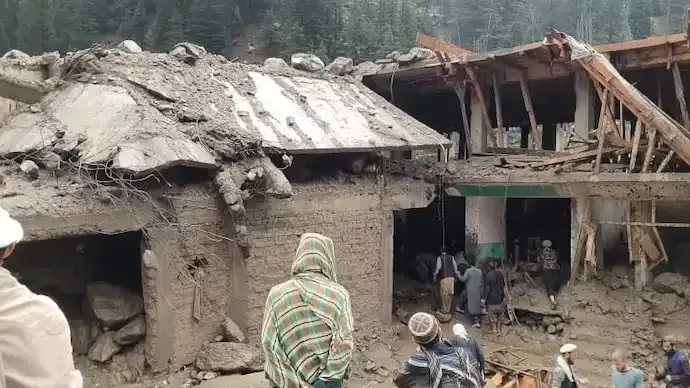
The powerful surge of mud, rocks, and debris caused widespread destruction, damaging homes, roads, and other infrastructure while significantly altering the course of the Bhagirathi River.
The disaster reshaped parts of the valley, leaving behind massive debris deposits that continue to affect river movement and drainage patterns nearly a year later.
Why the Newly Formed Water Pool Matters
Temporary water pools created behind landslide or mudflow debris can pose serious risks if not monitored carefully.
Some of the major concerns include:
Increased Flood Risk
As water continues accumulating, pressure on the natural debris barrier rises. A sudden breach could send large volumes of water downstream within a short period.
Riverbank Erosion
Higher water levels can accelerate erosion, weakening riverbanks and increasing the possibility of structural damage to nearby buildings and roads.
Threat to Infrastructure
Roads, bridges, public buildings, and utility networks located close to the Bhagirathi River may face greater vulnerability if river levels continue to rise.
Impact on Local Communities
People living in low-lying areas near the river remain concerned about possible evacuation needs if heavy rainfall intensifies during the ongoing monsoon season.
Role of Satellite Monitoring
Satellite-based remote sensing has become an essential tool for tracking changes in fragile Himalayan landscapes.
Modern satellite imagery allows authorities and scientists to:
- Monitor river channel changes.
- Detect newly formed lakes and water pools.
- Track landslide-prone areas.
- Assess erosion patterns.
- Support disaster preparedness and early warning efforts.
Regular observations can help identify emerging hazards before they become large-scale emergencies.
Monsoon Increases Risk in Himalayan Regions
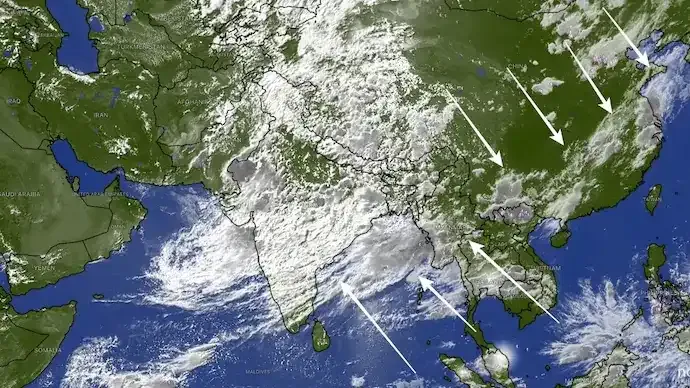
The Himalayan region experiences heightened geological activity during the southwest monsoon. Heavy rainfall often saturates mountain slopes, increasing the likelihood of landslides, mudflows, flash floods, and riverbank erosion.
When rivers carry additional sediment and debris, their channels may shift, creating new hazards for settlements located along their banks.
Experts continue to emphasize the importance of continuous monitoring, timely inspections, and preventive measures in vulnerable mountain districts.
Impact on Local Residents
People living in the Dharali-Harsil belt remain on alert as changing river conditions continue to affect daily life.
Many residents are worried about:
- Further riverbank erosion.
- Damage to homes and agricultural land.
- Disruption of transportation routes.
- Risks to government buildings and public infrastructure.
- Potential flooding if the temporary water pool expands.
Community members are closely watching weather conditions while hoping that preventive measures reduce future risks.
Disaster Preparedness Measures
Authorities typically monitor vulnerable river stretches during the monsoon using field inspections, satellite observations, rainfall data, and hydrological assessments.
Experts recommend continued surveillance of the newly formed water pool, regular evaluation of debris stability, and rapid response planning to minimize potential impacts if conditions deteriorate.
Featured Snippet
Satellite images have identified a newly formed water pool upstream of the Dharali-Harsil region in Uttarakhand's Uttarkashi district, nearly a year after the 2025 mudflow. Rising Bhagirathi River levels and ongoing erosion have raised concerns about flooding, infrastructure damage, and the need for continuous monitoring during the monsoon.
Key Highlights
- Satellite images show a new water pool near Dharali in Uttarkashi.
- The pool has formed behind debris from the August 2025 mudflow.
- Bhagirathi River levels are rising, increasing erosion risks.
- Homes, roads, and public infrastructure remain vulnerable.
- The 2025 disaster permanently altered the river's channel.
- Continuous satellite monitoring is helping track evolving hazards.
- Monsoon rainfall could increase pressure on temporary debris barriers.
- Residents remain concerned about possible flooding and further erosion.
Conclusion
The discovery of a new water pool behind the debris left by the 2025 Dharali mudflow highlights the continuing impact of last year's disaster on Uttarakhand's fragile Himalayan landscape. With the Bhagirathi River rising once again during the monsoon, close monitoring of the area remains essential to assess evolving risks, protect vulnerable communities, and support timely disaster preparedness measures.
FAQs
1. Where has the new water pool been detected?
The temporary water pool has been identified upstream of the Dharali-Harsil stretch in Uttarkashi district, Uttarakhand.
2. Why is the newly formed water pool a concern?
It may increase flood risk if accumulated water breaches the natural debris barrier created during the 2025 mudflow.
3. What caused the 2025 Dharali mudflow?
The disaster was triggered by debris and mudflows originating from the Tel Gad and Kheer Gad streams, which reshaped the Bhagirathi River channel.
4. How are satellite images helping authorities?
Satellite imagery helps monitor river changes, erosion, debris movement, and newly formed water bodies in difficult-to-access Himalayan terrain.
5. Is the Bhagirathi River rising again?
Yes. Residents have reported rising water levels and increased riverbank erosion in parts of the Harsil-Dharali valley.
6. Which infrastructure could be affected?
Homes, roads, government buildings, bridges, and public utilities located near the riverbanks may face increased risk.
7. Does the monsoon increase the danger?
Yes. Heavy rainfall during the monsoon can increase water accumulation, erosion, and pressure on temporary debris barriers.
8. What precautions are important now?
Continuous monitoring, timely inspections, early warning systems, and preparedness measures are essential to reduce potential disaster risks.


Conversation
Be kind and stay on topic. Comments are moderated; abuse, spam and personal attacks are removed. Report a problem