
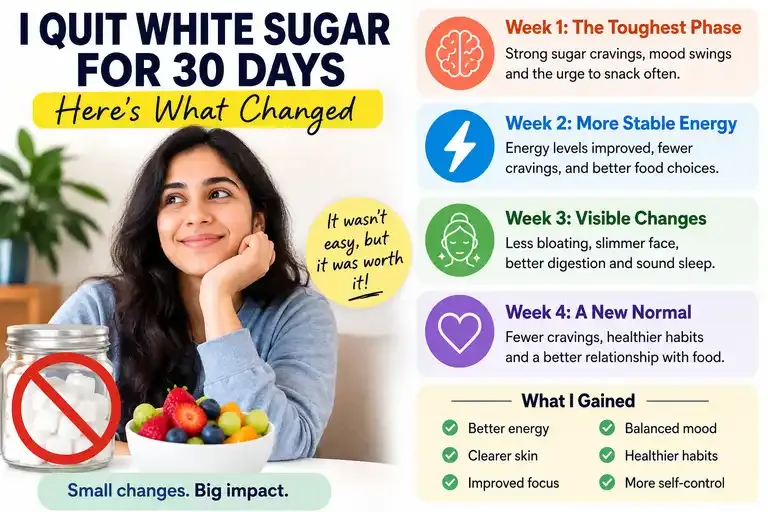
Giving up added white sugar for a month sounded simple at first, but it quickly turned into one of the biggest lifestyle challenges. From sweet tea and biscuits to desserts and sugary drinks, sugar had quietly become a daily habit.
Although I expected immediate weight loss, the biggest changes were far more surprising. Over four weeks, my energy levels improved, cravings reduced and my relationship with food completely changed.
Featured Snippet
Eliminating added white sugar for 30 days may lead to reduced sugar cravings, steadier energy levels, improved eating habits and better overall well-being. While weight loss isn't always immediate, many people notice positive lifestyle changes within a few weeks.
Key Highlights
- Weight may not change immediately.
- Sugar cravings gradually become easier to control.
- Energy levels remain more stable throughout the day.
- Mindless snacking becomes less frequent.
- Healthier eating habits develop over time.
Why I Decided to Quit Sugar
Like many people, I didn't realise how often I consumed added sugar.
It was present in:
- Morning tea or coffee.
- Biscuits during work breaks.
- Desserts after meals.
- Soft drinks and packaged beverages.
- Processed snacks.
Instead of eating sugar occasionally, it had quietly become part of my daily routine. That made me wonder what would happen if I completely stopped consuming added white sugar for a month.
Week 1: The Toughest Phase
The first few days were the most difficult.
I experienced:
- Frequent sugar cravings.
- The urge to snack between meals.
- Missing my regular sweet treats.
- Constant thoughts about sugary foods.
Breaking an old habit required conscious effort, especially during evening hours when cravings were strongest.
Week 2: Energy Started Feeling More Stable
By the second week, something began to change.
Instead of experiencing energy spikes followed by tiredness, I noticed more consistent energy throughout the day.
I also found myself reaching for healthier snacks rather than sugary options.
The cravings had not disappeared completely, but they had become easier to manage.
Week 3: Visible Changes Beyond the Weighing Scale
Interestingly, the weighing scale showed very little difference.
However, I noticed:
- My face looked less bloated.
- I felt lighter overall.
- Fewer cravings after meals.
- Better control over portion sizes.
The biggest surprise was that my body no longer expected something sweet after every meal.
Week 4: A New Relationship With Sugar
By the final week, avoiding sugar no longer felt like a struggle.
Instead, it became a habit.
I realised that many earlier cravings were driven more by routine than by actual hunger.
When I eventually thought about eating sweets again, I no longer felt the same strong urge as before.

What I Learned
Quitting added sugar wasn't just about losing weight.
The experience helped me:
- Become more mindful about food choices.
- Read nutrition labels carefully.
- Reduce unnecessary snacking.
- Appreciate naturally sweet foods like fruits.
- Develop healthier long-term eating habits.
Should You Try a No-Sugar Challenge?
Reducing added sugar may benefit many people, but individual results can vary depending on overall diet, activity levels and health conditions.
If you have diabetes or another medical condition that affects your diet, consult a healthcare professional or registered dietitian before making major dietary changes.
A balanced approach is generally more sustainable than extreme restrictions.
Conclusion
Giving up added white sugar for 30 days wasn't easy, but it changed far more than just my eating habits. Although dramatic weight loss didn't happen overnight, the improvements in energy, cravings and overall awareness made the challenge worthwhile. Sometimes the biggest health changes aren't immediately visible on the weighing scale—they're reflected in how you feel every day.
FAQs
1. Can quitting white sugar help with weight loss?
It may support weight management, but results vary depending on your overall diet, calorie intake and physical activity.
2. How long does it take for sugar cravings to reduce?
Many people notice cravings becoming less intense after one to three weeks, though experiences differ.
3. Is fruit allowed during a no-added-sugar challenge?
Many no-added-sugar plans allow whole fruits because they contain natural sugars along with fibre and nutrients.
4. Does quitting sugar improve energy levels?
Some people report steadier energy throughout the day after reducing added sugar, though individual responses vary.
5. Will my face look slimmer after cutting sugar?
Some people notice reduced bloating, but visible changes differ from person to person.
6. Is it safe to stop eating added sugar completely?
For most healthy adults, reducing added sugar is generally considered beneficial. If you have a medical condition or specific dietary needs, consult a healthcare professional before making significant dietary changes.



Conversation
Be kind and stay on topic. Comments are moderated; abuse, spam and personal attacks are removed. Report a problem