

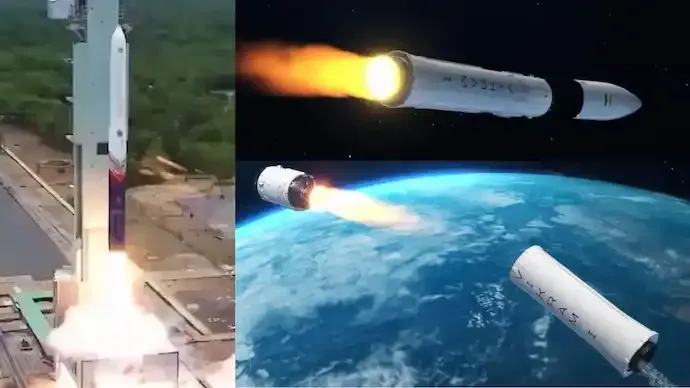
India's private space industry is preparing for a landmark moment as Skyroot Aerospace completes the integration of Vikram-I, the country's first privately developed orbital launch vehicle. With the rocket now fully assembled at the First Launch Pad in Sriharikota, the company is entering the final phase of launch preparations before its maiden mission.
The mission, named Aagaman, has a launch window beginning on July 12 and extending until August 4, offering flexibility based on weather conditions and technical readiness. If successful, the launch will represent a significant breakthrough for India's growing commercial space ecosystem and demonstrate the capabilities of the country's emerging private launch industry.
Vikram-I Fully Integrated at Sriharikota
Skyroot Aerospace announced that Vikram-I has been fully stacked and integrated at the First Launch Pad at the Satish Dhawan Space Centre in Sriharikota.
The integration marks one of the final milestones before launch. Engineers are now conducting comprehensive system checks, mission validation, safety inspections, and countdown rehearsals to ensure the rocket is ready for flight.
The upcoming mission will evaluate several critical onboard systems during its journey to orbit, providing valuable performance data for future commercial launches.
What Is the Aagaman Mission?
The maiden mission has been named Aagaman, a Sanskrit word meaning "Arrival."
The name reflects the beginning of a new chapter for India's commercial space industry, where private companies are increasingly contributing to satellite launches, launch vehicle development, and advanced aerospace technologies.
The mission is expected to demonstrate the operational readiness of Vikram-I while validating key technologies required for future orbital missions.
Why Vikram-I Is a Historic Milestone
Until recent years, orbital rocket launches from India were primarily carried out by the country's national space program. The emergence of private launch companies has transformed the landscape following policy reforms that encouraged greater participation from private enterprises.
If Vikram-I successfully reaches orbit, it will become India's first privately developed orbital launch vehicle to achieve this milestone, placing the country among a select group of nations with independent private launch capabilities.
The achievement would strengthen India's position in the rapidly expanding global commercial launch market.
About Vikram-I Rocket
Vikram-I is designed as a small satellite launch vehicle capable of placing payloads into orbit for commercial and scientific missions.
Some of its key objectives include:
- Launching small satellites.
- Supporting commercial space customers.
- Offering flexible and cost-effective launch services.
- Expanding India's private launch capabilities.
- Demonstrating indigenous aerospace innovation.
The rocket has been developed with a focus on efficient manufacturing, advanced engineering, and mission flexibility to meet the growing demand for small satellite launches worldwide.
Launch Window: July 12 to August 4
The mission's launch window extends from July 12 through August 4, allowing engineers to select the most suitable launch opportunity after considering several operational factors, including:
- Weather conditions.
- Wind patterns.
- Technical readiness.
- Range availability.
- Safety requirements.
Final launch timing will depend on mission readiness and favourable launch conditions.
Features of Vikram-I
Small Satellite Launch Capability
The rocket has been developed to serve the rapidly growing global market for small satellite deployments.
Indigenous Engineering
The launch vehicle has been designed and built in India using advanced engineering and manufacturing technologies.
Commercial Mission Focus
Vikram-I is expected to support future commercial customers seeking dedicated satellite launches.
Modular Design
The rocket is designed to provide flexibility for different mission requirements and payload configurations.
India's Growing Private Space Industry
India's private space ecosystem has expanded significantly in recent years following regulatory reforms that opened the sector to startups and private investment.
Today, several Indian companies are developing launch vehicles, satellites, propulsion technologies, and space applications aimed at serving domestic as well as international markets.
The growth of private participation is expected to:
- Increase launch capacity.
- Encourage technological innovation.
- Generate high-skilled employment.
- Strengthen India's space economy.
- Attract global commercial customers.
Global Competition in Small Satellite Launches
Demand for dedicated small satellite launches continues to rise worldwide as governments, research institutions, and private companies deploy satellites for communication, Earth observation, navigation, climate monitoring, and scientific research.
Private launch providers are increasingly competing by offering:
- Faster launch schedules.
- Lower launch costs.
- Dedicated payload capacity.
- Flexible mission planning.
A successful Vikram-I mission could position India as a stronger player in this competitive international market.
Future Outlook for Skyroot Aerospace
The successful maiden flight of Vikram-I would lay the foundation for future commercial launch services and expanded private participation in India's space sector.
As demand for satellite deployment grows globally, companies like Skyroot Aerospace could play an increasingly important role in supporting scientific missions, commercial customers, and emerging space technologies.
The mission is also expected to contribute valuable engineering data that can help improve future launch vehicles and mission reliability.
Featured Snippet
Skyroot Aerospace has completed the integration of Vikram-I, India's first privately developed orbital rocket, at Sriharikota. The Aagaman mission has a launch window from July 12 to August 4 and is expected to mark a major milestone for India's private space industry and commercial launch capabilities.
Key Highlights
- Skyroot Aerospace has fully stacked Vikram-I at Sriharikota.
- The launch window opens on July 12 and runs until August 4.
- Vikram-I is India's first privately developed orbital launch vehicle.
- The maiden mission is named Aagaman, meaning "Arrival."
- Engineers are conducting final system checks before launch.
- The mission aims to validate critical launch systems.
- A successful launch would strengthen India's private space ecosystem.
- The rocket is designed for commercial small satellite launches.
Conclusion
The upcoming launch of Vikram-I marks one of the most significant milestones in the evolution of India's private space industry. As Skyroot Aerospace prepares for the Aagaman mission, the successful deployment of the country's first privately developed orbital launch vehicle could reshape India's role in the global commercial space market. Beyond a single launch, the mission represents growing confidence in indigenous innovation, private enterprise, and the future of India's expanding space economy.
FAQs
1. What is Vikram-I?
Vikram-I is India's first privately developed orbital launch vehicle built by Skyroot Aerospace.
2. When will Vikram-I launch?
The launch window opens on July 12 and extends until August 4, depending on mission readiness and weather conditions.
3. What is the Aagaman mission?
Aagaman is the maiden mission of Vikram-I. The Sanskrit word "Aagaman" means "Arrival."
4. Where will the rocket launch from?
The launch is scheduled from the Satish Dhawan Space Centre in Sriharikota.
5. Why is this launch significant?
It could make India one of the few countries with a privately developed orbital launch capability, marking a major milestone for the country's commercial space sector.
6. What type of satellites can Vikram-I launch?
The rocket is designed primarily for launching small satellites into orbit for commercial and scientific missions.
7. What preparations have been completed?
Skyroot Aerospace has completed the rocket's integration and stacking, with final testing and launch preparations currently underway.
8. How could Vikram-I impact India's space industry?
A successful mission could accelerate private investment, expand commercial launch services, strengthen India's space economy, and boost the country's competitiveness in the global satellite launch market.




Conversation
Be kind and stay on topic. Comments are moderated; abuse, spam and personal attacks are removed. Report a problem