



Delhi Police has denied allegations of excessive force during a July 20 protest at Jantar Mantar, telling the Supreme Court that the scale of the demonstration and subsequent violence required the use of graded force.
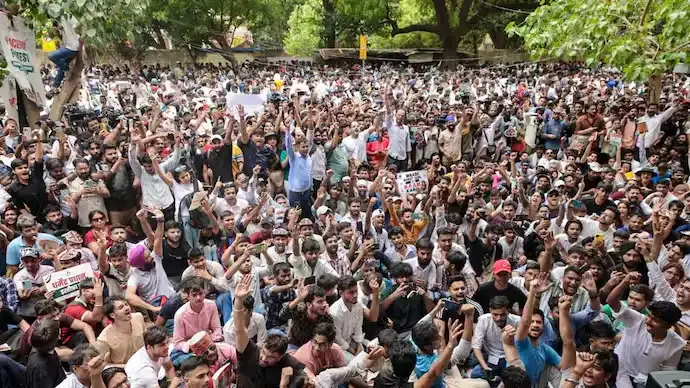
In an affidavit filed in connection with petitions seeking a Supreme Court-monitored probe, the police said more than 30,000 protesters had gathered across a stretch of nearly three kilometres.
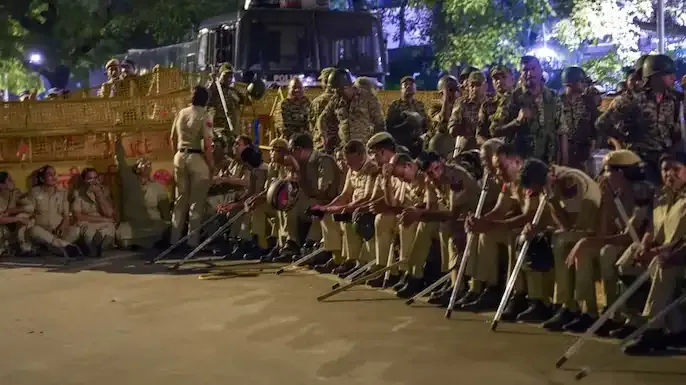
Around 5,000 police personnel were deployed to manage the demonstration, according to the affidavit.

The police claimed the protest was initially peaceful but escalated after protesters allegedly breached barricades, making crowd control increasingly difficult.
WHAT DID DELHI POLICE TELL THE SUPREME COURT?
Delhi Police said the force used during the Jantar Mantar protest was graded and proportionate to the circumstances.
According to the police affidavit, officers had to manage a very large crowd while preventing the demonstration from spreading into surrounding areas.
The police said the situation changed after barricades were breached and violence broke out.
The affidavit was filed as a common response to four connected petitions seeking a Supreme Court-monitored investigation into alleged police excesses during the protest.
WHY DID POLICE USE FORCE AT JANTAR MANTAR?
The central argument made by Delhi Police is that the size and behaviour of the crowd created a significant law-and-order challenge.
Police said:
- More than 30,000 protesters were present.
- The gathering extended across approximately 3 kilometres.
- Around 5,000 police personnel were deployed.
- The protest was initially peaceful.
- Protesters allegedly breached barricades.
- The crowd subsequently became difficult to control.
- Violence followed the breach.
- Police used what they described as graded force.
The police maintain that the response was dictated by circumstances on the ground rather than being an indiscriminate use of force.
HOW MANY PEOPLE WERE INJURED?
According to the Delhi Police affidavit, more than 240 police personnel were injured during the clashes.
Police also claimed that around 200 protesters suffered injuries.
The figures are part of the police's defence against allegations that excessive force was used during the demonstration.
The Supreme Court proceedings will determine how the competing allegations and evidence are assessed.
WHAT DOES 'GRADED FORCE' MEAN?
The term graded force generally refers to escalating the police response according to the seriousness of the situation.
Rather than immediately using the highest level of force, crowd-control responses can involve different levels of intervention depending on the threat, crowd behaviour and need to restore public order.
Delhi Police has argued that the force used during the Jantar Mantar protest followed this principle and was proportionate to the circumstances.
The exact conduct of individual officers and protesters, however, would need to be assessed from evidence including videos, medical records, police reports and other material.
POLICE CLAIM ANTI-SOCIAL ELEMENTS JOINED PROTEST
Delhi Police has also alleged that anti-social elements and history-sheeters entered the protest.
According to the affidavit, their presence contributed to the escalation of the situation.
The allegation is significant because the police are using it as part of their explanation for why a demonstration that began peacefully later turned violent.
However, the allegation concerns the police's account of the incident and does not by itself establish that every protester was involved in violence.
WHAT WAS THE JULY 20 JANTAR MANTAR PROTEST ABOUT?
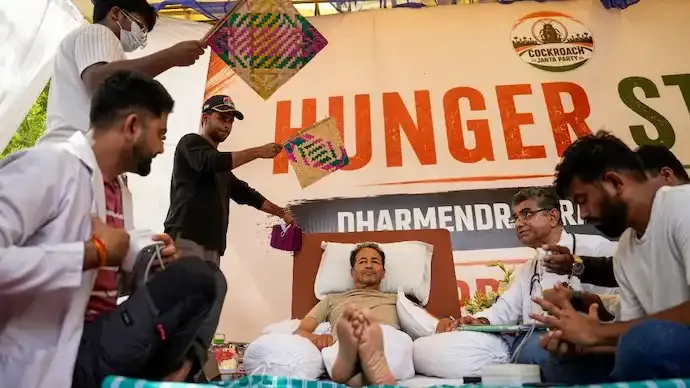
The protest was led by the Cockroach Janta Party (CJP) and was linked to demands concerning the NEET paper leak.
The demonstration drew a large number of participants and eventually became the subject of legal proceedings over allegations of police excesses.
Four petitions have been connected before the Supreme Court, with petitioners seeking judicial oversight of the investigation into the alleged police action.
WHY IS THE SUPREME COURT INVOLVED?
The Supreme Court's involvement stems from petitions alleging that protesters were subjected to excessive police force.
The petitioners are seeking a Supreme Court-monitored probe into what happened during the Jantar Mantar demonstration.
Delhi Police has now filed its response denying excessive force and explaining why it believes its personnel were justified in using graded measures.
The proceedings could therefore focus on competing accounts of how the protest escalated and whether the police response was proportionate.
30,000 PROTESTERS VS 5,000 POLICE PERSONNEL
The scale of the demonstration is a key part of Delhi Police's defence.
| Detail | Police's claim |
|---|---|
| Protesters | 30,000+ |
| Police deployed | Around 5,000 |
| Protest area | Around 3 km |
| Police personnel injured | 240+ |
| Protesters injured | Around 200 |
| Protest date | July 20 |
| Main location | Jantar Mantar, Delhi |
Police say these numbers demonstrate the difficulty of maintaining control once the barricades were breached.
WHAT REMAINS TO BE ESTABLISHED?
The police affidavit provides one side of the dispute.
The key questions before the court include whether:
- Protesters actually breached the barricades as alleged.
- Violence occurred on the scale claimed by police.
- Police force was necessary and proportionate.
- Individual protesters were subjected to excessive force.
- Anti-social elements or history-sheeters participated in the violence.
- Police personnel followed established crowd-control procedures.
- The injuries suffered by protesters and police support either side's account.
Evidence such as video footage, medical reports, deployment records and eyewitness accounts could be important in determining what happened.
WHY THIS CASE MATTERS
The dispute goes beyond one protest.
Large demonstrations frequently require police to balance public order with the right to peaceful assembly.
The case could therefore have broader implications for how law-enforcement agencies handle large protests in Delhi and elsewhere.
The Supreme Court's eventual assessment could also influence discussions around proportionality, crowd-control methods and accountability when protesters allege excessive police action.
FAQs
What did Delhi Police say about the Jantar Mantar protest?
Delhi Police denied using excessive force and said its personnel used graded force after the large crowd breached barricades and violence broke out.
How many people attended the protest?
Delhi Police said more than 30,000 protesters participated in the demonstration.
How many police personnel were deployed?
Around 5,000 police personnel were deployed, according to the affidavit.
How many people were injured?
Police said more than 240 personnel and around 200 protesters were injured.
What is graded force?
Graded force refers to using different levels of police intervention depending on the seriousness and circumstances of a situation.
Why are petitions pending before the Supreme Court?
The petitions seek a Supreme Court-monitored probe into allegations of excessive police force during the protest.
What caused the protest to turn violent?
According to Delhi Police, the demonstration was initially peaceful but escalated after protesters breached barricades. This remains part of the disputed account of the incident.






Conversation
Be kind and stay on topic. Comments are moderated; abuse, spam and personal attacks are removed. Report a problem