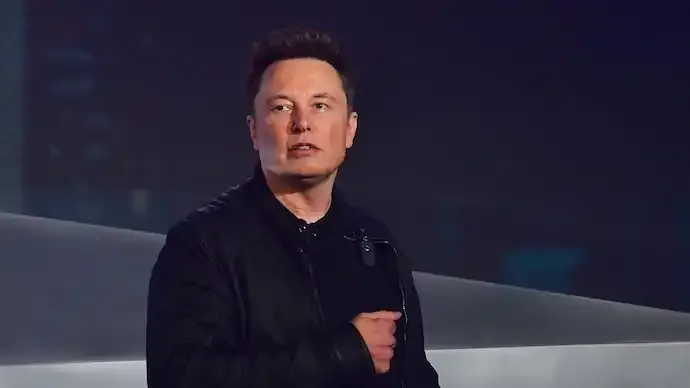
Tech billionaire Elon Musk has renewed his criticism of what he describes as “legacy media propaganda pushers,” accusing major US news outlets of applying double standards after largely ignoring controversy around Zohran Mamdani while previously subjecting Musk himself to intense scrutiny over a similar incident.
Musk’s comments followed the circulation of a viral comparison video highlighting arm gestures made by both figures at high-profile public events. Sharing the clip on X, Musk claimed that mainstream media outlets aggressively framed his gesture as Nazi-like in 2025, while remaining largely silent after Mamdani faced similar accusations following his mayoral swearing-in ceremony.
“Because they aren’t actually news organisations, they are legacy media propaganda pushers for the far left,” Musk wrote, reinforcing his long-held claim that major outlets operate with ideological bias rather than journalistic neutrality.
The controversy dates back to January 2025, when Musk attended an event marking the inauguration of Donald Trump. During the event, Musk placed his hand on his chest before extending his arm outward — a movement that drew sharp criticism from sections of the media and political commentators. Several outlets described the gesture as resembling a fascist or Nazi salute, triggering widespread debate.
Musk strongly rejected those claims at the time, describing them as politically motivated attacks. The Anti-Defamation League later stated that Musk’s movement appeared to be an awkward or enthusiastic gesture rather than a deliberate Nazi salute, urging restraint in interpretation.
Nearly a year later, the issue resurfaced after Mamdani, who was sworn in as New York mayor this week, was accused online of making a similar arm gesture during his inauguration. Short clips circulated widely on social media platforms, prompting criticism from Republican commentators and conservative voices who argued that the reaction from mainstream outlets was noticeably muted.
Unlike the scrutiny Musk faced, the Mamdani clip received limited coverage from major publications such as The New York Times and CNN, fueling accusations of selective outrage. Supporters of Musk argue this discrepancy exposes political bias in how gestures and symbolism are interpreted depending on the individual involved.
Others counter that the two incidents are not directly comparable, pointing to differences in context, duration, and intent. Critics argue that viral clips can be misleading and warn against drawing conclusions based on brief, decontextualised footage.
The renewed debate has unfolded amid broader political tensions in the United States, including an immigration crackdown and changes to visa policies under the Trump administration. Musk has increasingly positioned himself as a vocal critic of what he views as ideological conformity within traditional media, using his platform to challenge narratives he believes favour progressive political figures.
The episode has once again highlighted the growing distrust between influential public figures and mainstream news organisations. It also underscores how symbolic gestures, when amplified through social media, can quickly become flashpoints in polarised political environments.
As the argument continues online, the broader question remains unresolved: whether media scrutiny is being applied consistently, or whether political alignment increasingly shapes which controversies dominate headlines and which quietly fade away.
Prev Article
Zelenskyy Appoints Kyrylo Budanov as Ukraine’s New Chief of Staff Amid War Reset
Next Article
Nepal Runway Scare: Buddha Air Plane Overshoots Bhadrapur Airstrip With 51 Passengers Aboard