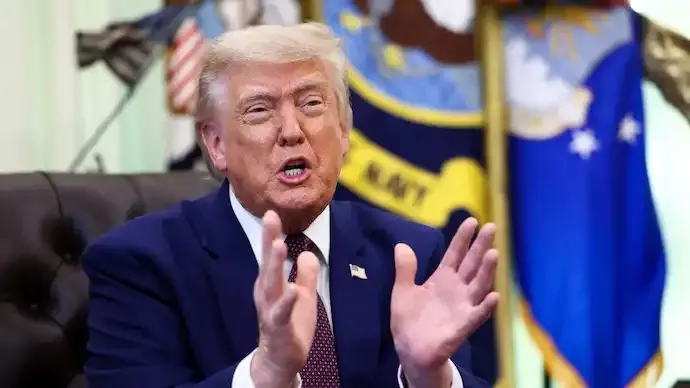
Few political leaders in modern history have influenced public discourse quite like US President Donald Trump. Whether through campaign rallies, interviews, social media posts, or public speeches, Trump has developed a communication style that frequently breaks from conventional political language.
Over the years, he has become known for introducing unusual phrases, coining new words, and making statements that often leave critics puzzled while energising supporters. From the infamous "covfefe" tweet to more recent remarks such as "I love inflation," Trump's language has evolved into a political phenomenon commonly referred to as "Trumpisms."
These expressions have become part of political conversations not only in the United States but across the world.
What Are Trumpisms?
Trumpisms refer to the distinctive phrases, invented words, unconventional expressions, and memorable statements frequently used by Donald Trump.
Supporters often view these remarks as evidence of his direct and unconventional communication style. Critics, however, argue that many of the statements create confusion, oversimplify complex issues, or generate controversy.
Regardless of political opinion, Trumpisms have become a defining feature of modern American political communication.
Political analysts note that Trump's language often prioritises attention-grabbing messaging over traditional political rhetoric, allowing him to dominate news cycles and social media discussions.
The Mystery of ‘Covfefe’
Perhaps the most famous Trumpism emerged in 2017 when Trump posted a tweet containing the now-famous word "covfefe."
The incomplete message quickly went viral, sparking global speculation about its meaning. Memes, jokes, merchandise, and countless social media discussions followed.
Although the intended meaning was never fully clarified, "covfefe" became one of the most recognizable political internet moments of the decade.
Even years later, the word remains associated with Trump's unique communication style.
‘PANICAN’ and Other Invented Terms
Trump has frequently created or popularized unconventional words to describe political opponents, media coverage, or economic developments.
One example is "PANICAN," a term he used to criticize individuals he believed were overreacting to economic or political events.
Throughout his political career, Trump has often employed nicknames, slogans, and newly coined expressions as tools to simplify messages and reinforce political branding.
These tactics have helped him connect with supporters while simultaneously attracting widespread media attention.
‘I Love Inflation’ Remark Sparks Debate
One of Trump's recent remarks that generated headlines was his statement that he "loves inflation."
The comment immediately attracted attention because inflation is generally viewed as a challenge for consumers due to rising prices and reduced purchasing power.
Supporters argued that the statement was made within a broader economic context, while critics pointed to it as another example of Trump's unconventional messaging style.
Regardless of interpretation, the remark quickly became another addition to the growing list of Trumpisms discussed across political and media circles.
Why Trump’s Language Resonates
Communication experts suggest that Trump's language succeeds because it is often simple, emotional, memorable, and designed to provoke reactions.
Unlike many politicians who rely on carefully scripted language, Trump frequently uses conversational speech patterns, repetition, and vivid imagery.
This approach helps his statements spread rapidly through television, social media, and online discussions.
Supporters often view his communication as authentic and relatable, while opponents argue that it can blur the line between political messaging and factual discourse.
A Lasting Impact on Political Communication
Regardless of political affiliation, few observers dispute that Donald Trump has changed the way modern politicians communicate.
His ability to create phrases that dominate headlines has influenced political campaigns, media coverage, and public debate both within the United States and internationally.
Many of his expressions have entered popular culture and continue to be referenced years after they were first spoken.
As Trump remains a major figure in global politics, his unique style of communication is likely to continue shaping discussions, generating controversy, and creating new additions to the growing dictionary of Trumpisms.