Shopping cart
Your cart empty!


Your cart empty!
Terms of use dolor sit amet consectetur, adipisicing elit. Recusandae provident ullam aperiam quo ad non corrupti sit vel quam repellat ipsa quod sed, repellendus adipisci, ducimus ea modi odio assumenda.
Lorem ipsum dolor sit amet consectetur adipisicing elit. Sequi, cum esse possimus officiis amet ea voluptatibus libero! Dolorum assumenda esse, deserunt ipsum ad iusto! Praesentium error nobis tenetur at, quis nostrum facere excepturi architecto totam.
Lorem ipsum dolor sit amet consectetur adipisicing elit. Inventore, soluta alias eaque modi ipsum sint iusto fugiat vero velit rerum.
Sequi, cum esse possimus officiis amet ea voluptatibus libero! Dolorum assumenda esse, deserunt ipsum ad iusto! Praesentium error nobis tenetur at, quis nostrum facere excepturi architecto totam.
Lorem ipsum dolor sit amet consectetur adipisicing elit. Inventore, soluta alias eaque modi ipsum sint iusto fugiat vero velit rerum.
Dolor sit amet consectetur adipisicing elit. Sequi, cum esse possimus officiis amet ea voluptatibus libero! Dolorum assumenda esse, deserunt ipsum ad iusto! Praesentium error nobis tenetur at, quis nostrum facere excepturi architecto totam.
Lorem ipsum dolor sit amet consectetur adipisicing elit. Inventore, soluta alias eaque modi ipsum sint iusto fugiat vero velit rerum.
Sit amet consectetur adipisicing elit. Sequi, cum esse possimus officiis amet ea voluptatibus libero! Dolorum assumenda esse, deserunt ipsum ad iusto! Praesentium error nobis tenetur at, quis nostrum facere excepturi architecto totam.
Lorem ipsum dolor sit amet consectetur adipisicing elit. Inventore, soluta alias eaque modi ipsum sint iusto fugiat vero velit rerum.
Do you agree to our terms? Sign up

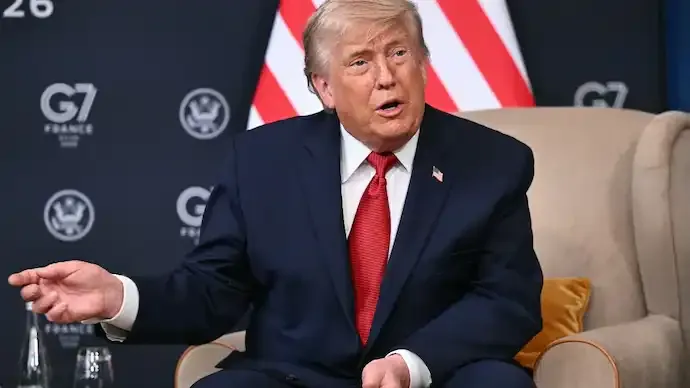
The world’s leading Western powers are considering their toughest action yet against Moscow’s oil trade. According to Reuters, G7 nations and the European Union are discussing a full maritime services ban on Russian crude — a move that would cut off the Western ships, insurers and intermediaries that still transport a significant share of Russia’s oil exports.
The proposal would replace the existing price-cap mechanism with a broader restriction targeting Russia’s seaborne shipments, many of which rely on EU-linked maritime hubs such as Greece, Cyprus and Malta. Despite sanctions introduced after the 2022 Ukraine invasion, Russia continues to ship over one-third of its crude using Western vessels, with India and China remaining its top buyers.
The maritime ban is under discussion for the EU’s next sanctions package, expected in early 2026, sources told Reuters. Brussels is coordinating with G7 partners and hopes to table the proposal once a joint decision is reached.
British and US officials are driving the technical discussions, though Washington’s final stance will depend on the approach taken by President Donald Trump’s administration as it navigates ongoing Russia-Ukraine peace negotiations.
If approved, this would mark the most far-reaching Western restriction on Russian energy since the war began.
To bypass the price cap, Moscow has redirected its crude to Asia using a large “shadow fleet” — hundreds of aging tankers operating with opaque ownership, limited oversight and no Western insurance.
Data from the Centre for Research on Energy and Clean Air shows that in October:
44% of Russian oil exports moved via sanctioned shadow-fleet vessels,
18% on non-sanctioned shadow ships,
38% on tankers tied to G7, EU or Australian entities.
Lloyd’s List Intelligence estimates the combined sanctioned fleet transporting restricted oil from Russia, Iran and Venezuela has reached 1,423 tankers, raising global safety concerns.
The Biden administration earlier argued that forcing Moscow to expand its costly shadow fleet would drain revenue and limit its war financing. The Trump administration, in contrast, has shown limited enthusiasm for the price-cap framework and declined to support a 2025 proposal to lower the cap from USD 60 to USD 47.60 per barrel.
Western governments maintain that the goal is to weaken the Kremlin’s war chest while avoiding a global oil shock. A full maritime ban, if adopted, would sharply reduce Russia’s access to Western-controlled shipping — pushing Moscow to invest in more risky vessels or accept reduced export capacity.
Officials in Washington, London, Brussels and Ottawa did not comment on the ongoing deliberations.
65
Published: Dec 06, 2025

All India Story is your trusted source for comprehensive and up-to-the-minute news coverage across India. Bringing you the latest on politics, business, technology, entertainment, sports, and more, we are dedicated to keeping you informed with accurate, engaging, and insightful stories from every corner of the nation.