

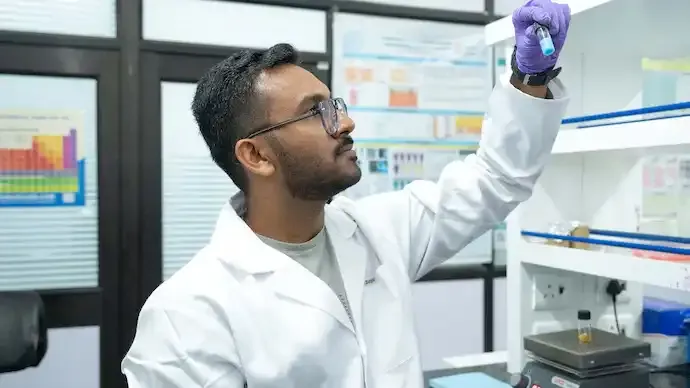

In a major advancement for India’s biomedical sector, a researcher from Indian Institute of Technology Gandhinagar has developed an innovative injectable hydrogel technology that is gaining global recognition.
This cutting-edge development represents a successful transition from lab research to a patented solution with real-world medical applications.
What is the Injectable Hydrogel?
The newly developed hydrogel is a stimuli-responsive biomaterial that can be injected directly into the body. Once inside, it forms a biocompatible scaffold within tissues.

This scaffold supports better visibility and precision during medical procedures, especially in detecting early-stage abnormalities.
Role in Early Cancer Detection
One of the most promising applications of this technology is in the early detection of cancers, particularly in gastrointestinal conditions such as colorectal polyps.
These polyps can develop into cancer if not identified and treated in time. The hydrogel helps doctors detect and manage such conditions more effectively, improving patient outcomes.
Supports Minimally Invasive Procedures
The hydrogel is designed to assist in minimally invasive surgeries. By forming a stable structure inside the body, it enables:
- Better tissue visualization
- Enhanced accuracy during procedures
- Reduced surgical complications
This approach reduces the need for more invasive surgical methods, making treatments safer and faster.
Added Benefit: Tissue Regeneration
Beyond detection, the hydrogel also aids in tissue regeneration. Its biocompatible nature allows it to support healing processes, making it a dual-purpose innovation in both diagnosis and recovery.
This combination of detection and regeneration makes the technology highly valuable in modern medicine.
Global Recognition and Impact
The innovation has received a global award, highlighting India’s growing presence in advanced biomedical research.
Such recognition not only boosts the credibility of Indian institutions like Indian Institute of Technology Gandhinagar but also opens doors for further research collaborations and clinical applications.
Future of Biomedical Innovation in India
This development signals a strong future for healthcare innovation in India. Technologies like injectable hydrogels could transform how diseases are detected and treated, especially in early stages.
With continued research and support, such breakthroughs have the potential to significantly improve global healthcare outcomes.







Conversation
Be kind and stay on topic. Comments are moderated; abuse, spam and personal attacks are removed. Report a problem