

Shopping cart
Your cart empty!
Terms of use dolor sit amet consectetur, adipisicing elit. Recusandae provident ullam aperiam quo ad non corrupti sit vel quam repellat ipsa quod sed, repellendus adipisci, ducimus ea modi odio assumenda.
Lorem ipsum dolor sit amet consectetur adipisicing elit. Sequi, cum esse possimus officiis amet ea voluptatibus libero! Dolorum assumenda esse, deserunt ipsum ad iusto! Praesentium error nobis tenetur at, quis nostrum facere excepturi architecto totam.
Lorem ipsum dolor sit amet consectetur adipisicing elit. Inventore, soluta alias eaque modi ipsum sint iusto fugiat vero velit rerum.
Sequi, cum esse possimus officiis amet ea voluptatibus libero! Dolorum assumenda esse, deserunt ipsum ad iusto! Praesentium error nobis tenetur at, quis nostrum facere excepturi architecto totam.
Lorem ipsum dolor sit amet consectetur adipisicing elit. Inventore, soluta alias eaque modi ipsum sint iusto fugiat vero velit rerum.

Dolor sit amet consectetur adipisicing elit. Sequi, cum esse possimus officiis amet ea voluptatibus libero! Dolorum assumenda esse, deserunt ipsum ad iusto! Praesentium error nobis tenetur at, quis nostrum facere excepturi architecto totam.
Lorem ipsum dolor sit amet consectetur adipisicing elit. Inventore, soluta alias eaque modi ipsum sint iusto fugiat vero velit rerum.

Sit amet consectetur adipisicing elit. Sequi, cum esse possimus officiis amet ea voluptatibus libero! Dolorum assumenda esse, deserunt ipsum ad iusto! Praesentium error nobis tenetur at, quis nostrum facere excepturi architecto totam.
Lorem ipsum dolor sit amet consectetur adipisicing elit. Inventore, soluta alias eaque modi ipsum sint iusto fugiat vero velit rerum.

Do you agree to our terms? Sign up
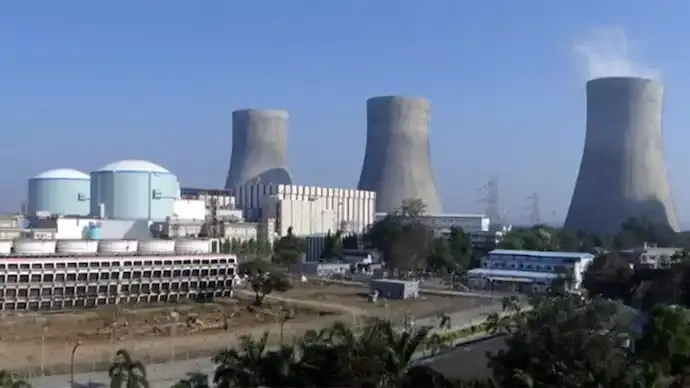
India has achieved a significant milestone in nuclear energy with the successful criticality of the 500 MWe Prototype Fast Breeder Reactor (PFBR) at Kalpakkam.
Developed by BHAVINI and Indira Gandhi Centre for Atomic Research (IGCAR), the reactor reached “first criticality” on April 6, marking the beginning of a self-sustaining nuclear chain reaction.
This achievement places India among a select group of nations with advanced fast breeder reactor technology.
Fast Breeder Reactors (FBRs) are considered one of the most advanced forms of nuclear technology. Unlike conventional reactors, they produce more fuel than they consume.
While countries like the United States and France invested heavily in similar technologies, they were unable to achieve sustained commercial success. Currently, only Russia operates a commercially running FBR.
India’s success at Kalpakkam marks a major technological breakthrough in this field.
The PFBR uses a unique approach to generate energy. It converts non-fissile materials into usable nuclear fuel, increasing efficiency and sustainability.
A key advantage of this system is its ability to utilize Thorium fuel cycle, an area where India has significant natural reserves.
This makes the technology highly relevant for India’s long-term energy strategy.
India possesses one of the largest thorium reserves in the world. The Kalpakkam reactor is a crucial step toward harnessing this resource.
Thorium-based energy offers several benefits:
This positions India to become a global leader in alternative nuclear fuel technologies.
The successful operation of the PFBR is expected to contribute significantly to India’s energy security. By producing more fuel internally, the country can reduce reliance on external energy sources.
Over time, this technology has the potential to power millions of households, supporting economic growth and industrial development.
India’s achievement stands out globally, especially considering the challenges faced by developed nations in implementing FBR technology.
The success of the Kalpakkam reactor demonstrates India’s growing capabilities in advanced scientific research and engineering.
The next phase will involve scaling up operations and integrating such reactors into the broader energy grid. Continued success could position India as a leader in next-generation nuclear energy.
This milestone is not just a technological success but also a strategic step toward energy independence.
77
Published: Apr 09, 2026