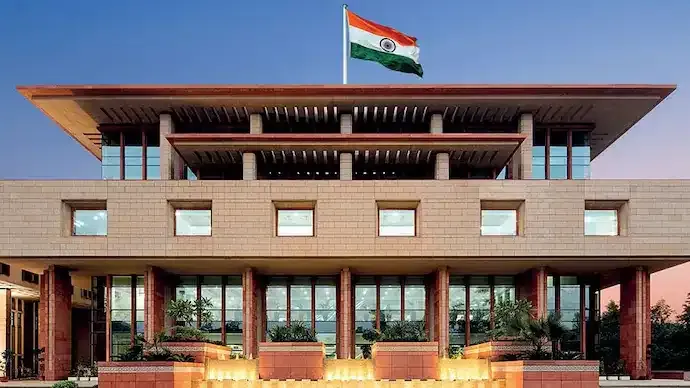
In a landmark decision, the Delhi High Court has ruled that no law student in India can be barred from appearing in examinations due to attendance shortage. The judgment marks a major turning point in Indian legal education and aims to prevent mental distress among students.
Key Highlights of the Judgment
A division bench of Justices Prathiba M. Singh and Amit Sharma issued a directive to the Bar Council of India (BCI), urging it to review and modify existing attendance norms to make them more flexible and student-friendly.
The court stated:
“Education cannot be made so stringent as to lead to mental trauma or the death of a student.”
The judgment comes nearly a decade after the 2016 suicide of law student Sushant Rohilla, who was barred from his exams for attendance shortage — a tragedy that had sparked national outrage and prompted the Supreme Court to take suo motu cognisance. The matter was later transferred to the Delhi High Court in 2017.
What the Delhi High Court Directed
The court’s directives aim to create a compassionate and transparent academic system across law institutions in India.
| Area | Directive | Purpose |
|---|
| Exam Eligibility | No student can be barred from exams for attendance shortage | Ensure fair academic opportunity |
| BCI Role | Review and modify attendance norms through consultation | Make rules inclusive and student-centric |
| Institutional Limits | Colleges cannot impose stricter attendance rules than BCI | Maintain national uniformity |
| Student Support System | Upload weekly attendance and notify parents monthly | Promote transparency |
| Remedial Classes | Mandatory extra classes for low-attendance students | Prevent academic setbacks |
Court’s Observations
The bench highlighted that rigid attendance rules often lead to mental distress, academic pressure, and even extreme actions like the 2016 Rohilla incident.
“The purpose of education is not punishment but growth. Law schools must nurture learning, not fear,” said Justice Prathiba Singh.
The court also instructed law colleges to take proactive measures to help students manage attendance through digital tracking, parental alerts, and flexible scheduling.
Bar Council of India’s Role
The BCI, the apex body governing legal education, has been tasked with conducting stakeholder consultations — involving students, faculty, parents, and administrators — before implementing new attendance rules.
The consultation process is expected to ensure that academic discipline and student well-being coexist harmoniously.
Until the review is complete, the High Court has barred all law colleges from preventing students from writing exams or progressing to the next semester due to attendance shortages.
⚖️ Why This Verdict Matters
-
Ends arbitrary disqualification of law students from exams.
-
Protects students’ mental health and academic future.
-
Ensures transparency through digital attendance tracking.
-
Reinforces the judiciary’s commitment to educational reform.
-
Sets a precedent for other professional courses with rigid attendance rules.
Conclusion
The Delhi High Court’s judgment signals a paradigm shift in how attendance and academic discipline are enforced in Indian law schools. By prioritising mental health, inclusivity, and educational access, the court has taken a decisive step to prevent future tragedies like the Sushant Rohilla case.
This ruling could pave the way for similar reforms in other professional fields where outdated attendance policies still cause undue stress for students.
Prev Article
AI and Mental Health: How Automation is Speeding Up Work but Slowing Down Wellbeing
Next Article
INI CET 2026: Aspirants Face 300–700 km Travel After AIIMS Allots Distant Exam Centres