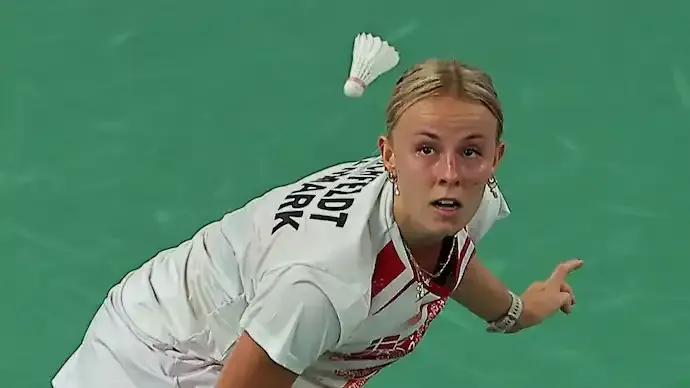
Criticism surrounding the India Open Super 750 intensified on Friday after Danish shuttler Mia Blichfeldt once again voiced strong concerns over playing conditions, raising serious doubts about New Delhi’s preparedness to host the BWF World Championships later this year.
Taking to social media, Blichfeldt described the environment at the tournament venue as “unacceptable” and “highly unprofessional,” stating that the conditions made it extremely difficult for players to focus on performance and preparation. Her remarks come amid growing discontent among international players competing in the capital.
This is not the first time the Danish shuttler has flagged issues at the India Open. Last year, she had highlighted hygiene concerns inside the KD Jadhav Indoor Hall, claiming that bird droppings were present in training areas. Her latest comments suggest that the issues remain unresolved despite repeated complaints.
“The past few days have been tougher than expected. Even after preparing mentally for difficult conditions, what we are facing here goes beyond what is reasonable at a World Tour Super 750 event,” Blichfeldt wrote. She added that players arrive at such tournaments expecting a professional environment that allows them to perform at their best, something she believes is currently lacking.
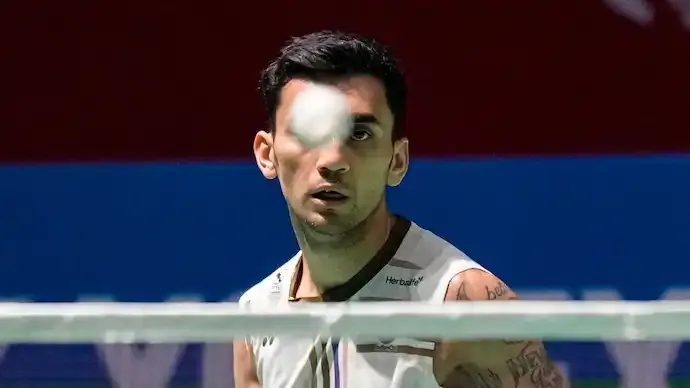
Her criticism has been echoed by several other players. Singapore’s Loh Kean Yew, a former world champion, has openly spoken about the impact of severe air pollution on energy levels, revealing that he uses protective masks whenever possible to limit exposure. Concerns over health, recovery, and long-term well-being have increasingly dominated conversations around the event.
The backlash prompted the Badminton Association of India to issue a clarification, acknowledging the concerns raised by athletes and assuring that corrective measures would be taken ahead of future events, including the World Championships scheduled in Delhi later this year.
However, Blichfeldt remained unconvinced. In her latest post, she questioned whether the city, under present circumstances, could realistically host a tournament of such global significance. She pointed out that constant stress and frustration among players undermine both competition quality and athlete welfare.
Adding to the controversy, Danish world No. 2 Anders Antonsen had earlier withdrawn from the tournament, citing extreme pollution levels. He revealed that this marked his third consecutive withdrawal from the India Open and said he did not believe the city was suitable for hosting elite badminton events under current environmental conditions.
Antonsen’s withdrawal, which reportedly resulted in a financial penalty from the Badminton World Federation, further intensified scrutiny of tournament conditions and governance.
In response, BAI officials maintained that the India Open serves as a preparatory event to test infrastructure and logistics ahead of the World Championships. They expressed confidence that conditions during the August global event would be significantly improved, promising a festival-like atmosphere for players and fans.
The controversy has wider implications beyond badminton. With India actively pitching itself as a future Olympic host, concerns over event management, environmental conditions, and athlete welfare are increasingly under the international spotlight. Critics argue that acknowledging and addressing these issues transparently is crucial if India aims to strengthen its reputation as a global sporting destination.
As the India Open continues, the focus is no longer limited to on-court action alone. Instead, questions around organisation, sustainability, and athlete safety have taken centre stage — issues that may ultimately shape perceptions of India’s readiness to host world-class sporting events.
Prev Article
India Open 2026: Lin Chun-yi Knocks Out Lakshya Sen to End India’s Campaign in Quarter-finals
Next Article
Bengaluru’s Chinnaswamy Stadium Gets Government Nod to Host IPL, International Matches