
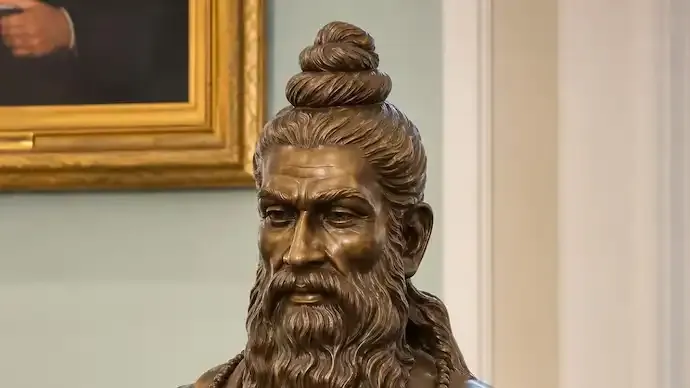
The Royal College of Surgeons of Edinburgh has unveiled a statue of Sushruta, the renowned ancient Indian physician whose contributions to surgery and medicine continue to be studied centuries later. The recognition has renewed global interest in India's rich medical heritage and the remarkable achievements documented in the ancient text known as the Sushruta Samhita.
Widely regarded as one of the earliest pioneers of surgery, Sushruta is often referred to as the "Father of Plastic Surgery" due to his detailed descriptions of reconstructive surgical techniques. The installation of his statue in Scotland reflects growing international recognition of the historical contributions made by ancient Indian scholars to science and medicine.
Who Was Sushruta?
Sushruta is believed to have lived around 600 BCE, approximately 2,600 years ago. He is considered one of the most influential physicians and surgeons in medical history.
His work formed the foundation of many surgical practices and medical teachings that would influence generations of healers and scholars. Sushruta's teachings were preserved in the Sushruta Samhita, one of the world's oldest known medical texts.
The text remains an important historical source for understanding ancient healthcare systems, surgical methods, anatomy, and disease management.
What Is the Sushruta Samhita?
The Sushruta Samhita is regarded as one of the most comprehensive medical compilations from the ancient world.
The text contains extensive information on:
- Approximately 1,120 diseases and medical conditions
- More than 700 medicinal plants
- Around 300 surgical and medical procedures
- Nearly 120 surgical instruments
- Principles of anatomy and physiology
- Diagnosis and treatment methods
- Medical ethics and patient care
Historians and medical researchers continue to study the text for insights into the development of healthcare practices in ancient civilizations.
Why Is Sushruta Called the Father of Plastic Surgery?
Sushruta is particularly known for describing advanced reconstructive surgical procedures centuries before modern surgical science emerged.
One of the most notable techniques documented in the Sushruta Samhita involved nasal reconstruction, often cited as an early form of plastic surgery. The procedure used skin grafting methods that demonstrated a sophisticated understanding of surgical repair.
His writings also covered:
- Cataract surgery
- Fracture management
- Wound treatment
- Surgical training methods
- Childbirth-related procedures
- Removal of foreign objects from the body
These innovations have led many historians to recognize Sushruta as a pioneer in surgical medicine.
Statue Unveiled at Prestigious Scottish Institution
The unveiling of Sushruta's statue at the Royal College of Surgeons of Edinburgh marks a significant acknowledgment of his contributions to global medical history.
The institution is among the world's oldest and most respected surgical organizations. By honoring Sushruta, it highlights the international nature of medical advancement and recognizes that important scientific knowledge has emerged from multiple civilizations throughout history.
The tribute also serves as a reminder of the historical connections between ancient medical traditions and modern healthcare practices.
Ancient Indian Knowledge Systems Gain Global Recognition
The recognition of Sushruta comes at a time when traditional knowledge systems and historical scientific achievements are receiving increased academic attention worldwide.
Researchers continue to explore ancient texts to understand how early civilizations approached healthcare, surgery, pharmacology, and disease management.
India's historical contributions in fields such as mathematics, astronomy, metallurgy, medicine, and philosophy have increasingly become subjects of global scholarly discussion.
Other Notable Contributions of Ancient Indian Medicine
Ancient Indian medical traditions contributed to several areas, including:
- Herbal medicine
- Surgical techniques
- Medical education
- Disease classification
- Preventive healthcare
- Holistic treatment approaches
Many of these concepts influenced later medical developments across different regions.
Why Sushruta's Legacy Still Matters Today
Although modern medicine has evolved dramatically over the centuries, Sushruta's work remains historically significant because it demonstrates the advanced understanding of healthcare that existed in ancient India.
His emphasis on observation, practical training, surgical precision, and patient care continues to attract interest among historians of medicine.
The Sushruta Samhita also offers valuable insight into how ancient societies approached scientific inquiry and medical education long before the establishment of modern medical institutions.
What This Recognition Means
The installation of Sushruta's statue in Scotland is more than a symbolic tribute. It represents growing international appreciation for the diverse origins of medical knowledge and the role ancient civilizations played in shaping scientific progress.
Such recognitions encourage broader discussions about the history of medicine and help bring attention to important figures whose contributions continue to influence understanding of healthcare and surgery.
Conclusion
The unveiling of Sushruta's statue at the Royal College of Surgeons of Edinburgh has once again placed the spotlight on one of history's most influential physicians. Through the Sushruta Samhita, Sushruta documented hundreds of surgical procedures, medical instruments, diseases, and treatments, leaving behind a legacy that continues to be studied thousands of years later. The honour serves as a powerful reminder of ancient India's remarkable contributions to the evolution of medicine and surgery.
FAQ SECTION
Q1. Who was Sushruta?
Sushruta was an ancient Indian physician and surgeon believed to have lived around 600 BCE. He is widely regarded as the Father of Plastic Surgery.
Q2. Why has Scotland honoured Sushruta?
The Royal College of Surgeons of Edinburgh unveiled a statue to recognize Sushruta's pioneering contributions to surgery and medical science.
Q3. What is the Sushruta Samhita?
The Sushruta Samhita is an ancient Indian medical text containing information on diseases, surgical procedures, medicinal plants, anatomy, and healthcare practices.
Q4. How many diseases were documented in the Sushruta Samhita?
The text recorded approximately 1,120 diseases and medical conditions.
Q5. Why is Sushruta called the Father of Plastic Surgery?
He described reconstructive surgical techniques, including nasal reconstruction procedures, centuries before modern plastic surgery developed.
Q6. What medical topics are covered in the Sushruta Samhita?
The text discusses surgery, anatomy, medicinal plants, diagnosis, treatment methods, medical ethics, and patient care.


Conversation
Be kind and stay on topic. Comments are moderated; abuse, spam and personal attacks are removed. Report a problem