
Indian Startups Lay Off 4,500 Employees in 8 Months: Is AI to Blame?

Indian Startups Lay Off 4,500 Employees in 8 Months: Is AI to Blame?

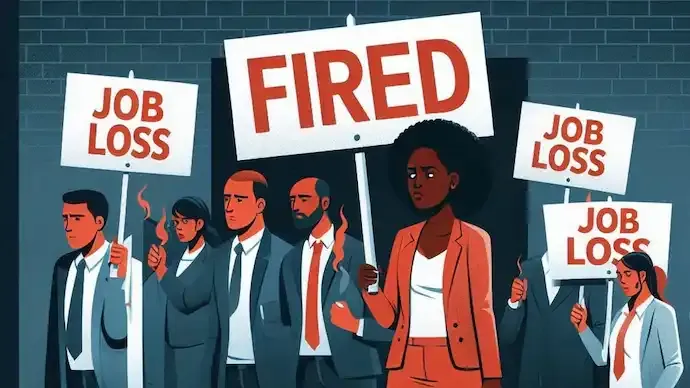
Indian startups have laid off more than 4,500 employees over the past eight months, raising questions about whether artificial intelligence is accelerating job losses or if deeper business challenges are driving the trend.

According to industry data cited from executive search firm Longhouse Consulting, layoffs began increasing around July last year. However, early indicators suggest that the primary reasons may be linked to regulatory shifts, funding constraints, and investor pressure to achieve profitability rather than AI alone.

Regulatory and Funding Pressures at Play

One of the biggest contributors to job losses was the sudden regulatory action affecting the online real-money gaming sector. The crackdown led several companies to suspend or shut down operations, resulting in immediate workforce reductions.

Beyond gaming, the broader startup ecosystem has been facing tighter capital flows. Venture funding has become more selective, with investors prioritising sustainable business models over aggressive expansion. This shift has pushed founders to restructure teams and focus on revenue-generating roles.

Startups are now operating with leaner structures, adding incremental hires only where necessary. Senior-level hiring continues in critical areas, but large-scale recruitment drives have slowed significantly compared to previous years.

AI’s Role in Workforce Restructuring

While artificial intelligence is influencing business models, experts suggest it is not the sole cause of layoffs. Many new-age companies are being built as “AI-first” organisations, designed to operate with smaller teams from the outset.

For example, home decor startup Livspace reportedly laid off around 1,000 employees as part of an automation-led efficiency drive. The company clarified that cost optimisation and AI integration were key factors behind the decision.

Other startups have also announced workforce reductions. Companies such as Zepto, Zupee, Porter, and Krutrim have implemented job cuts across different verticals.

However, some companies have denied that artificial intelligence directly replaced affected employees. Zepto, for instance, previously stated that its layoffs were aimed at reducing operational costs in a highly competitive quick-commerce market rather than AI-driven optimisation.

Zupee also described its restructuring decisions as part of aligning the organisation with long-term sustainability goals. Leadership statements emphasised that such steps, though difficult, were necessary to ensure future stability.

Global Context and Structural Shift

Globally, the technology sector continues to experience restructuring pressures. Higher interest rates, cautious investor sentiment, and profitability demands have forced startups worldwide to re-evaluate growth strategies.

In India, the ecosystem appears to be entering a phase of disciplined expansion rather than rapid hiring. While AI is undoubtedly reshaping operational efficiency, experts believe that macroeconomic conditions, regulatory disruptions, and funding realignments are currently the dominant forces behind workforce reductions.

The coming months will likely reveal whether these layoffs represent a temporary correction or a longer-term shift in how Indian startups scale in an AI-driven economy.

Prev Article
IDFC First Bank Returns Rs 583 Crore After Fraud; Can Trust Be Rebuilt?
Next Article
Narayana Murthy Warns Youth on AI After 70-Hour Workweek Debate

Related to this topic: