Shopping cart
Your cart empty!


Your cart empty!
Terms of use dolor sit amet consectetur, adipisicing elit. Recusandae provident ullam aperiam quo ad non corrupti sit vel quam repellat ipsa quod sed, repellendus adipisci, ducimus ea modi odio assumenda.
Lorem ipsum dolor sit amet consectetur adipisicing elit. Sequi, cum esse possimus officiis amet ea voluptatibus libero! Dolorum assumenda esse, deserunt ipsum ad iusto! Praesentium error nobis tenetur at, quis nostrum facere excepturi architecto totam.
Lorem ipsum dolor sit amet consectetur adipisicing elit. Inventore, soluta alias eaque modi ipsum sint iusto fugiat vero velit rerum.
Sequi, cum esse possimus officiis amet ea voluptatibus libero! Dolorum assumenda esse, deserunt ipsum ad iusto! Praesentium error nobis tenetur at, quis nostrum facere excepturi architecto totam.
Lorem ipsum dolor sit amet consectetur adipisicing elit. Inventore, soluta alias eaque modi ipsum sint iusto fugiat vero velit rerum.
Dolor sit amet consectetur adipisicing elit. Sequi, cum esse possimus officiis amet ea voluptatibus libero! Dolorum assumenda esse, deserunt ipsum ad iusto! Praesentium error nobis tenetur at, quis nostrum facere excepturi architecto totam.
Lorem ipsum dolor sit amet consectetur adipisicing elit. Inventore, soluta alias eaque modi ipsum sint iusto fugiat vero velit rerum.
Sit amet consectetur adipisicing elit. Sequi, cum esse possimus officiis amet ea voluptatibus libero! Dolorum assumenda esse, deserunt ipsum ad iusto! Praesentium error nobis tenetur at, quis nostrum facere excepturi architecto totam.
Lorem ipsum dolor sit amet consectetur adipisicing elit. Inventore, soluta alias eaque modi ipsum sint iusto fugiat vero velit rerum.
Do you agree to our terms? Sign up
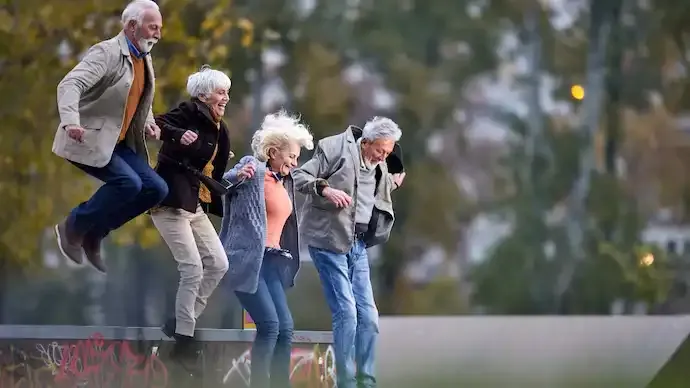
Fitness for older adults has traditionally focused on low-intensity activities like walking, yoga, and light stretching. While these practices support basic mobility and relaxation, experts are now questioning whether they are enough to ensure healthy ageing.
A new trend emerging in Singapore is challenging this idea. Known as geriatric parkour, this approach encourages seniors to move more dynamically and interact with their environment in ways that improve strength, balance, and agility.
Geriatric parkour is a modified version of traditional parkour, an urban activity that involves navigating obstacles through climbing, balancing, and controlled movements. Unlike its high-risk counterpart, this version is carefully designed for older adults.
Participants are trained to:
The focus is not on speed or thrill, but on functional fitness—helping seniors perform everyday activities more confidently and safely.
In Singapore, retirees are increasingly adopting this method as a way to stay active and independent. The idea is to go beyond passive exercise and prepare the body for real-world challenges, such as avoiding falls or navigating crowded spaces.
This shift reflects a broader understanding that ageing well is not just about slowing down, but about maintaining physical capability and resilience.
India’s ageing population is growing rapidly, and with it comes the need for better senior fitness solutions. While traditional practices like yoga already offer significant benefits, incorporating elements of geriatric parkour could enhance outcomes.
Potential benefits for Indian seniors include:
However, adapting this trend to India would require structured programs, trained instructors, and safe environments.
India already has a strong foundation in wellness through yoga and Ayurveda. Integrating these with modern movement-based training like geriatric parkour could create a more holistic approach to ageing.
For example, combining balance-focused yoga poses with controlled obstacle navigation may provide both flexibility and functional strength.
Despite its potential, there are some barriers to widespread adoption in India:
Addressing these challenges will be essential for making such programs accessible and acceptable.
The rise of geriatric parkour signals a broader shift in how societies approach ageing. Instead of focusing solely on comfort and rest, there is a growing emphasis on active ageing—staying physically capable and independent for longer.
For India, adopting such innovative approaches could significantly improve the quality of life for its senior population.
97
Published: Apr 15, 2026

All India Story is your trusted source for comprehensive and up-to-the-minute news coverage across India. Bringing you the latest on politics, business, technology, entertainment, sports, and more, we are dedicated to keeping you informed with accurate, engaging, and insightful stories from every corner of the nation.