

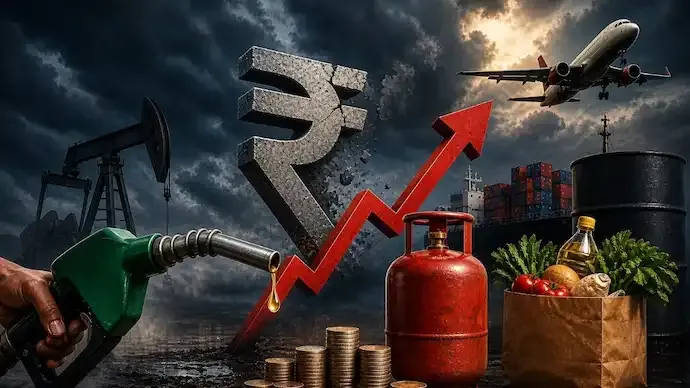

After a period of relative relief from rising prices, inflation concerns are once again returning to the spotlight for Indian households. Economists are closely monitoring global developments as rising crude oil prices and higher inflation in major economies threaten to put fresh pressure on India's economy.
Recent data from the United States showed consumer inflation climbing to 4.2% in May, its highest level in nearly three years. Analysts attribute much of the increase to higher energy prices driven by geopolitical tensions in West Asia, which have disrupted global markets and raised concerns about future fuel costs.
While India is not currently facing an immediate inflation crisis, experts warn that external risks are increasing and could eventually impact household budgets if global conditions worsen.

Why Global Oil Prices Matter to India
India is one of the world's largest importers of crude oil and relies heavily on international markets to meet its energy requirements.
When global crude oil prices rise, the impact can spread across the economy through:
- Higher fuel costs
- Increased transportation expenses
- Rising manufacturing costs
- More expensive logistics operations
- Costlier imports
These factors can eventually lead to higher prices for everyday goods and services.
Because energy influences nearly every sector of the economy, sustained increases in oil prices are often viewed as one of the biggest inflation risks for India.
West Asia Tensions Fuel Market Uncertainty
The latest inflation concerns have emerged amid escalating geopolitical tensions in West Asia.
The region remains critical to global oil production and energy exports. Any disruption to supply chains, shipping routes, or production facilities can quickly affect international crude oil prices.
Financial markets have responded cautiously as investors assess the potential impact of ongoing regional conflicts on global energy supplies.
Economists note that even the possibility of supply disruptions can push oil prices higher, creating inflationary pressures worldwide.
Could Everyday Expenses Increase?
For Indian consumers, the biggest concern is whether rising global prices will eventually translate into higher household expenses.
If oil prices remain elevated for a prolonged period, sectors that could experience cost increases include:
- Transportation
- Food distribution
- Consumer goods
- Household products
- Utility services
- Travel and tourism
However, experts stress that the impact is not automatic and depends on several factors, including government policies, currency movements, and domestic supply conditions.
At present, economists believe inflation risks are increasing but remain manageable.
RBI Monitoring Inflation Risks Closely
The Reserve Bank of India has repeatedly emphasized that inflation remains a key focus area for policymakers.
While recent inflation trends in India have remained relatively stable, the central bank continues to monitor global developments that could affect domestic price levels.
The RBI has identified crude oil prices as one of the most important external risks to India's inflation outlook.
Financial experts believe the central bank will closely track energy markets before making any major policy adjustments.
Strong US Inflation Adds Another Challenge
The resurgence of inflation in the United States has also attracted attention from economists.
Higher inflation in the world's largest economy can influence:
- Global interest rates
- Currency markets
- Capital flows
- Commodity prices
- International investment decisions
A stronger inflation environment in developed economies can create additional challenges for emerging markets, including India.
As a result, policymakers are carefully assessing how global economic conditions may affect domestic growth and inflation.
Why India Is Better Prepared Than Before
Despite growing concerns, many economists believe India is better positioned today than during previous inflationary periods.
Several factors support this view:
- Improved inflation management
- Better food supply chains
- Stronger foreign exchange reserves
- More diversified energy procurement
- Enhanced monetary policy framework
These strengths could help reduce the impact of external shocks on domestic consumers.
However, experts caution that prolonged geopolitical instability or a sustained surge in crude oil prices could still create challenges.
What Should Consumers Expect?
At present, there is no indication of an immediate inflation shock for Indian households.
Most economists expect inflation to remain under control unless global energy prices rise sharply and remain elevated for an extended period.
Consumers are advised to stay informed about economic developments but avoid panic over short-term fluctuations.
For now, the focus remains on how global energy markets evolve and whether geopolitical tensions continue to place upward pressure on oil prices.
Outlook Remains Cautious
While India has enjoyed a period of easing inflation, the latest developments serve as a reminder that global events can quickly influence domestic economic conditions.
With oil prices remaining one of the most significant risks to inflation, policymakers, businesses, and households will continue monitoring developments closely.
Whether inflation becomes a major concern again will largely depend on the direction of global energy markets in the months ahead.






Conversation
Be kind and stay on topic. Comments are moderated; abuse, spam and personal attacks are removed. Report a problem