
Israel Iran Intelligence War: Mossad Strategy and Iran’s Security Challenges

Israel Iran Intelligence War: Mossad Strategy and Iran’s Security Challenges

The ongoing conflict between Israel and Iran is increasingly being shaped not just by military strikes but by a silent and sophisticated intelligence war. Experts suggest that Israel’s intelligence operations have become one of its most powerful tools, creating significant challenges for Iran’s internal security.

This evolving battleground highlights how modern warfare is shifting from visible combat to covert operations.

Legacy of Eli Cohen and Modern Espionage

The foundation of Israel’s intelligence strategy can be traced back to figures like Eli Cohen, who infiltrated Syria’s political and military circles in the 1960s. Operating under a false identity, he provided critical intelligence that helped shape military decisions.

His legacy continues to influence modern intelligence practices, where infiltration of inner circles is seen as a decisive advantage.

Mossad’s Expanding Network Inside Iran

Israel’s intelligence agency, Mossad, is believed to have developed an extensive network within Iran. This network reportedly includes informants, technological surveillance systems, and covert operatives working within sensitive areas.

Such infiltration allows for precise targeting and strategic planning, often giving Israel a tactical edge.

Rise of AI-Driven Espionage

One of the most significant developments in recent years is the use of artificial intelligence in intelligence operations. AI tools are being used to analyse data, identify patterns, and map high-value targets with increased accuracy.

This technological shift has made espionage more efficient and harder to detect, intensifying pressure on Iran’s security systems.

Internal Vulnerabilities in Iran

Iran’s biggest challenge appears to be internal vulnerabilities rather than external threats alone. Reports suggest that internal dissent, combined with advanced surveillance techniques, has made it difficult for authorities to identify and neutralise threats.

The inability to track the full extent of infiltration raises serious concerns about national security.

Focus on Strategic Targeting

The intelligence-driven approach allows for highly targeted operations, including strikes on key infrastructure and individuals. This strategy reduces the need for large-scale military engagement while still achieving significant impact.

It reflects a shift towards precision-based conflict rather than conventional warfare.

Leadership and Security Concerns

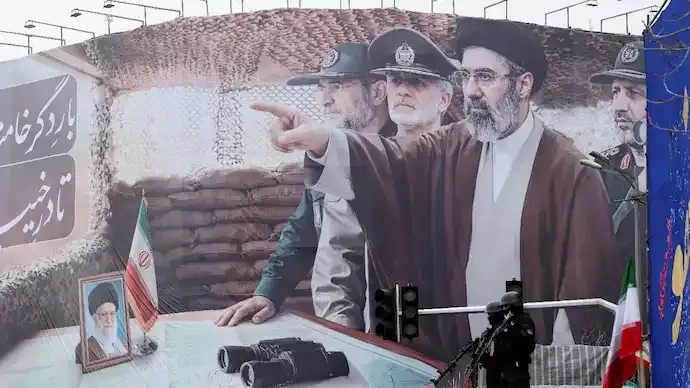
The evolving intelligence landscape has also raised concerns around the safety of Iran’s leadership and strategic assets. Figures linked to the country’s leadership structure, including Mojtaba Khamenei, are increasingly seen as potential targets in this covert conflict environment.

A New Era of Invisible Warfare

The Israel-Iran conflict demonstrates how intelligence operations have become central to modern warfare. Invisible enemies, data-driven strategies, and internal infiltration are now shaping outcomes more than traditional battlefield engagements.

As the situation develops, the intelligence war is likely to remain a critical factor influencing the broader geopolitical landscape.

Prev Article
US Warship USS Tripoli Heads to Strait of Hormuz With 2,000 Marines
Next Article
Canada Says No Link Between India Government and Violent Crimes: RCMP

Related to this topic: