
Israel US Iran Conflict: Netanyahu’s Strategy and Trump’s Role Explained

Israel US Iran Conflict: Netanyahu’s Strategy and Trump’s Role Explained

The ongoing conflict involving Israel, Iran, and the United States has taken a complex turn, raising questions about strategic control and global power dynamics. Recent developments suggest a deeper alignment and coordination between key players, even as public narratives sometimes indicate otherwise.

The situation highlights how geopolitical decisions in the Middle East continue to influence global stability.

Strike on South Pars Gas Field Sparks Controversy

On March 18, 2026, Israel carried out a major strike on the South Pars natural gas field in the Persian Gulf, one of the world’s largest energy reserves. The attack drew global attention due to its scale and potential economic impact.

Initial reactions suggested that the United States was not informed in advance. However, subsequent reports indicated that there may have been coordination between Washington and Tel Aviv on strategically significant operations.

Conflicting Signals from Leadership

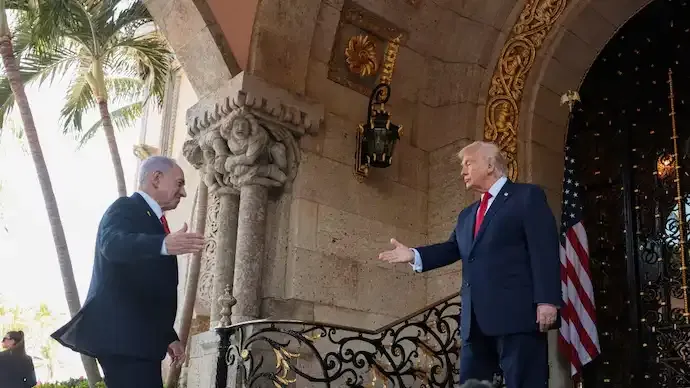
Donald Trump publicly stated that the United States had no prior knowledge of the strike, describing it as an independent Israeli action. His remarks created confusion about the level of coordination between the two allies.

Soon after, officials suggested otherwise, indicating that such operations are often closely aligned, especially when they involve high-value strategic targets.

Netanyahu’s Strategic Positioning

Benjamin Netanyahu is seen as playing a central role in shaping Israel’s military and geopolitical strategy. Analysts suggest that his decisions have effectively influenced the involvement of global powers, particularly the United States.

The approach reflects a broader strategy of targeting critical infrastructure and key figures to weaken adversaries.

US Involvement and Long-Term Implications

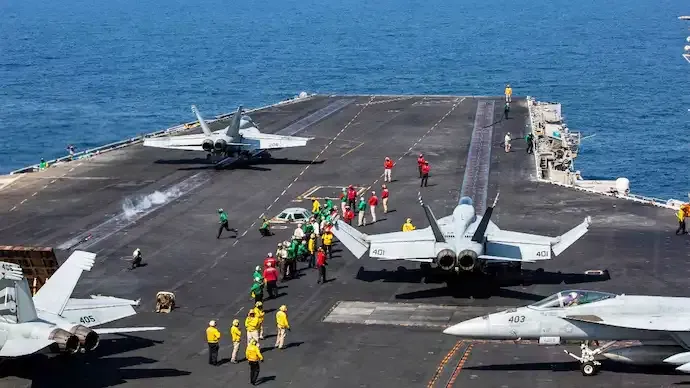
The United States finds itself deeply engaged in the conflict, both militarily and diplomatically. The situation raises concerns about long-term commitments, financial costs, and strategic consequences.

Experts believe that such involvement could lead to prolonged geopolitical entanglements, with ripple effects across global markets and alliances.

Pattern of Targeted Military Operations

Israel’s actions in the region follow a pattern of precise, high-impact strikes. Similar strategies have been used in operations involving groups like Hamas and Hezbollah, focusing on key assets and leadership targets.

The strike on South Pars represents an escalation, as it targets a major energy infrastructure with global significance.

Geopolitical and Economic Impact

The conflict is not only a military issue but also an economic one. Attacks on energy infrastructure can disrupt global supply chains, impact oil and gas prices, and create uncertainty in international markets.

Such developments have far-reaching consequences beyond the immediate region.

A Complex Power Dynamic

The evolving situation reflects a complex power dynamic where regional actions influence global superpowers. The interplay between Israel, Iran, and the United States continues to shape the trajectory of the conflict.

As tensions remain high, the world is closely watching how these relationships develop and what it means for future global stability.

Prev Article
IRGC Spokesperson Ali Mohammad Naini Killed in Israeli Strike
Next Article
US Warship USS Tripoli Heads to Strait of Hormuz With 2,000 Marines

Related to this topic: