
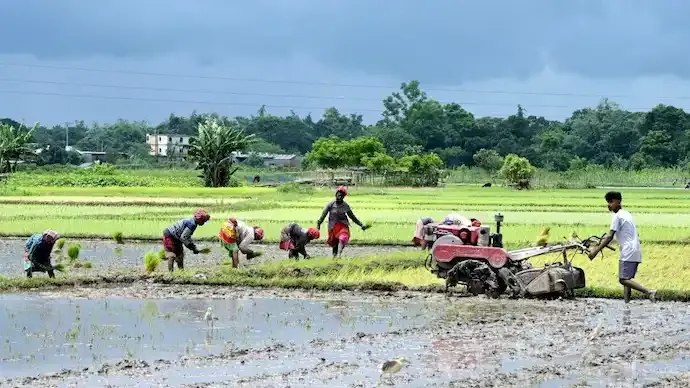
India's kharif sowing season has started on a weak note, with fresh government data showing a nearly 23% decline in the total area under cultivation compared to the same period last year. The slowdown has been linked to the delayed progress of the southwest monsoon, which has reduced soil moisture and delayed planting across several agricultural regions.
The decline in sowing has affected key crops, including rice, pulses, oilseeds and cotton, raising concerns about agricultural output if rainfall does not improve in the coming weeks.
Featured Snippet
Government data shows India's kharif sowing has fallen by nearly 23% compared to last year due to delayed southwest monsoon rains. The reduced planting area has impacted major crops such as rice, pulses, cotton and oilseeds, highlighting the importance of timely rainfall for the agricultural season.
Key Highlights
- Kharif sowing has declined by nearly 23% year-on-year.
- Delayed southwest monsoon has slowed crop planting.
- Rice, pulses, cotton and oilseeds have recorded lower sowing.
- Farmers in several regions are waiting for adequate rainfall.
- The progress of the monsoon will determine how quickly sowing recovers.
Government Data Shows Sharp Decline
According to the latest data released by the Ministry of Agriculture and Farmers' Welfare, the total area under kharif cultivation stood at 182.72 lakh hectares as of June 25, compared to 236.46 lakh hectares during the same period last year.
The figures indicate a significant slowdown in sowing activity during the early part of the season.
Why Has Kharif Sowing Declined?
The primary reason for the decline is the delayed and uneven advance of the southwest monsoon.
Insufficient rainfall has left many agricultural fields with inadequate soil moisture, making it difficult for farmers to begin sowing on schedule.
Many growers are waiting for more consistent rainfall before planting major crops to reduce the risk of poor germination and crop loss.
Which Crops Have Been Affected?
The delayed monsoon has impacted several important kharif crops, including:
- Rice
- Pulses
- Cotton
- Oilseeds
These crops depend heavily on timely rainfall during the early stages of cultivation.
Any prolonged delay could influence crop productivity, although sowing activity often accelerates if rainfall improves during July.
Why Kharif Crops Matter
Kharif crops play a vital role in India's agricultural economy and food security.
They contribute significantly to:
- Food grain production.
- Farmer incomes.
- Rural employment.
- Edible oil supply.
- Cotton production.
- Inflation and food prices.
A healthy monsoon is therefore crucial for maintaining agricultural output and supporting the broader economy.
What Is the Impact of El Niño?
Weather experts have linked the weaker monsoon conditions to El Niño, a climate pattern that can influence rainfall across parts of the world, including India.
El Niño does not always result in below-normal rainfall across the country, but it can contribute to delayed or uneven monsoon activity in some years.
The overall agricultural impact will depend on rainfall distribution during the remaining weeks of the monsoon season.
What Could Happen Next?
Agricultural experts note that the current decline in sowing may narrow if monsoon rainfall strengthens during July, which is traditionally one of the most active months for kharif planting.
State governments and agricultural departments are expected to continue monitoring rainfall patterns and advising farmers on suitable sowing schedules based on local weather conditions.
Conclusion
India's kharif sowing has experienced a slow start due to delayed monsoon rains, resulting in a nearly 23% decline in cultivated area compared with last year. While rice, pulses, cotton and oilseeds have all been affected, the coming weeks will be critical. Improved rainfall could help farmers accelerate sowing and reduce the overall impact on agricultural production during the 2026 kharif season.
FAQs
1. Why has kharif sowing declined in 2026?
Delayed and uneven southwest monsoon rainfall has reduced soil moisture, preventing timely planting in many regions.
2. How much has kharif sowing fallen?
Government data shows a decline of nearly 23% compared to the same period last year.
3. Which crops are most affected?
Rice, pulses, cotton and oilseeds have recorded lower sowing during the early part of the season.
4. What is El Niño?
El Niño is a climate phenomenon that can influence global weather patterns, including India's monsoon in some years.
5. Can the sowing deficit recover?
Yes. If rainfall improves during July, farmers may accelerate sowing and reduce the current gap.
6. Why is kharif sowing important?
Kharif crops contribute significantly to India's food production, farmer incomes and rural economy.



Conversation
Be kind and stay on topic. Comments are moderated; abuse, spam and personal attacks are removed. Report a problem