
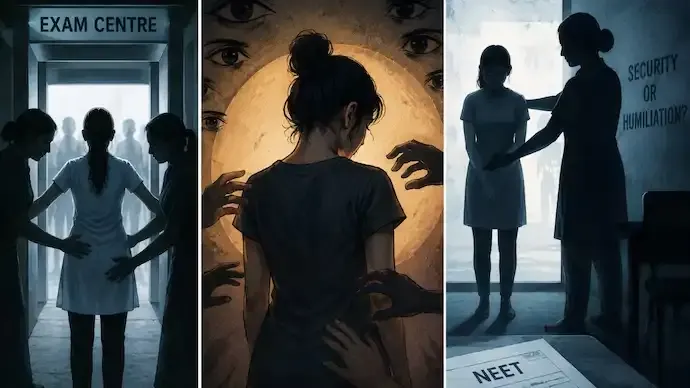
A growing controversy surrounding examination security procedures has sparked widespread discussion after several NEET candidates alleged that they were subjected to invasive frisking practices at examination centres.
The issue gained attention after a Re-NEET candidate claimed she was asked personal questions and subjected to checks that she found humiliating and distressing. Following her account, numerous students took to social media to share similar experiences, raising concerns about the balance between examination security and personal dignity.
The allegations have triggered debate among students, parents, educators, and policymakers regarding the conduct of frisking procedures during high-stakes examinations.
Allegations Trigger Nationwide Discussion
The controversy emerged after a student appearing for a Re-NEET examination publicly described her experience during the security screening process at an examination centre.
According to her account, she was questioned about her menstrual status and allegedly asked to prove that she was wearing a sanitary pad.
Following the viral post, many other candidates shared stories describing various forms of security checks that they believed crossed personal boundaries.
These accounts have amplified calls for a review of examination security protocols.
Students Describe Disturbing Experiences
Several candidates who responded online described incidents involving:
- Detailed clothing inspections
- Questions about personal health matters
- Repeated frisking
- Checks involving undergarments
- Verification of sanitary products
- Delays and embarrassment before entering exam halls
It is important to note that these are allegations shared by students, and authorities may conduct investigations or reviews to determine the facts surrounding individual incidents.
Why Frisking Is Conducted During NEET
NEET is one of India's largest and most competitive entrance examinations.
Security measures are implemented to:
- Prevent cheating
- Detect prohibited electronic devices
- Ensure fairness
- Maintain examination integrity
- Protect the credibility of results
Because of previous incidents involving unfair means and technological devices, examination authorities often employ strict screening procedures.
However, experts argue that security measures must also respect candidates' privacy and dignity.
Concerns Over Student Dignity
The controversy has highlighted concerns regarding how security checks are conducted, particularly for female candidates.
Students and education advocates argue that:
Key Concerns Include
- Personal privacy
- Emotional distress
- Gender sensitivity
- Lack of standardised procedures
- Potential humiliation before exams
Many believe that candidates should not be subjected to procedures that create unnecessary psychological pressure before a major examination.
Mental Health Impact on Students
Competitive examinations such as NEET already place significant pressure on candidates.
Students often spend years preparing for the examination, making test day an emotionally intense experience.
Potential Effects of Distressing Experiences
- Increased anxiety
- Loss of concentration
- Emotional distress
- Reduced confidence
- Exam-day panic
Mental health experts have frequently emphasized that examination environments should minimize unnecessary stress wherever possible.
The Need for Clear Guidelines
The controversy has renewed discussions about the need for transparent and standardized frisking procedures across examination centres.
Experts suggest that security protocols should clearly define:
- Acceptable screening methods
- Gender-sensitive practices
- Privacy safeguards
- Complaint mechanisms
- Training requirements for staff
Uniform implementation can help reduce confusion and prevent inconsistent practices.
Balancing Security and Human Dignity
One of the central questions raised by the controversy is how examination authorities can balance strict security requirements with respect for individual rights.
What Students and Parents Want
- Fair examination processes
- Effective anti-cheating measures
- Respectful treatment
- Clear communication
- Consistent procedures
Many stakeholders believe that both security and dignity can coexist if protocols are carefully designed and properly implemented.
Social Media Amplifies Student Voices
The incident demonstrates how social media has become an important platform for students to share experiences and raise concerns.
Online discussions have brought attention to issues that might otherwise remain unnoticed and have encouraged broader conversations about examination practices.
The widespread response indicates that the concerns expressed by students resonate with many candidates who have appeared for competitive examinations.
What Authorities May Need to Review
The controversy could prompt discussions regarding:
- Examination centre management
- Frisking procedures
- Staff training
- Candidate grievance systems
- Gender-sensitive screening policies
Any future review would likely focus on ensuring both exam security and candidate welfare.
Why This Story Matters
The issue extends beyond a single examination centre. It raises broader questions about how educational institutions and testing agencies treat students during high-pressure academic events.
As millions of students participate in competitive examinations each year, ensuring that security measures remain respectful, transparent, and proportionate is increasingly important.
The debate may influence future conversations about examination reforms and student rights.
Conclusion
The NEET frisking controversy has sparked a nationwide discussion about privacy, dignity, and examination security. While strict screening procedures play an important role in maintaining fairness, allegations from students have raised concerns about whether some practices may be crossing acceptable boundaries. As calls for greater transparency and standardized guidelines grow, the focus remains on finding a balance between safeguarding exam integrity and protecting the rights and well-being of candidates.
FAQ SECTION
Q1. What is the NEET frisking controversy?
The controversy involves allegations by students who claim they experienced invasive security checks during NEET examinations.
Q2. Why are students raising concerns?
Some candidates allege that certain frisking procedures affected their privacy, dignity, and emotional well-being.
Q3. Why are security checks conducted during NEET?
They are intended to prevent cheating and maintain the integrity of the examination process.
Q4. Have multiple students shared similar experiences?
Several students have shared accounts on social media describing experiences they considered invasive or uncomfortable.
Q5. What issues are being debated?
The debate centers on balancing exam security with privacy, dignity, and student welfare.
Q6. Could examination procedures be reviewed?
Public discussion and concerns raised by candidates may lead to reviews of existing frisking and screening guidelines.



Conversation
Be kind and stay on topic. Comments are moderated; abuse, spam and personal attacks are removed. Report a problem