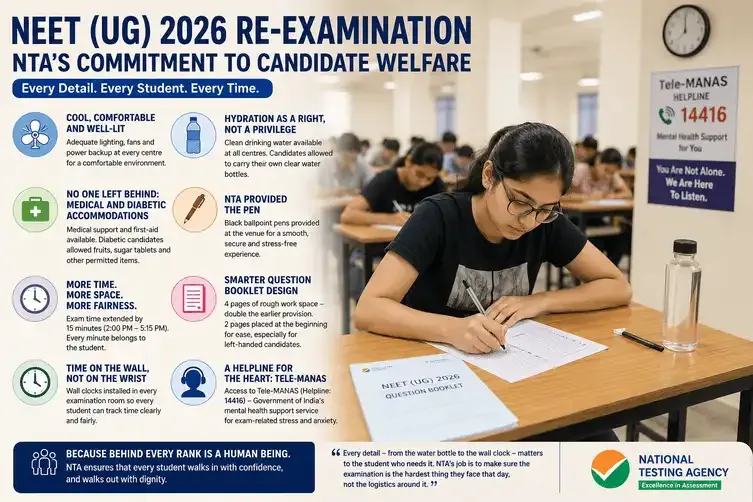
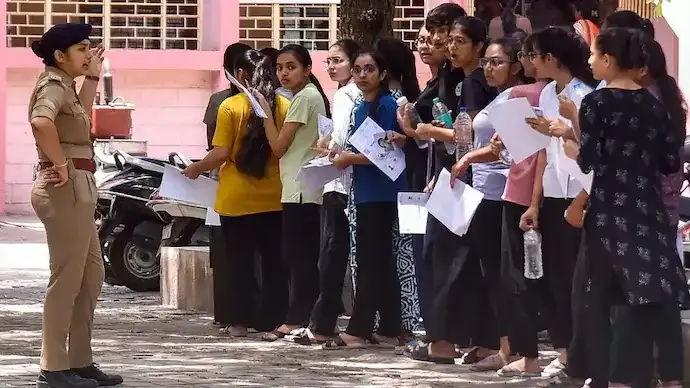
The NEET (UG) 2026 Re-Examination was not only about ensuring the integrity of one of India's largest entrance examinations—it was also designed with a strong emphasis on student welfare, comfort and fairness. Recognising the physical and emotional pressure faced by lakhs of aspirants, the National Testing Agency (NTA) introduced several measures aimed at creating a safe, supportive and stress-free examination environment.
From providing clean drinking water and medical assistance to extending examination time and integrating mental health support, the re-examination reflected a student-centric approach that focused on reducing avoidable stress while maintaining the highest standards of examination security.
Comfortable Examination Centres for Better Performance
To help students remain focused during the examination, every examination centre was equipped with essential facilities including:
* Adequate lighting
* Functional ceiling fans
* Reliable power backup
Considering the intense summer temperatures in many parts of the country, these arrangements ensured candidates could complete the examination in a comfortable environment without interruptions caused by heat or electricity failures.
Clean Drinking Water Made Available
Recognising that hydration plays an important role in maintaining concentration during a three-hour examination, NTA ensured the availability of clean drinking water at all examination centres.
In addition, candidates were permitted to carry transparent water bottles, allowing them to remain hydrated without compromising examination security.
This simple yet practical provision helped reduce unnecessary anxiety among students.
Medical Support and Special Arrangements for Diabetic Candidates
Basic medical assistance and first-aid facilities were available at examination centres to respond promptly in case of any health emergency.
NTA also continued its inclusive approach towards candidates with medical needs.
Diabetic candidates were permitted to carry approved food items such as:
* Fruits
* Sugar tablets
* Other permitted consumables
These accommodations ensured that candidates with health conditions could appear for the examination without compromising their well-being.
NTA Provided Black Ballpoint Pens
To simplify entry procedures and strengthen examination security, the National Testing Agency supplied black ballpoint pens to every candidate at the examination centre.
The initiative offered multiple benefits:
* Reduced items carried into the examination hall
* Uniform stationery for all candidates
* Better examination management
* Lower risk of malpractice
Candidates could focus entirely on the examination without worrying about carrying the correct pen.
Extended Examination Time Ensured Fairness
The NEET UG 2026 Re-Examination duration was increased by 15 minutes, extending the examination timing from 2:00 PM to 5:15 PM.
The additional time ensured that security checks, attendance verification and invigilation procedures did not reduce the actual writing time available to students.
The move reinforced NTA's commitment to fairness for every candidate.
More Rough Work Space for Better Problem Solving
The question booklet was redesigned to provide four pages of rough work, offering students significantly more space than before.
One particularly thoughtful improvement was the placement of two rough sheets immediately after the instruction page.
This design proved especially beneficial for:
* Left-handed candidates
* Students solving lengthy calculations
* Better organisation of rough work
* Improved convenience during problem solving
The change reflected attention to practical details that directly influence the examination experience.
Wall Clocks Installed in Every Examination Room
Every examination room was equipped with an official wall clock, enabling candidates to monitor time without relying on personal watches or electronic devices.
This helped students:
* Manage time efficiently
* Reduce stress
* Maintain equal access to timekeeping
* Focus better throughout the examination
Although a simple facility, it contributed significantly to the overall examination experience.
Mental Health Support Through Tele-MANAS
Among the most significant student welfare initiatives was the inclusion of Tele-MANAS (Helpline: 14416) as part of the examination ecosystem.
The Government of India's mental health support service offered candidates access to trained counsellors who could assist students experiencing:
* Examination anxiety
* Stress
* Emotional pressure
* Mental health concerns
The initiative acknowledged that student well-being extends beyond academics and that emotional support is equally important during high-pressure competitive examinations.
A Student-First Approach to Examination Management
Taken together, these measures demonstrate an evolving approach towards conducting national entrance examinations.
Rather than focusing solely on security and logistics, the NEET UG 2026 Re-Examination also prioritised:
* Candidate comfort
* Inclusivity
* Health and safety
* Mental well-being
* Equal opportunities for all examinees
The combination of physical infrastructure and welfare-oriented initiatives helped create an examination environment designed to minimise unnecessary distractions.
Why These Measures Matter
NEET UG is one of India's most competitive entrance examinations, with millions of students competing each year for admission to undergraduate medical courses.
Small improvements in examination-day facilities can significantly influence a candidate's ability to perform at their best.
By addressing practical concerns such as hydration, medical support, time management and mental health, NTA sought to ensure that students could focus entirely on demonstrating their academic abilities.
Conclusion
The NEET UG 2026 Re-Examination showcased a comprehensive approach towards student welfare by combining examination security with thoughtful facilities designed around candidates' needs. From providing drinking water, medical assistance and additional writing time to introducing mental health support through Tele-MANAS, the National Testing Agency aimed to make the examination process more humane, inclusive and student-friendly. These initiatives highlight a growing recognition that successful examinations depend not only on robust procedures but also on creating an environment where every candidate has the opportunity to perform at their best.
FAQ SECTION
Q1. What facilities were provided during the NEET UG 2026 Re-Examination?
Candidates received facilities including clean drinking water, power backup, fans, adequate lighting, medical support, wall clocks, black ballpoint pens and additional rough work pages.
Q2. Were diabetic candidates given special permission?
Yes. Diabetic candidates were allowed to carry approved food items such as fruits and sugar tablets as per examination guidelines.
Q3. Why was the examination extended by 15 minutes?
The additional time ensured that security checks and examination formalities did not reduce candidates' actual writing time.
Q4. What is Tele-MANAS?
Tele-MANAS is the Government of India's mental health support helpline that provides counselling services for people experiencing stress or emotional difficulties.
Q5. Why did NTA provide black ballpoint pens?
Providing pens helped standardise examination materials, simplify entry procedures and reduce the possibility of malpractice.
Q6. How did the redesigned question booklet help students?
The booklet included four pages for rough work, with improved placement that made calculations more convenient, especially for left-handed candidates.