

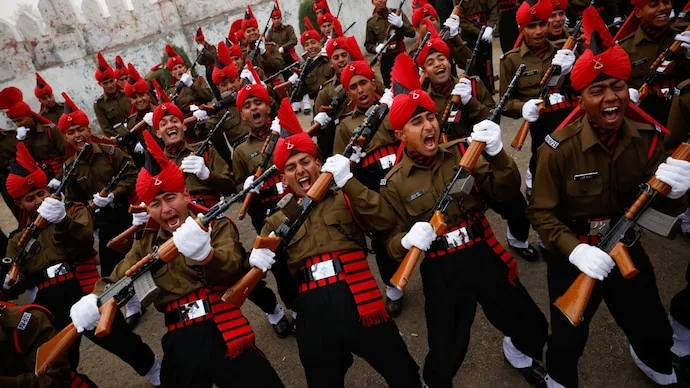

The Agniveer service extension has changed the immediate future of recruits who were originally expected to leave the armed forces after four years if they were not selected for regular enrolment. The Union Cabinet has approved an additional two-year engagement for the remaining 75% of each batch, giving them another opportunity to compete for permanent service, subject to selection criteria.
The first batch of Agniveers was scheduled to complete its initial four-year engagement in 2026. The revised arrangement gives those not selected more time in uniform, but it also raises questions about their eventual transition to civilian life.
The development comes as fresh recruitment continues. In Chhattisgarh, a recruitment rally covering Agniveer categories across all 33 districts is scheduled for January 2027, following the declaration of the 2026 Common Entrance Examination results in July.

Chief of Defence Staff General Raja Subramani said on November 4 that revised Agnipath guidelines would be released in a formal format soon through the Indian Army's official website. No specific publication date has been announced.
How Will the Army Manage Growing Agniveer Batches?
The original Agnipath scheme was designed around four years of service, with up to 25% of each batch eligible for retention in the regular cadre.
The additional two years could mean overlapping batches serving under different stages of the scheme. Questions remain about how the Army will manage training, postings, supervision and career progression while continuing fresh recruitment.
The revised arrangement also raises questions about whether the original manpower calculations behind the scheme will need adjustment.
What Happens to Class 10-Pass Agniveers After Six Years?
This is one of the biggest concerns surrounding the revised arrangement. Candidates with Class 10 qualifications have traditionally been eligible for certain Army General Duty and Tradesman entries.
A recruit joining at 17.5 years could complete six years of service at around 23.5 if not selected for regular enrolment.
Military experience can develop discipline, physical fitness, teamwork and operational skills. However, questions remain over how easily civilian employers will recognise these capabilities, particularly when candidates compete with graduates and technical diploma holders.
Will Agniveers Be Allowed to Marry During Extended Service?
Under existing rules, Agniveers cannot marry during their initial four-year engagement. The restriction is intended to keep recruits focused on training and military responsibilities.
The possibility of allowing marriage during the additional two-year period is reportedly under consideration as part of wider family-related provisions. However, no formal change has been announced, and the existing restriction during the first four years remains in place.
Can Agniveers Complete Their Education While Serving?
The government introduced education pathways through the National Institute of Open Schooling (NIOS) for eligible recruits entering service after Classes 8 and 10. Class 12-qualified Agniveers can also pursue undergraduate degrees through IGNOU.
The additional two years could provide more time to complete educational qualifications. However, questions remain about enrolment numbers, course completion rates and whether personnel posted at different locations receive sufficient time and support to study alongside military duties.
What Civilian Jobs Will Be Available to Ex-Agniveers?
The government has highlighted employment opportunities in Central Armed Police Forces, state police, public sector undertakings and private companies.
In July 2026, the Centre announced a 50% reservation for ex-Agniveers in Constable (General Duty) and Rifleman recruitment in CAPFs and Assam Rifles, along with age relaxation and exemptions from certain selection stages.
Chhattisgarh has also approved a 10% quota in certain Class III state government posts, including police constable, forest guard and jail warder positions.
However, reservations do not automatically guarantee employment. The number of vacancies, actual recruitment and availability of opportunities for every batch remain important questions.
Are Military Skills Translating Into Civilian Jobs?
The government says 325 military skill sets have been mapped to industry-aligned qualifications. The Army also offers National Trade Certificates in 47 trades.
These qualifications are intended to help former Agniveers find work in sectors such as security, logistics, transport, technical maintenance and disaster management.
But certification alone does not guarantee employment. Data on placements, salaries, hiring industries and the number of former Agniveers still seeking work would help assess the effectiveness of these initiatives.
What Happens to Those Not Selected for Regular Service?
The additional engagement gives recruits another opportunity to qualify for regular enrolment, but selection will still depend on established criteria.
Those who complete six years without being selected will need clear pathways into civilian employment or higher education. Career counselling, placement assistance and structured transition programmes could become important parts of the process.
Ultimately, the two-year extension addresses the immediate transition of the first batch, but it does not automatically resolve the larger question of civilian rehabilitation. The success of the Agnipath scheme will depend not only on recruitment numbers but also on whether young people leaving military service can build stable careers afterwards.
Read more: All India Story





Conversation
Be kind and stay on topic. Comments are moderated; abuse, spam and personal attacks are removed. Report a problem