Shopping cart
Your cart empty!


Your cart empty!
Terms of use dolor sit amet consectetur, adipisicing elit. Recusandae provident ullam aperiam quo ad non corrupti sit vel quam repellat ipsa quod sed, repellendus adipisci, ducimus ea modi odio assumenda.
Lorem ipsum dolor sit amet consectetur adipisicing elit. Sequi, cum esse possimus officiis amet ea voluptatibus libero! Dolorum assumenda esse, deserunt ipsum ad iusto! Praesentium error nobis tenetur at, quis nostrum facere excepturi architecto totam.
Lorem ipsum dolor sit amet consectetur adipisicing elit. Inventore, soluta alias eaque modi ipsum sint iusto fugiat vero velit rerum.
Sequi, cum esse possimus officiis amet ea voluptatibus libero! Dolorum assumenda esse, deserunt ipsum ad iusto! Praesentium error nobis tenetur at, quis nostrum facere excepturi architecto totam.
Lorem ipsum dolor sit amet consectetur adipisicing elit. Inventore, soluta alias eaque modi ipsum sint iusto fugiat vero velit rerum.
Dolor sit amet consectetur adipisicing elit. Sequi, cum esse possimus officiis amet ea voluptatibus libero! Dolorum assumenda esse, deserunt ipsum ad iusto! Praesentium error nobis tenetur at, quis nostrum facere excepturi architecto totam.
Lorem ipsum dolor sit amet consectetur adipisicing elit. Inventore, soluta alias eaque modi ipsum sint iusto fugiat vero velit rerum.
Sit amet consectetur adipisicing elit. Sequi, cum esse possimus officiis amet ea voluptatibus libero! Dolorum assumenda esse, deserunt ipsum ad iusto! Praesentium error nobis tenetur at, quis nostrum facere excepturi architecto totam.
Lorem ipsum dolor sit amet consectetur adipisicing elit. Inventore, soluta alias eaque modi ipsum sint iusto fugiat vero velit rerum.
Do you agree to our terms? Sign up
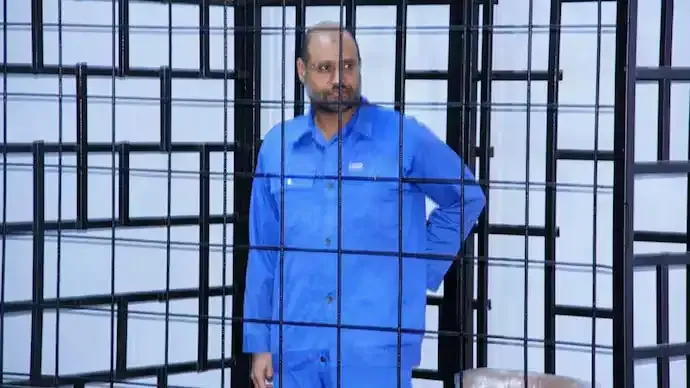
Saif al-Islam Gaddafi, the son of former Libyan leader Muammar Gaddafi and a prominent figure in the country’s turbulent political landscape, has been shot dead after armed men reportedly stormed his residence in western Libya. His political office confirmed his death following what was described as a direct confrontation with a group of attackers, marking a dramatic development in Libya’s already fragile security environment.
According to initial details shared by individuals associated with his legal team, a small armed unit allegedly carried out the attack at his home in Zintan, a city that has long played a significant role in Libya’s post-revolution power dynamics. The exact motive behind the killing remains unclear, and authorities have yet to release comprehensive information regarding those responsible. Conflicting reports have also emerged about the circumstances of his death, with some accounts suggesting he may have been attacked near Libya’s border region.
Saif al-Islam Gaddafi’s life and political trajectory reflected the complex shifts Libya has undergone since the 2011 uprising that ended his father’s decades-long rule. Once widely viewed as a potential successor and a key figure in efforts to modernise Libya’s international image, he faded from public view after being captured during the conflict. Following years in detention, his re-emergence on the political stage reignited debates over Libya’s future and the lingering influence of figures linked to the former regime.
In recent years, he attempted to re-enter national politics and was associated with plans to contest leadership roles, a move that added another layer of complexity to Libya’s already fragmented political landscape. Although he did not hold an official government position at the time of his death, he remained an influential personality, often seen as capable of shaping alliances among rival groups.
Before Libya’s political upheaval, Saif al-Islam had positioned himself as a reform-minded figure within the government. He played a role in diplomatic efforts that sought to improve Libya’s global standing, including negotiations connected to disarmament initiatives and international compensation agreements. His attempts to project a more moderate image contrasted with the country’s later descent into prolonged instability, marked by competing administrations and ongoing security challenges.
The circumstances surrounding his killing are likely to intensify scrutiny over Libya’s internal security situation and the influence of armed factions operating across the region. Analysts warn that incidents targeting high-profile figures can deepen political divisions and complicate ongoing reconciliation efforts. The event also highlights the persistent volatility that continues to shape Libya’s path more than a decade after the revolution.
As investigations continue, global observers are closely watching developments for clues about potential power struggles or shifting alliances within Libya. The death of Saif al-Islam Gaddafi represents not only the loss of a controversial political figure but also another reminder of the fragile state of stability in a country still navigating the legacy of conflict and transformation.
115
Published: Feb 04, 2026

All India Story is your trusted source for comprehensive and up-to-the-minute news coverage across India. Bringing you the latest on politics, business, technology, entertainment, sports, and more, we are dedicated to keeping you informed with accurate, engaging, and insightful stories from every corner of the nation.