Shopping cart
Your cart empty!
Terms of use dolor sit amet consectetur, adipisicing elit. Recusandae provident ullam aperiam quo ad non corrupti sit vel quam repellat ipsa quod sed, repellendus adipisci, ducimus ea modi odio assumenda.
Lorem ipsum dolor sit amet consectetur adipisicing elit. Sequi, cum esse possimus officiis amet ea voluptatibus libero! Dolorum assumenda esse, deserunt ipsum ad iusto! Praesentium error nobis tenetur at, quis nostrum facere excepturi architecto totam.
Lorem ipsum dolor sit amet consectetur adipisicing elit. Inventore, soluta alias eaque modi ipsum sint iusto fugiat vero velit rerum.
Sequi, cum esse possimus officiis amet ea voluptatibus libero! Dolorum assumenda esse, deserunt ipsum ad iusto! Praesentium error nobis tenetur at, quis nostrum facere excepturi architecto totam.
Lorem ipsum dolor sit amet consectetur adipisicing elit. Inventore, soluta alias eaque modi ipsum sint iusto fugiat vero velit rerum.
Dolor sit amet consectetur adipisicing elit. Sequi, cum esse possimus officiis amet ea voluptatibus libero! Dolorum assumenda esse, deserunt ipsum ad iusto! Praesentium error nobis tenetur at, quis nostrum facere excepturi architecto totam.
Lorem ipsum dolor sit amet consectetur adipisicing elit. Inventore, soluta alias eaque modi ipsum sint iusto fugiat vero velit rerum.

Sit amet consectetur adipisicing elit. Sequi, cum esse possimus officiis amet ea voluptatibus libero! Dolorum assumenda esse, deserunt ipsum ad iusto! Praesentium error nobis tenetur at, quis nostrum facere excepturi architecto totam.
Lorem ipsum dolor sit amet consectetur adipisicing elit. Inventore, soluta alias eaque modi ipsum sint iusto fugiat vero velit rerum.
Do you agree to our terms? Sign up
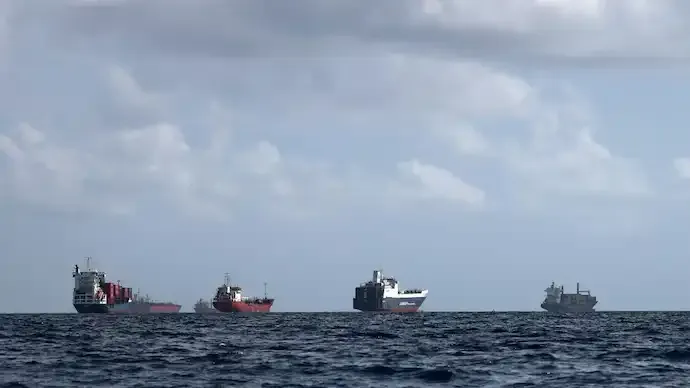
Global oil markets remain extremely sensitive to developments involving Iran, largely due to the strategic importance of the Strait of Hormuz, one of the world’s most critical energy transit routes. Any shift in geopolitical tensions around Iran has an immediate ripple effect on crude prices, even in the absence of actual supply disruptions.
The Strait of Hormuz is a narrow maritime passage located between Iran and Oman, connecting the Persian Gulf to the Arabian Sea. Despite its limited width, the strait handles approximately 20 million barrels of crude oil and condensate per day, representing nearly one-fifth of total global oil consumption. In addition to oil, close to 20 per cent of the world’s liquefied natural gas (LNG) trade also transits through this route.
Market volatility was clearly visible on January 15, when global crude prices fell by more than three per cent after US President Donald Trump signalled a softer stance on Iran. His remarks suggesting that killings and executions of Iranian protesters had stopped immediately eased fears of an imminent military escalation, prompting traders to reassess supply risk.
According to data from the US Energy Information Administration, only about 2.6 million barrels per day of oil transported through the Strait of Hormuz can be diverted via alternative pipeline routes. This means nearly 87 per cent of oil shipments through the strait have no viable substitute, making the passage a major vulnerability for global energy security.
Asia remains the most exposed region to any disruption in Hormuz. Roughly 84 per cent of crude oil and condensate passing through the strait is destined for Asian markets, with China, India, Japan and South Korea together accounting for nearly 69 per cent of total flows. In contrast, Europe and North America together receive less than one-sixth of the oil transported through Hormuz.
The strait’s outsized influence on energy prices has been evident in past crises. In June 2025, Israeli strikes on Iranian targets triggered a sudden surge in Brent Crude prices from around USD 69 to USD 74 per barrel in a single day, despite no immediate interruption to oil shipments. Days later, US strikes on Iranian nuclear facilities and Tehran’s warning about potential naval mining operations pushed prices close to USD 81 per barrel.
Such movements underline how perception and risk assessment, rather than physical shortages alone, drive oil price volatility. Even statements or diplomatic signals from Washington or Tehran are enough to influence futures markets, shipping insurance costs and energy stocks worldwide.
With Iran continuing to play a central role in regional geopolitics, analysts warn that the Strait of Hormuz will remain a key pressure point for global energy markets. Any escalation — whether military, economic or diplomatic — is likely to keep crude prices on edge, reinforcing the strait’s reputation as the world’s most sensitive oil chokepoint.
44
Published: Jan 16, 2026