
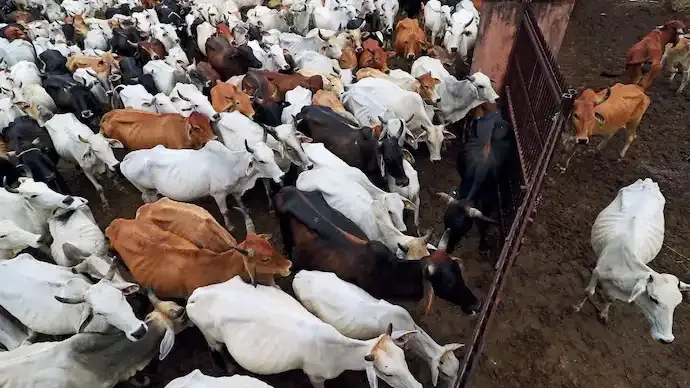
The Tamil Nadu government has approached the Supreme Court of India, challenging a Madras High Court order that imposed a blanket ban on cow slaughter in the state, except in cases permitted under the Tamil Nadu Animal Preservation Act, 1958.
The state government argues that the High Court's directive goes beyond the legal framework established under the existing law and has sought relief from the apex court.
Featured Snippet
The Tamil Nadu government has challenged a Madras High Court order in the Supreme Court, arguing that the blanket ban on cow slaughter exceeds the provisions of the Tamil Nadu Animal Preservation Act, 1958.
Key Highlights
- Tamil Nadu has moved the Supreme Court against the High Court's order.
- The petition challenges the blanket ban on cow slaughter.
- The state argues the directive exceeds the existing legal framework.
- The Animal Preservation Act already specifies conditions under which slaughter is permitted.
- The Supreme Court will now consider the state's plea.
Why Has Tamil Nadu Approached the Supreme Court?
The state government has challenged the Madras High Court's interpretation of the law, arguing that the court's directive effectively imposes a broader restriction than what is provided under the Tamil Nadu Animal Preservation Act, 1958.
According to the government, the legislation already lays down specific circumstances in which cow slaughter is legally permitted.
What Does the Existing Law Say?
Under Section 4 of the Tamil Nadu Animal Preservation Act, 1958, cow slaughter is permitted only under certain conditions, including when the animal:
- Is over 10 years of age.
- Is permanently unfit for work or breeding.
- Has been certified by the competent authority.
The state argues that these statutory provisions already regulate the issue.
Government's Argument
In its appeal, the Tamil Nadu government contends that the High Court's order extends beyond the scope of the existing legislation.
The state has requested the Supreme Court to examine whether the High Court's direction is consistent with the statutory framework established by the Act.
What Happens Next?
The Supreme Court will consider the Tamil Nadu government's petition and decide whether to hear the matter in detail.
The court's eventual ruling could clarify the interpretation and application of the Animal Preservation Act in the state.
Why the Case Matters
The dispute raises important legal questions regarding:
- Interpretation of state legislation.
- Scope of judicial directions.
- Powers of constitutional courts.
- Regulation under existing animal preservation laws.
The case may also have broader implications for similar legal issues in other states.
Conclusion
The Tamil Nadu government's move to challenge the Madras High Court's order has brought the issue before the Supreme Court. The case now centres on whether the High Court's blanket ban aligns with the provisions of the Tamil Nadu Animal Preservation Act, 1958. The apex court's decision will determine the next course of action.
FAQs
1. Why has Tamil Nadu approached the Supreme Court?
The state is challenging a Madras High Court order imposing a blanket ban on cow slaughter.
2. What is the government's main argument?
It says the High Court's directive goes beyond the provisions of the Tamil Nadu Animal Preservation Act, 1958.
3. Does the law already regulate cow slaughter?
Yes. Section 4 of the Act allows it only under specified conditions.
4. What are those conditions?
The cow must be over 10 years old, unfit for work or breeding, and certified by the competent authority.
5. Which court issued the original order?
The Madras High Court.
6. What will happen next?
The Supreme Court will decide whether to hear the state's appeal and consider the legal issues involved.





Conversation
Be kind and stay on topic. Comments are moderated; abuse, spam and personal attacks are removed. Report a problem