

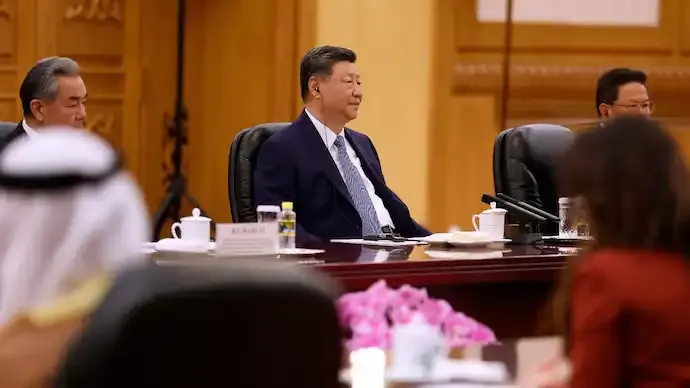

China is positioning itself as a key player in resolving tensions in the Middle East, as President Xi Jinping unveiled a four-point proposal aimed at promoting long-term peace in the region.
The proposal was presented during a high-level meeting in Beijing with Sheikh Khaled bin Mohamed bin Zayed Al Nahyan, highlighting China’s increasing diplomatic engagement in global conflict resolution.
Xi Jinping’s 4-Point Peace Proposal
During the discussions, Xi outlined a roadmap focused on stability, cooperation, and international order. The key elements of the proposal include:

- Promoting peaceful coexistence among nations
- Respecting national sovereignty and territorial integrity
- Balancing development with security priorities
- Upholding a rules-based international order
The framework reflects China’s approach to conflict resolution through dialogue and mutual respect.
Focus on Stability and Cooperation
Xi emphasised the importance of maintaining regional stability while encouraging cooperation among Middle Eastern nations. He highlighted that long-term peace can only be achieved through balanced development and collective security efforts.
The proposal comes at a time when geopolitical tensions in the Middle East continue to impact global markets and international relations.
China Expands Its Global Influence
By presenting a structured peace plan, China is signalling its intent to play a larger role in global diplomacy. The move aligns with its broader strategy of expanding influence beyond Asia and engaging more actively in international conflict resolution.
China has increasingly positioned itself as a mediator in global issues, aiming to strengthen its diplomatic presence on the world stage.
Strategic Timing Amid Global Tensions
The announcement comes amid heightened tensions in the Middle East, which have affected energy markets and global stability. China’s proposal is being seen as a strategic step to contribute to peace while safeguarding its economic and geopolitical interests.
The Middle East remains a critical region for global energy supply, making stability there essential for countries worldwide.
Global Reactions and Implications
While the proposal highlights China’s diplomatic ambitions, its effectiveness will depend on how regional and global stakeholders respond. The initiative may influence future peace talks and international cooperation efforts.
Experts suggest that such proposals could reshape the dynamics of global diplomacy if supported by key nations.
What Lies Ahead
China’s increasing involvement in Middle East affairs signals a shift in global power dynamics. As tensions continue, the success of such initiatives will depend on cooperation among regional players and major global powers.
The coming months will be crucial in determining whether China’s peace roadmap gains traction and contributes to lasting stability.




Conversation
Be kind and stay on topic. Comments are moderated; abuse, spam and personal attacks are removed. Report a problem