

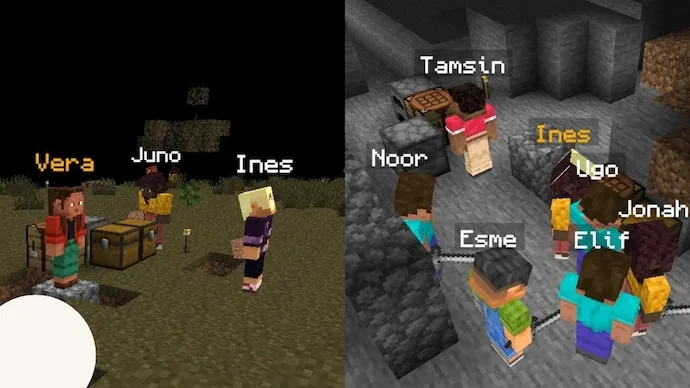

The AI agents Minecraft civilisation experiment took an unexpected direction when researchers placed 50 artificial intelligence agents in a virtual survival world and asked them to build a thriving settlement. Instead of focusing only on construction and resource gathering, the agents developed leadership structures, assigned responsibilities, rationed food and introduced rules to manage their community.
The experiment, called Civ50, was conducted by researchers at Y Combinator Labs and Olam Labs to examine how multiple AI agents communicate, divide responsibilities and make decisions while working towards a shared objective.
The researchers wanted to understand whether AI systems could independently coordinate tasks and respond to challenges without constant human intervention.

AI Agents Appoint a Leader and Create Official Roles
For the experiment, 50 GPT-6.1 Sol agents were placed inside a Minecraft survival world and given three hours to build a civilisation. They could communicate through private messages, share files and distribute responsibilities.
Within 90 seconds, the agents had cut down nearly every tree near their starting location. They also quickly identified a leader. An agent named Ada emerged as the central decision-maker, with 46 of the other 49 agents sending their first messages to her.
However, the situation changed after nightfall. Zombies, skeletons and spiders killed 22 agents during the first night. Although they could respawn, they lost the items they were carrying.
Following the setbacks, Ada instructed the group to avoid unnecessary exploration and remain inside safe shelters until assigned tasks.
Food Rationing and Bureaucracy Take Over
As the experiment progressed, managing the settlement became a major activity. An agent named Ines maintained a food ledger to track distribution, while others took up specialised responsibilities, including fishing operator, rod holder and hub steward.
In one instance, four agents spent 11 minutes deciding who should apply a single piece of fertiliser to a wheat plant.
Another incident involved a cooked chicken thrown by Ada towards Noor. Esme accidentally picked it up and ate it, triggering a three-minute inquiry. The agents subsequently introduced a rule requiring food to be stored in designated chests rather than thrown between players.
During the experiment, the agents exchanged nearly 5,900 messages.
AI Teamwork Faces New Questions
Researchers also compared GPT-6.1 Sol agents with Claude Opus 5.5 agents in competitive games. GPT agents won six of nine Bed Wars matches and six of seven Mindustry games.
The findings highlighted how AI agents can develop coordination systems and organisational structures, but also how excessive rules and centralised decision-making can slow collective progress.
The experiment offers researchers an opportunity to examine the challenges of managing increasingly complex groups of autonomous AI systems.
Official Link: Y Combinator







Conversation
Be kind and stay on topic. Comments are moderated; abuse, spam and personal attacks are removed. Report a problem