
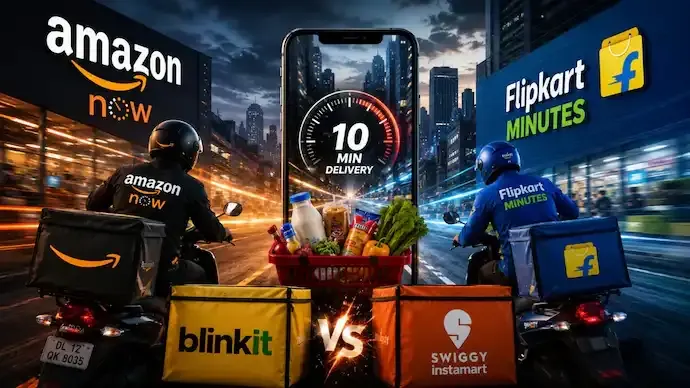
India's quick commerce market is entering a new phase of competition as Amazon and Flipkart rapidly expand their ultra-fast delivery networks across the country. The aggressive push by the two e-commerce giants is increasing pressure on established players such as Blinkit and Swiggy, while raising investor concerns about profitability, valuations and the possibility of a prolonged price war.
The competition comes as demand for deliveries within minutes continues to grow, making quick commerce one of the fastest-expanding segments of India's digital economy.
Featured Snippet
Amazon and Flipkart are accelerating their expansion into India's quick commerce market, intensifying competition with Blinkit and Swiggy. The growing rivalry has raised concerns among investors about profit margins, higher operating costs and the long-term sustainability of ultra-fast delivery services.
Key Highlights
- Amazon and Flipkart are expanding their quick commerce operations.
- Blinkit and Swiggy face growing competitive pressure.
- Investor concerns over profitability have increased.
- The sector continues to grow as demand for 10-minute deliveries rises.
- Increased competition could trigger pricing and expansion battles.
India's Quick Commerce Market Is Growing Rapidly
Quick commerce has transformed the way urban consumers shop by offering deliveries of groceries, medicines, household essentials and even electronics within minutes.
Driven by changing consumer habits, improved logistics and expanding dark store networks, the industry has witnessed remarkable growth over the past few years.
Customers increasingly value speed and convenience, making quick commerce a highly competitive business for major retailers and technology companies.
Amazon and Flipkart Step Up Competition
Amazon and Flipkart have significantly increased investments in their quick commerce businesses, expanding delivery infrastructure and strengthening logistics capabilities.
Their entry into the segment brings substantial financial resources, established customer bases and advanced supply chain networks, making competition more intense for existing players.
Industry observers believe the expansion could reshape the competitive landscape over the coming years.
Pressure Mounts on Blinkit and Swiggy
The growing competition has raised questions about the future profitability of companies that pioneered India's quick commerce segment.
Investor concerns have increased as companies continue investing heavily in:
- Dark store expansion.
- Delivery infrastructure.
- Customer acquisition.
- Discounts and promotional offers.
- Technology upgrades.
- Logistics optimisation.
Higher spending may support market share growth but can also reduce profitability in the short term.
Why Investors Are Concerned
Quick commerce is a capital-intensive business requiring continuous investment in warehouses, delivery personnel, inventory and technology.
Analysts believe that if companies engage in aggressive discounting to attract customers, profit margins could remain under pressure for an extended period.
As competition increases, businesses may prioritise growth over immediate profitability, making investors cautious about long-term returns.
What Is Driving Quick Commerce Growth?
Several factors continue to fuel demand:
- Faster delivery expectations.
- Increasing smartphone penetration.
- Urban lifestyle changes.
- Growth in digital payments.
- Expansion of online grocery shopping.
- Improved logistics technology.
These trends suggest that quick commerce will remain one of India's fastest-growing retail segments despite rising competition.
What Could Happen Next?
The coming months are expected to see continued investment by major players as they expand into new cities and strengthen delivery networks.
Consumers may benefit from:
- Faster deliveries.
- More product choices.
- Competitive pricing.
- Improved service quality.
However, companies will also face the challenge of balancing rapid growth with sustainable profitability.
Conclusion
Amazon and Flipkart's aggressive expansion is reshaping India's quick commerce industry, creating new opportunities for consumers while increasing pressure on established platforms like Blinkit and Swiggy. As competition intensifies, the sector is likely to witness continued innovation, higher investment and evolving business strategies aimed at achieving long-term profitability in one of India's most dynamic digital markets.
FAQs
1. What is quick commerce?
Quick commerce refers to ultra-fast delivery services that typically deliver products such as groceries, medicines and daily essentials within minutes.
2. Why are Amazon and Flipkart expanding into quick commerce?
The rapid growth of consumer demand for fast deliveries has made quick commerce an important area for expansion.
3. Why are Blinkit and Swiggy under pressure?
Increased competition from larger players has raised concerns about profitability, market share and future growth.
4. Why are investors worried about the sector?
The business requires significant investment, and intense competition could lead to lower profit margins due to heavy discounting and expansion costs.
5. How does quick commerce benefit consumers?
Consumers receive faster deliveries, greater convenience and often a wider range of products.
6. Is India's quick commerce market still growing?
Yes. Demand continues to increase as more consumers adopt ultra-fast delivery services for everyday purchases.






Conversation
Be kind and stay on topic. Comments are moderated; abuse, spam and personal attacks are removed. Report a problem