Border 2 Falls Short of Honouring the Armed Forces Despite Emotional Legacy

Border 2 Falls Short of Honouring the Armed Forces Despite Emotional Legacy

War films carry an emotional advantage few genres possess. The uniform, the music, the sacrifice, and the idea of duty already prime the audience to feel something before the story even begins. But that emotional head start is also a responsibility. When a film claims to honour the armed forces, it must earn its sentiment through authenticity, care, and restraint.

That is why Border remains timeless. It was never just about combat. It was about waiting, longing, silence, and the families left behind. For many viewers, the song Sandese Aate Hain was not a soundtrack—it was a reminder of absence, anxiety, and love stretched across distance. The film humanised soldiers without turning them into caricatures of patriotism.

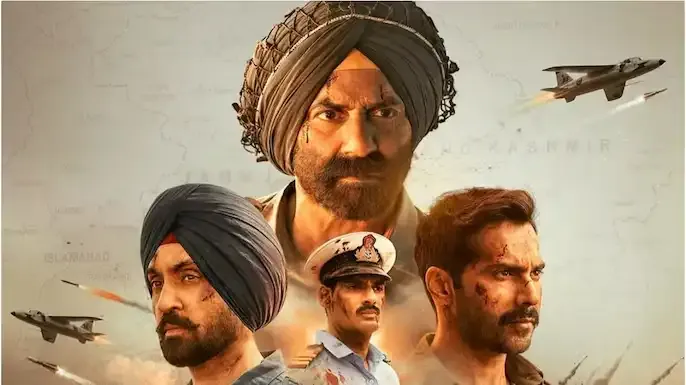
Nearly three decades later, Sunny Deol returns with Border 2, carrying the emotional weight of that legacy. Expectations were not about louder action or grander scale, but about the same sincerity that once made theatres fall silent. Unfortunately, the sequel struggles to live up to that responsibility.

This is not a conventional film review. Cinema can take creative liberties, and fiction has room to breathe. But when a film positions itself as a tribute to the armed forces, accuracy and respect become non-negotiable. Border 2 falters precisely here.

The lack of research is evident in how military operations and inter-service coordination are portrayed. The aerial sequences, in particular, rely on unconvincing CGI that distracts rather than immerses. The Navy’s depiction feels especially underdeveloped, reduced to hurried visuals instead of being treated as a professional force with its own doctrine and complexity. In an era where even open-source research and accessible technology can dramatically elevate realism, these shortcuts feel avoidable—and disappointing.

Visual authenticity is not a cosmetic issue. Representation shapes how civilians understand institutions they rarely see up close. When that representation is careless, it does not merely weaken storytelling; it risks trivialising service and sacrifice.

The contrast becomes sharper when viewed alongside films like Top Gun: Maverick, where decades of patience, preparation, and respect for the subject translated into credibility on screen. The comparison is not about budgets or scale, but about intent. Border 2 had 28 years to reflect on why the original mattered. That introspection rarely surfaces in the final product.

Directed by Anurag Singh, the film leans heavily into spectacle—noise over nuance. What it misses is the quiet dignity that once defined Border. The silences, the letters, the fear that never needed background music. The sequel often feels more interested in evoking applause than understanding emotion.

Border was never about winning battles alone. It was about the human cost of standing guard while life continues elsewhere. Border 2, despite its intent, does not fully grasp that essence. Without that emotional honesty, the uniform on screen risks feeling like a costume rather than a calling.

And that is the real disappointment—not that Border 2 is imperfect, but that it forgets why Border mattered in the first place.

(Disclaimer: The views expressed are the author’s own.)

Prev Article
Arijit Singh’s Exit From Playback Singing Is Not Retirement, It’s Resistance
Next Article
Alia Bhatt on Online Comments About Marriage to Ranbir Kapoor: The Noise Doesn’t Reach Us

Related to this topic: