Shopping cart
Your cart empty!


Your cart empty!
Terms of use dolor sit amet consectetur, adipisicing elit. Recusandae provident ullam aperiam quo ad non corrupti sit vel quam repellat ipsa quod sed, repellendus adipisci, ducimus ea modi odio assumenda.
Lorem ipsum dolor sit amet consectetur adipisicing elit. Sequi, cum esse possimus officiis amet ea voluptatibus libero! Dolorum assumenda esse, deserunt ipsum ad iusto! Praesentium error nobis tenetur at, quis nostrum facere excepturi architecto totam.
Lorem ipsum dolor sit amet consectetur adipisicing elit. Inventore, soluta alias eaque modi ipsum sint iusto fugiat vero velit rerum.
Sequi, cum esse possimus officiis amet ea voluptatibus libero! Dolorum assumenda esse, deserunt ipsum ad iusto! Praesentium error nobis tenetur at, quis nostrum facere excepturi architecto totam.
Lorem ipsum dolor sit amet consectetur adipisicing elit. Inventore, soluta alias eaque modi ipsum sint iusto fugiat vero velit rerum.
Dolor sit amet consectetur adipisicing elit. Sequi, cum esse possimus officiis amet ea voluptatibus libero! Dolorum assumenda esse, deserunt ipsum ad iusto! Praesentium error nobis tenetur at, quis nostrum facere excepturi architecto totam.
Lorem ipsum dolor sit amet consectetur adipisicing elit. Inventore, soluta alias eaque modi ipsum sint iusto fugiat vero velit rerum.
Sit amet consectetur adipisicing elit. Sequi, cum esse possimus officiis amet ea voluptatibus libero! Dolorum assumenda esse, deserunt ipsum ad iusto! Praesentium error nobis tenetur at, quis nostrum facere excepturi architecto totam.
Lorem ipsum dolor sit amet consectetur adipisicing elit. Inventore, soluta alias eaque modi ipsum sint iusto fugiat vero velit rerum.
Do you agree to our terms? Sign up
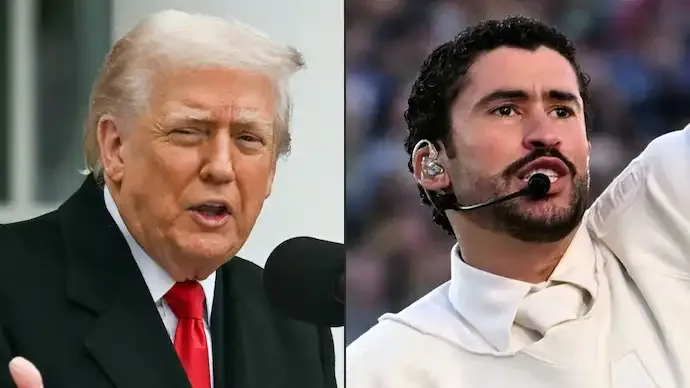
The Super Bowl halftime show has once again become a focal point of political and cultural debate after US President Donald Trump strongly criticised the performance by global music star Bad Bunny. The remarks, shared on social media shortly after the event, triggered widespread discussion about entertainment, representation and the evolving identity of major global sporting spectacles.
Bad Bunny’s halftime performance at Levi’s Stadium marked a historic moment as the Puerto Rican artist became one of the few Latin performers to headline the globally watched show. The set aimed to celebrate cultural diversity and unity, featuring music and visuals that highlighted Latin heritage. However, the performance also attracted criticism from some political figures and commentators who questioned its style and messaging.
In a series of online posts, Trump described the halftime show as disappointing and criticised elements of the choreography and presentation. He argued that the performance did not reflect what he considers traditional American values, adding that the event’s content sparked concern among certain audiences. His comments quickly circulated across social media platforms, generating mixed reactions from supporters and critics alike.
The debate intensified as some observers framed the criticism within a broader conversation about language and cultural expression at international events. Bad Bunny’s music, which often blends Spanish lyrics with global pop influences, has helped him gain a massive international fan base. Supporters of the artist praised the performance as a milestone for Latin representation on one of the world’s largest entertainment stages.
The controversy surrounding the halftime show began even before the event took place. Discussions about the artist’s selection had already gained attention due to his outspoken views on social and political issues, as well as his previous commentary on immigration policies. Following the performance, several public figures echoed Trump’s criticism, while others defended the show as a celebration of cultural diversity in modern entertainment.
Despite the differing opinions, the Super Bowl halftime show continues to remain one of the most influential platforms for artists, often blending music, politics and cultural expression into a single global moment. Analysts note that reactions to such performances frequently reflect broader societal debates, especially as audiences become more diverse and international.
The incident highlights how major entertainment events increasingly intersect with political discourse, turning performances into conversations that extend far beyond music alone. As discussions continue online, the halftime show has once again demonstrated its ability to spark global dialogue about identity, creativity and the evolving landscape of popular culture.
43
Published: Feb 09, 2026

All India Story is your trusted source for comprehensive and up-to-the-minute news coverage across India. Bringing you the latest on politics, business, technology, entertainment, sports, and more, we are dedicated to keeping you informed with accurate, engaging, and insightful stories from every corner of the nation.