

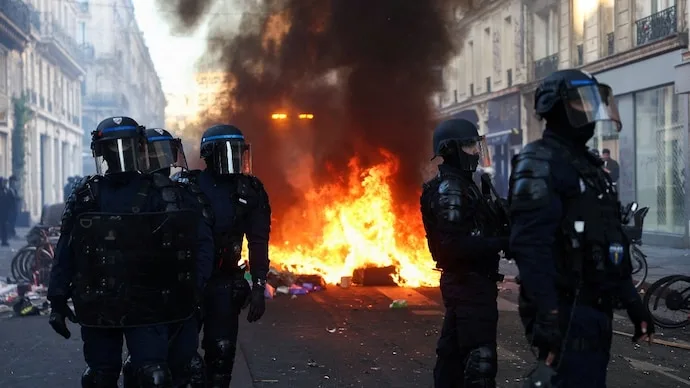

Young people and other residents have taken to the streets across several European countries over rising living expenses, unaffordable housing and concerns about education standards. Demonstrations in France and Italy have escalated into clashes with police, while protests in Spain and Portugal have focused heavily on housing affordability.
The unrest reflects growing frustration over household budgets, teacher shortages, inadequate school infrastructure and rising rents. In France, student-led demonstrations have broadened into a wider movement demanding better wages, improved pensions and relief from higher fuel prices.
The protests are also placing pressure on governments to introduce measures that address the economic challenges facing ordinary residents.

France Sees Student Protests and Clashes With Police
In France, high school students have protested against long school hours, teacher shortages, deteriorating classroom conditions and concerns over university admissions procedures.
Staffing shortages have reportedly left some pupils without regular instruction for extended periods. The demonstrations have attracted support from trade unions and people concerned about the broader cost-of-living crisis.
The General Confederation of Labour (CGT), one of France's largest trade unions, has backed demands for higher wages, better pensions and lower prices. Rising fuel costs have added to public frustration.
The unrest comes as President Emmanuel Macron faces mounting pressure ahead of the country's next presidential election, scheduled for April 2027.
Housing Crisis Fuels Anger in Spain and Portugal
In Spain, soaring housing costs have become a major source of public discontent. Activists organised demonstrations following the reported eviction of 87-year-old Maricarmen Abascal after her rent was increased by 230% by an investment fund. Her subsequent death after hospitalisation intensified debate over housing insecurity and tenant protections.
Protesters have demanded lower rents, an end to evictions and restrictions on investment funds purchasing residential properties.
In Portugal, hundreds gathered in central Lisbon over similar concerns. Official data cited in reports showed that Portuguese house prices increased by 124% between 2015 and 2024, approximately twice the European Union average over that period.
The figures underline the growing difficulty many residents face in finding affordable homes.
Milan Violence and Albania's Anti-Corruption Protests
In Milan, a march over living costs reportedly began peacefully before masked demonstrators threw stones and other objects at riot police. Some barricades made from bar tables were set on fire.
Meanwhile, protests in Albania entered their sixth consecutive day on Sunday. Demonstrators have raised concerns about alleged corruption, unemployment and education standards. The unrest initially intensified around a controversial luxury coastal development backed by Jared Kushner, son-in-law of US President Donald Trump.
Governments Face Pressure to Deliver Solutions
Authorities in France have announced plans to deploy an additional 3,000 substitute teachers and involve students in decisions affecting schools. The government has also withdrawn plans to increase certain university registration fees in the following year's budget.
In Spain, Prime Minister Pedro Sanchez's proposed emergency housing legislation was defeated in Congress. Sanchez subsequently called an early election for November 29, seeking a broader progressive majority to advance further reforms.
Across Europe, governments face the challenge of turning announcements into meaningful relief. With housing, education and everyday expenses continuing to dominate public concerns, the protests highlight the political consequences of persistent affordability pressures.
For official European policy information, visit the European Commission website.








Conversation
Be kind and stay on topic. Comments are moderated; abuse, spam and personal attacks are removed. Report a problem