

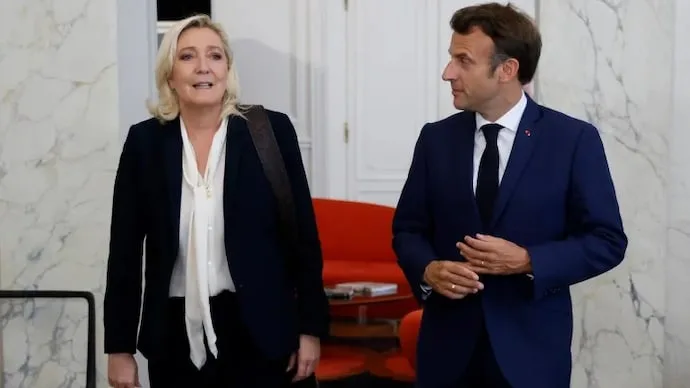

France’s recent unrest has opened a fresh political battle, with far-right leader Marine Le Pen blaming President Emmanuel Macron’s government for the violence and presenting herself as a candidate for restoring law and order. With the next presidential election approaching, the protests have given her an opportunity to advance her political message.
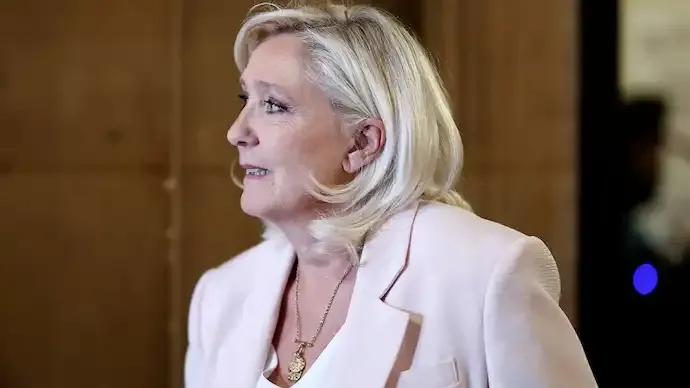
Le Pen’s televised-style address, delivered with the French flag prominently displayed beside her, drew attention for its presidential optics. She accused the political left and decades of immigration of contributing to the country’s problems, although the supplied report states that French authorities had not implicated migrants in the violence.
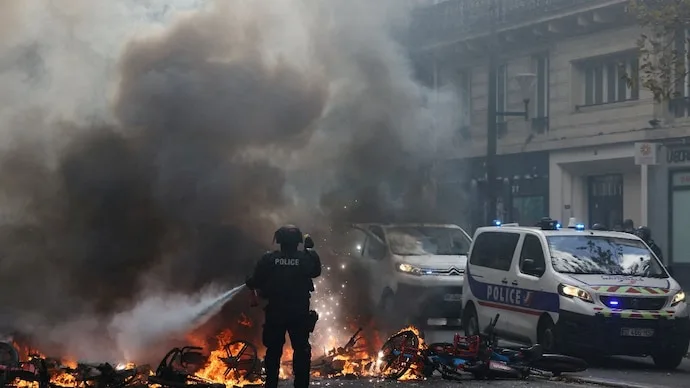
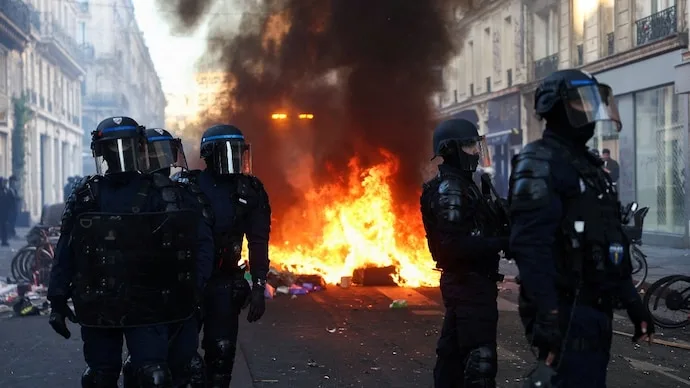
The unrest began with student-led demonstrations over school conditions before expanding into protests over the cost of living, inflation and declining public services. Some demonstrations subsequently escalated into arson, looting and clashes with police.

How the Unrest Could Shape France’s Political Debate
Le Pen and her National Rally party have long focused on immigration, security and law enforcement. The latest violence has allowed them to connect public disorder with their established political agenda.
Le Pen said voters would have an opportunity to choose a different direction, promising greater authority and improved security. Her party has also pointed to protesters carrying Palestinian and Algerian flags, using these images to support its political messaging.
However, the presence of such flags does not establish who organised or carried out the violence. The report also notes that authorities had not provided evidence linking migrants to the rioting.
Centre-right lawmaker Nathalie Loiseau argued that the unrest benefits the far right, reflecting concerns among Le Pen’s opponents that the crisis could strengthen her political position.
Economic Pressures Complicate Macron’s Position
France’s economic challenges have added another dimension to the political crisis. The report highlights persistent fiscal deficits and public debt approaching 120% of gross domestic product, limiting the government’s room for additional spending.
Le Pen has used these pressures to criticise Macron’s economic policies. However, economic management has also been a challenge for her political movement, including criticism of earlier proposals to withdraw France from the euro.
Her 2025 conviction related to the misuse of European Parliament funds could also remain an issue during the campaign.
Will the Protests Change the Election?
The report cites polling that placed Le Pen ahead of former prime minister Édouard Philippe in a hypothetical presidential contest. It also notes that Macron cannot seek another consecutive term because of France’s constitutional limit.
Political observers quoted in the report believe the unrest could help Le Pen gain momentum. However, the protests alone do not establish how voters will respond, and the eventual electoral outcome remains uncertain.
The central question is whether public anger over security, immigration and economic conditions will translate into sustained support for Le Pen or whether voters will prioritise economic credibility and other issues. The coming months will reveal whether the unrest reshapes France’s political debate in her favour.




Conversation
Be kind and stay on topic. Comments are moderated; abuse, spam and personal attacks are removed. Report a problem