

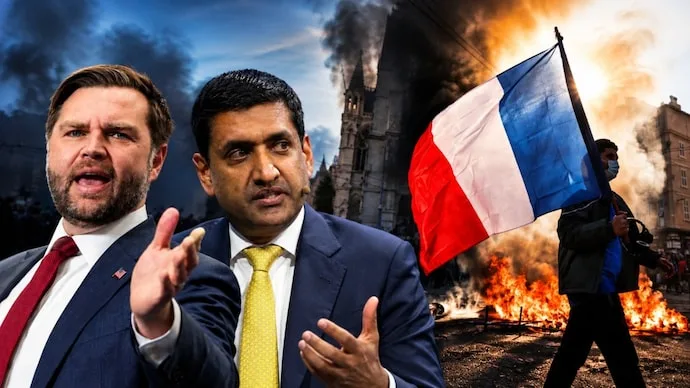

The France protests have sparked a political dispute in the United States, with Vice President JD Vance attributing the unrest to immigration and failed assimilation, while Democratic Congressman Ro Khanna has pointed to wealth inequality and economic insecurity.
The exchange comes ahead of the November 2026 US midterm elections, turning demonstrations across France and other European countries into a debate over America's immigration and economic policies.
On October 18, Vance accused Western liberal governments of having “imported the Third World into France” in the name of diversity and compassion. Khanna responded the following day, arguing that the vice president was misreading the reasons behind the unrest.

The two politicians have offered sharply different explanations, although neither argument alone establishes the causes of every protest or incident of violence.
Why JD Vance Blames Immigration Policies
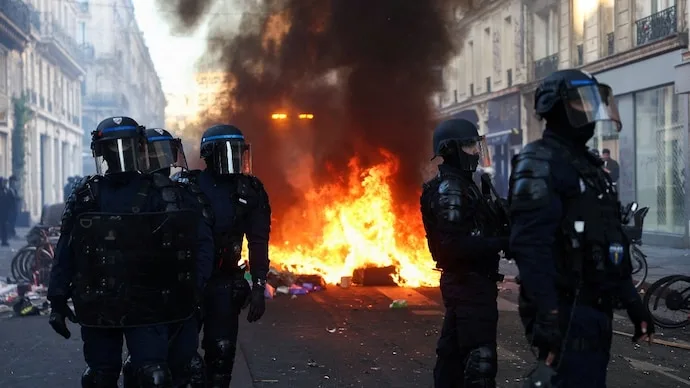
Vance has argued that European governments have prioritised diversity and humanitarian considerations over assimilation and cultural cohesion. He shared footage of a fire at the historic town hall in Limoges, France, and urged Americans to view the unrest as a warning about immigration policies.
“I hope Americans are paying attention. This is the future congressional Democrats seek for your country,” Vance wrote on X.
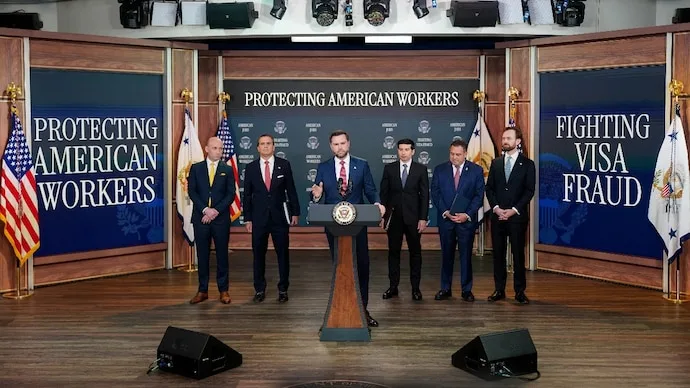
His remarks align with the Trump administration's broader emphasis on border enforcement, deportations and tighter immigration controls. With midterm elections approaching, the unrest offers Republicans an opportunity to argue that immigration policy is closely connected to public safety and national identity.
However, the available account does not establish that immigration caused the specific acts of violence in France. The protests have also involved grievances over teacher shortages, school conditions, university admissions and rising living expenses.
Ro Khanna Counters With Wealth Inequality
California Congressman Ro Khanna offered a different interpretation, connecting demonstrations in France, Spain and Albania to economic insecurity among young people.
“From the high schools of France to the streets of Madrid to the universities of Tirana, young people are telling their governments the same thing,” Khanna wrote on X, referring to wealth inequality and the search for a more secure future.
His argument centres on the difficulty young people face in accessing affordable housing, quality education and stable employment. In France, students and teachers have demanded better school conditions. In Spain, rising rents and evictions have fuelled protests, while Albanian demonstrators have raised concerns about alleged corruption, unemployment and education.
Khanna has called for an economic and political transformation under what he describes as “America's Next New Deal”, invoking former President Franklin D Roosevelt's programme of reforms during the Great Depression.
Economic inequality may help explain some grievances, but it does not independently account for every act of vandalism or violence.
Why Are France and Other European Countries Protesting?
France's student demonstrations began over education concerns, including teacher shortages, deteriorating classrooms and university admissions procedures. They subsequently broadened to include demands for higher wages, better pensions and relief from rising costs.
The government has announced plans to deploy an additional 3,000 substitute teachers and withdrawn proposals to increase certain university registration fees.
In Spain, housing affordability has become a major source of public anger. Portugal has also faced mounting concerns over property prices and access to accommodation. Meanwhile, protests in Albania have focused on corruption, employment and education.
These demonstrations do not represent one unified European movement. Their immediate triggers differ, even where economic insecurity is a common theme.
Can the French Unrest Influence US Midterm Elections?
Vance and Khanna are using the same events to advance competing political narratives. Republicans are emphasising immigration enforcement and assimilation, while Democrats are drawing attention to inequality, housing affordability and economic opportunity.
The personal backgrounds of the politicians have also entered the debate. Vance's wife, Usha Vance, was born in California to Indian immigrant parents. Her background, however, does not determine or contradict her husband's policy positions.
Ultimately, the French unrest does not establish that either politician's explanation is universally correct. Immigration, economic pressures and local political grievances need to be examined separately rather than treated as a single explanation.
As the US midterms approach, the debate illustrates how developments in Europe can become part of America's domestic political contest over immigration, inequality and the responsibilities of government.
For official information on US policy, visit the White House website.




Conversation
Be kind and stay on topic. Comments are moderated; abuse, spam and personal attacks are removed. Report a problem