
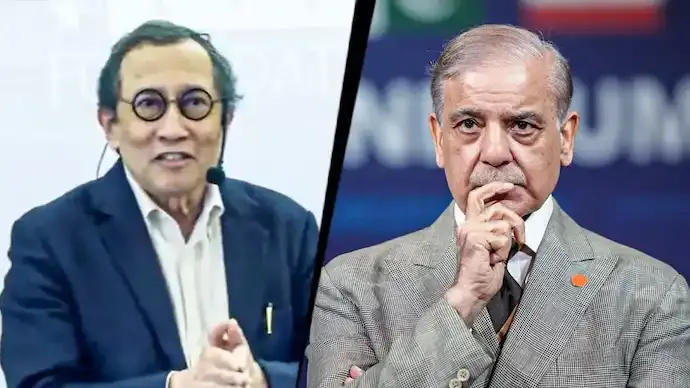
Former Singapore diplomat Bilahari Kausikan has delivered a candid assessment of Pakistan's political and economic situation, arguing that the country's biggest problems stem from its own institutions rather than external rivals.
Speaking during an international conference, Kausikan said that while Pakistan may have gained diplomatic visibility in recent geopolitical developments, those achievements alone cannot resolve the country's deeper structural challenges. He maintained that Pakistan's long-term issues are rooted in domestic governance, political instability and the role of the military.
His remarks have drawn attention amid ongoing discussions about Pakistan's economic recovery, regional diplomacy and internal political landscape.
Diplomatic gains cannot replace economic stability
Kausikan acknowledged that Pakistan's recent diplomatic engagement on the international stage may have improved its global image in certain quarters.
However, he argued that diplomatic successes do not automatically translate into economic relief or improvements in the daily lives of citizens.
According to his assessment, meaningful progress requires addressing domestic governance, strengthening institutions and creating sustainable economic opportunities rather than relying solely on foreign policy achievements.
He suggested that international recognition alone cannot solve persistent financial and governance challenges.
'Pakistan's problem is not India'
One of the strongest points made during the discussion was Kausikan's assertion that Pakistan's primary challenges do not originate from neighbouring countries.
Instead, he argued that the country's political leadership and military establishment have played a much larger role in shaping its current situation.
According to him, focusing on internal reforms would be more beneficial for Pakistan than attributing its difficulties to external factors.
The remarks reflected his broader argument that long-term stability depends on domestic institutional strength rather than geopolitical rivalry.
Pakistan continues to face economic pressures
Pakistan has experienced significant economic difficulties in recent years, including:
- High inflation.
- Fiscal pressures.
- Currency volatility.
- External debt obligations.
- Challenges in attracting sustained investment.
- Structural economic reforms.
Economic experts have frequently highlighted the importance of political stability and policy continuity in supporting long-term growth.
Kausikan's observations echoed the view that internal governance remains closely linked to economic performance.
Why the comments matter
Bilahari Kausikan is widely recognised for his experience in diplomacy and strategic affairs.
His observations carry weight because they come from a veteran diplomat with decades of involvement in regional and international policy discussions.
Although his comments represent his personal assessment rather than an official government position, they contribute to ongoing debates surrounding Pakistan's political trajectory and regional security.
Regional implications
Political stability in Pakistan remains important for South Asia due to its impact on:
Regional security
Developments inside Pakistan can influence broader security dynamics across the region.
Economic cooperation
Stable governance can encourage trade, investment and cross-border economic partnerships.
Diplomatic engagement
Domestic political developments often affect Pakistan's ability to pursue long-term foreign policy objectives.
Strategic balance
Pakistan's internal political environment also shapes its relationships with neighbouring countries and major global powers.
Expert analysis
Analysts have long debated the relationship between political governance, military influence and economic development in Pakistan.
Some argue that institutional reforms are essential for long-term stability, while others point to external geopolitical factors as equally significant.
Kausikan's remarks place greater emphasis on internal governance as the principal factor influencing Pakistan's future trajectory.
What lies ahead?
Pakistan continues to navigate multiple domestic and international challenges.
Future progress is likely to depend on several factors, including:
- Economic reforms.
- Political stability.
- Institutional strengthening.
- Investment climate.
- Regional cooperation.
- Effective governance.
Observers believe these issues will remain central to Pakistan's long-term development regardless of shifts in regional geopolitics.
Featured Snippet
Former Singapore diplomat Bilahari Kausikan said Pakistan's biggest challenges arise from its own political leadership and military rather than India. He argued that diplomatic successes alone cannot resolve the country's economic and governance issues.
Key Highlights
- Bilahari Kausikan offered a critical assessment of Pakistan's internal challenges.
- He said Pakistan's biggest problems stem from domestic politics and the military.
- He argued diplomatic achievements cannot solve economic difficulties.
- The comments were made during an international conference.
- The remarks have renewed discussion on governance and economic reform.
- Political stability remains a key factor in Pakistan's long-term development.
Conclusion
Bilahari Kausikan's remarks add another perspective to the ongoing debate over Pakistan's political and economic future. While acknowledging recent diplomatic developments, he argued that sustainable progress depends primarily on domestic reforms, institutional stability and effective governance. Whether policymakers embrace that view remains to be seen, but the discussion underscores the importance of internal resilience alongside international engagement.
FAQs
1. Who is Bilahari Kausikan?
Bilahari Kausikan is a former Singapore diplomat known for his work in foreign policy and strategic affairs.
2. What did Bilahari Kausikan say about Pakistan?
He said Pakistan's primary challenges stem from its own political leadership and military rather than India.
3. Why are his comments significant?
His extensive diplomatic experience gives his geopolitical observations considerable attention in international policy discussions.
4. Did he comment on Pakistan's economy?
Yes. He argued that diplomatic achievements alone cannot address Pakistan's underlying economic challenges.
5. Were the remarks an official Singapore government position?
No. The comments reflected Kausikan's personal views and not an official government statement.
6. What challenges is Pakistan currently facing?
Pakistan continues to face economic pressures, governance issues, political uncertainty and structural reform challenges.
7. Why is Pakistan's political stability important?
Political stability affects economic growth, investment, regional security and diplomatic engagement across South Asia.


Conversation
Be kind and stay on topic. Comments are moderated; abuse, spam and personal attacks are removed. Report a problem