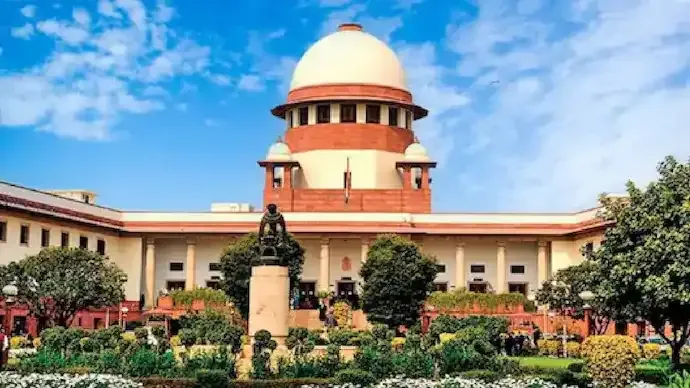
Over the past decade, India’s education reforms have begun to follow a predictable and increasingly familiar trajectory. A major policy is announced with ambitious goals, it triggers resistance from stakeholders, petitions are filed, and the matter ultimately lands before the Supreme Court of India, which steps in to pause, clarify, or reinterpret the reform.
This pattern has raised a deeper question: has the judiciary effectively become India’s second classroom—where education policy is debated, refined, and sometimes stalled?
Several landmark reforms illustrate this trend. The Right to Education Act’s mandate requiring private unaided schools to reserve 25 per cent seats for economically weaker sections faced years of litigation before finally being upheld. The introduction of NEET as a single medical entrance examination was challenged repeatedly by states and minority institutions, delaying its stabilisation for nearly half a decade.
The National Education Policy 2020, despite being widely praised for its vision, also reached the courts when states questioned whether the Centre could push a national policy in a constitutionally federal subject like education. In 2025, the apex court clarified that states could not be compelled to implement it.
Most recently, the University Grants Commission’s revised regulations on caste-based discrimination were put on hold by the Supreme Court, which directed that the older 2012 framework continue until concerns around definitions, scope and safeguards were addressed.
These are not marginal disputes. They cut to the core of access, equity, institutional autonomy and federal balance. Taken together, they suggest a structural issue: education reforms in India are increasingly being resolved through judicial scrutiny rather than institutional consensus.
The problem, experts argue, is not intent but execution. Reform language often moves faster than reform readiness. Policies are announced before institutions, states and stakeholders are fully prepared to absorb them. Trust, unlike regulation, cannot be legislated overnight.
Ambiguity has emerged as a recurring legal fault line. Vague definitions, wide discretionary powers and unclear enforcement mechanisms frequently make reforms vulnerable to constitutional challenge. In the latest UGC case, the court did not reject the intent of addressing caste-based discrimination but flagged the lack of clarity and the need for expert examination.
The consequences of these pauses are felt most acutely by students. With India hosting one of the world’s largest student populations, every legal stay or delayed rollout fuels uncertainty in admissions, governance and grievance redressal. While regulators and institutions debate policy, learners are left navigating an unstable system.
Importantly, judicial intervention itself is not the problem. Courts step in when reforms intersect with constitutional guarantees such as equality, minority rights or federal autonomy. Litigation, in this sense, is a symptom of governance gaps rather than judicial overreach.
Policy analysts argue that reducing courtroom dependence will require deeper pre-legislative consultation, clearer drafting, independent review of contentious provisions and transparent implementation roadmaps. Education reform, they say, is not a race to announce but a process to internalise.
Courts must remain the guardians of constitutional values. But if every major reform ends with “see you in court,” it signals a system where consensus-building has lagged behind ambition.
Prev Article
Sharad Pawar Breaks Silence on Sunetra Pawar’s Appointment as Maharashtra Deputy CM
Next Article
Delhi Blast Probe Reveals Terror Plan to Target Global Coffee Chain