Shopping cart
Your cart empty!


Your cart empty!
Terms of use dolor sit amet consectetur, adipisicing elit. Recusandae provident ullam aperiam quo ad non corrupti sit vel quam repellat ipsa quod sed, repellendus adipisci, ducimus ea modi odio assumenda.
Lorem ipsum dolor sit amet consectetur adipisicing elit. Sequi, cum esse possimus officiis amet ea voluptatibus libero! Dolorum assumenda esse, deserunt ipsum ad iusto! Praesentium error nobis tenetur at, quis nostrum facere excepturi architecto totam.
Lorem ipsum dolor sit amet consectetur adipisicing elit. Inventore, soluta alias eaque modi ipsum sint iusto fugiat vero velit rerum.
Sequi, cum esse possimus officiis amet ea voluptatibus libero! Dolorum assumenda esse, deserunt ipsum ad iusto! Praesentium error nobis tenetur at, quis nostrum facere excepturi architecto totam.
Lorem ipsum dolor sit amet consectetur adipisicing elit. Inventore, soluta alias eaque modi ipsum sint iusto fugiat vero velit rerum.
Dolor sit amet consectetur adipisicing elit. Sequi, cum esse possimus officiis amet ea voluptatibus libero! Dolorum assumenda esse, deserunt ipsum ad iusto! Praesentium error nobis tenetur at, quis nostrum facere excepturi architecto totam.
Lorem ipsum dolor sit amet consectetur adipisicing elit. Inventore, soluta alias eaque modi ipsum sint iusto fugiat vero velit rerum.
Sit amet consectetur adipisicing elit. Sequi, cum esse possimus officiis amet ea voluptatibus libero! Dolorum assumenda esse, deserunt ipsum ad iusto! Praesentium error nobis tenetur at, quis nostrum facere excepturi architecto totam.
Lorem ipsum dolor sit amet consectetur adipisicing elit. Inventore, soluta alias eaque modi ipsum sint iusto fugiat vero velit rerum.
Do you agree to our terms? Sign up

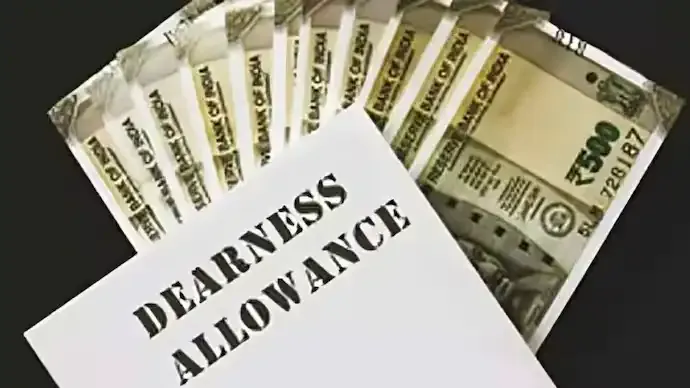
The unchecked expansion of state-sponsored freebies has begun to impose visible and growing costs on India’s public finances, the Economic Survey 2025-26 has warned. Presented ahead of the Union Budget, the policy document flags unconditional cash transfers (UCTs) as a major contributor to widening fiscal stress at the state level.
According to the Survey, spending on unconditional cash schemes has increased more than fivefold between FY23 and FY26, touching an estimated Rs 1.7 lakh crore this year. While these transfers, largely targeted at women, have provided immediate income relief and boosted household consumption, the Survey finds little evidence that they have delivered lasting gains in education, nutrition, employment or poverty reduction.
Instead, the rapid growth of freebies has tightened fiscal space, pushed up revenue expenditure and crowded out investment in infrastructure and human capital. With committed expenses such as salaries, pensions, interest payments and subsidies already accounting for nearly two-thirds of state revenues, additional spending on freebies has left states with limited flexibility to fund development priorities.
The Survey notes that several states are now borrowing to finance consumption rather than asset creation. Aggregate state fiscal deficits have risen from 2.6 per cent of GDP in FY22 to over 3 per cent in recent years, while revenue deficits have widened in parallel. Outstanding state debt stands above 28 per cent of GDP, amplifying concerns over long-term sustainability.
A key concern highlighted in the Survey is the impact of freebies on labour participation, particularly among women. In several states, unconditional cash transfers account for a significant share of household income, reducing incentives to seek paid employment. Without clear exit mechanisms or links to skilling and service delivery, such schemes risk entrenching dependency rather than enabling upward mobility.
The document acknowledges that the political appeal of freebies is strong. They are easy to announce, deliver quick electoral dividends and provide tangible short-term relief. However, the core problem, the Survey argues, lies in design. Most schemes lack conditions, time limits and outcome-based monitoring, turning temporary safety nets into permanent fiscal liabilities.
To address this, the Economic Survey urges policymakers to shift from unconditional to conditional, time-bound welfare models. It points to Brazil’s Bolsa Familia programme as a framework worth adapting. Launched in 2003 under Lula da Silva, the scheme links cash transfers to measurable outcomes such as school attendance, immunisation and maternal healthcare.
Unlike India’s freebie model, Bolsa Familia incorporates monitoring systems, periodic reassessments and clear exit pathways, ensuring that welfare spending contributes to long-term human capital formation. Similar conditional cash transfer programmes in Mexico and the Philippines have also demonstrated improvements in education and health outcomes while maintaining fiscal discipline.
The Survey argues that welfare spending must function as an investment rather than a substitute for growth-enhancing expenditure. It recommends introducing sunset clauses, outcome-linked evaluations and regular audits to prevent fiscal slippage. Without such reforms, it warns, the expanding culture of freebies could undermine India’s development trajectory by sacrificing infrastructure, skilling and productivity for short-term political gains.
As India prepares Budget 2026, the message from the Economic Survey is clear: welfare must be redesigned to support work, education and health — not replace them.
121
Published: Jan 31, 2026

All India Story is your trusted source for comprehensive and up-to-the-minute news coverage across India. Bringing you the latest on politics, business, technology, entertainment, sports, and more, we are dedicated to keeping you informed with accurate, engaging, and insightful stories from every corner of the nation.