
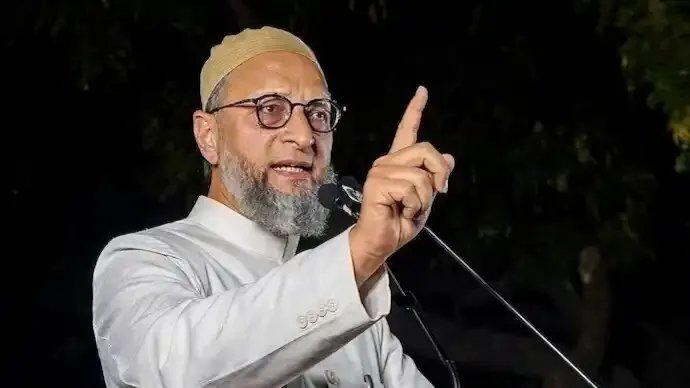
AIMIM chief Asaduddin Owaisi on Saturday launched a sharp and sarcastic attack on Prime Minister Narendra Modi, invoking the recent US military action in Venezuela to question India’s approach towards Pakistan-based terror masterminds behind the 26/11 Mumbai attacks.
Addressing a public gathering in Mumbai, Owaisi referred to reports claiming that US forces captured Venezuelan President Nicolas Maduro and transferred him to the United States following airstrikes that crippled key infrastructure in Caracas. Drawing a direct comparison, the Hyderabad MP asked why India had not taken similar decisive action against those accused of orchestrating one of the deadliest terror attacks in the country’s history.
Owaisi said that if US President Donald Trump could authorise an overseas military operation to apprehend a sitting foreign head of state, India should also demonstrate similar resolve by bringing back the masterminds of the 26/11 terror attacks from Pakistan.
“Today we are hearing that Trump captured the President of Venezuela and took him to America. If the United States can do this, then why can’t India act? Why can’t the Prime Minister send troops into Pakistan and bring back those who planned the 26/11 attacks?” Owaisi asked.
The AIMIM leader specifically named Masood Azhar, the chief of Pakistan-based terror group Jaish-e-Mohammed, and other operatives linked to Lashkar-e-Taiba, accusing successive governments of failing to ensure justice for the victims of the Mumbai attacks.
Continuing his sharp rhetoric, Owaisi said Prime Minister Modi should match Trump’s decisiveness. “If Trump can, Modi ji is no less. If Trump can do it, then you will also have to do it,” he said, referring sarcastically to the Prime Minister’s earlier political slogan, “Abki Baar Trump Sarkar.”
The remarks were made in the context of heightened political discourse surrounding national security and foreign policy, particularly as claims of US military intervention in Venezuela dominate global headlines. Owaisi used the comparison to underline what he described as India’s inability to bring key terror suspects to justice despite repeated diplomatic assurances from Pakistan.
The 2008 Mumbai attacks occurred between November 26 and 29, 2008, when 10 heavily armed terrorists carried out coordinated strikes across multiple locations in Mumbai, including hotels, a railway station and a Jewish centre. At least 170 people were killed and more than 300 injured. Investigations later established that the attackers were trained and directed by Lashkar-e-Taiba operatives based in Pakistan.
India has repeatedly accused Pakistan of shielding the planners and financiers of the attacks, including Masood Azhar, allegations that Islamabad has denied. While India has pursued diplomatic pressure, international sanctions and intelligence operations, critics like Owaisi argue that these measures have failed to deliver closure to victims’ families.
Owaisi’s comments have once again ignited debate over India’s counter-terror doctrine, cross-border military options and the limits of diplomatic engagement in dealing with state-sheltered terrorism.



Conversation
Be kind and stay on topic. Comments are moderated; abuse, spam and personal attacks are removed. Report a problem