Middle East Rain Crisis: Heavy Flood Threat Amid War

Middle East Rain Crisis: Heavy Flood Threat Amid War

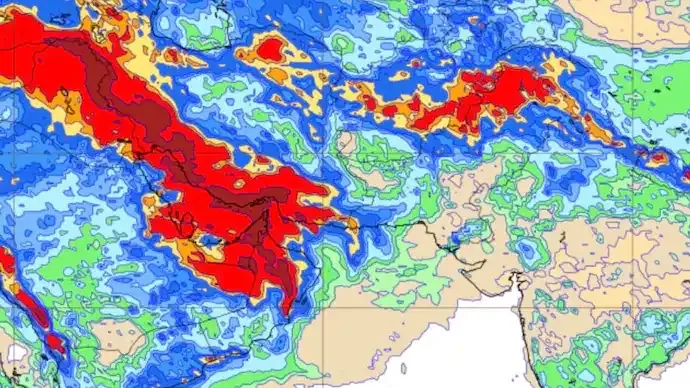
The Middle East rain crisis is intensifying as a powerful weather system moves toward the Persian Gulf, bringing the threat of heavy rainfall to desert regions already dealing with ongoing conflict.

Meteorologists have warned that this deep weather disturbance could deliver between 100–200 mm of rain across countries like Saudi Arabia, UAE, Qatar, and Bahrain within just a few days.

In regions that typically receive less than 100 mm of rain annually, such intense precipitation raises serious concerns of flash floods and infrastructure damage.


Flood Warnings Issued Across Gulf Countries

Authorities across the Gulf have issued alerts as early impacts are already visible.

Oman’s capital, Muscat, has experienced heavy rainfall exceeding 100 mm in a short period, leading to flooding in several areas. Reports indicate casualties and multiple rescue operations as emergency teams worked to evacuate stranded residents.

Flooding has turned roads into rivers and disrupted daily life, highlighting the vulnerability of urban infrastructure in desert regions.


Cities at High Risk Due to Poor Drainage

The Middle East rain crisis is particularly dangerous for cities built on hard surfaces with limited drainage capacity.

Urban centres like Dubai and Abu Dhabi are at risk of facing conditions similar to the devastating 2024 floods, which caused widespread damage and economic losses.

Heavy rainfall in such regions can quickly overwhelm drainage systems, leading to:

  • Severe waterlogging
  • Traffic disruptions
  • Infrastructure damage

Weather Crisis Collides with Ongoing Conflict

The situation becomes more critical as the extreme weather coincides with ongoing geopolitical tensions in the region.

With conflict affecting key areas, including threats to oil routes and infrastructure, the additional pressure of heavy rainfall could worsen the crisis.

Potential impacts include:

  • Disruption of emergency services
  • Delays in humanitarian aid
  • Damage to already strained infrastructure

Flooded roads and power outages could significantly affect hospitals and essential services.


Economic and Humanitarian Risks Rise

The combined effect of war and extreme weather could lead to major economic losses.

Previous floods in the Gulf region have already demonstrated the scale of potential damage, costing billions and affecting thousands of lives.

Now, with conflict already impacting oil supply and regional stability, the Middle East rain crisis could:

  • Increase economic strain
  • Disrupt global energy markets
  • Lead to higher casualty risks

Uncertain Days Ahead for the Region

Weather experts indicate that the system may persist into early April, prolonging the threat.

Leaders in the region have urged caution as authorities prepare for worst-case scenarios. The overlap of natural disaster and conflict presents a complex challenge that requires coordinated response efforts.


Nature Adds to an Already Volatile Situation

The Middle East rain crisis highlights how environmental events can amplify existing geopolitical tensions.

In a region already facing instability, the arrival of extreme weather could have far-reaching consequences, affecting not only local populations but also global markets and supply chains.

Prev Article
India Groundwater Crisis: Cities Sinking, Water Running Out

Related to this topic: