
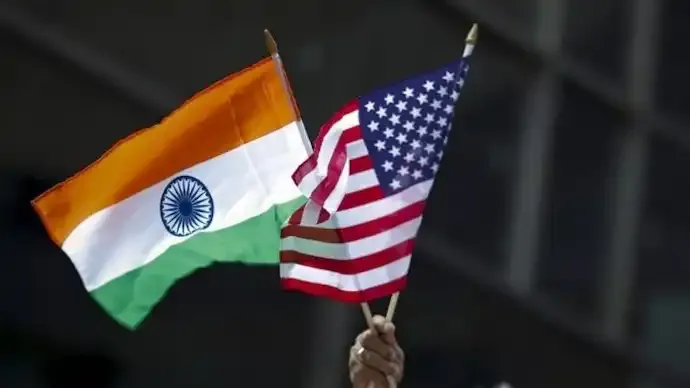
India has strongly rejected a report by the United States Commission on International Religious Freedom (USCIRF) that recommended sanctions against India’s external intelligence agency Research and Analysis Wing (RAW) and the Rashtriya Swayamsevak Sangh (RSS).
The Ministry of External Affairs (MEA) described the report as biased and accused the commission of presenting a distorted picture of the country’s social and political situation.
India Calls Report Biased and Selective
Responding to media queries, MEA spokesperson Randhir Jaiswal said the government “categorically rejects” the recommendations made in the report.
He stated that the commission has repeatedly attempted to portray India in a negative light by presenting a selective interpretation of facts.
According to the MEA, the report reflects a consistent pattern in which the commission highlights specific incidents while ignoring the broader context of India’s democratic institutions and legal framework.
USCIRF Recommendation on India
The controversy emerged after the USCIRF released its 2026 annual report on global religious freedom. In the report, the commission recommended that the United States government designate India as a Country of Particular Concern (CPC).
Such a designation is typically reserved for countries that the US government believes are involved in serious violations of religious freedom.
The report also called for targeted sanctions against individuals and entities that it claimed were responsible for or complicit in alleged violations of religious rights.
Among its recommendations, the commission suggested travel restrictions and asset freezes against certain organisations, including India’s external intelligence agency RAW and the RSS.
Government Rejects Allegations
Indian authorities rejected the allegations and stated that the report misrepresents the country’s situation.
The MEA said that India’s democratic system ensures protection of fundamental rights, including freedom of religion, through constitutional provisions and independent institutions.
Officials also argued that external bodies should avoid making conclusions based on selective narratives or limited information.
Longstanding Disagreement Over Reports
India has frequently criticised reports by the USCIRF in previous years as well, describing them as politically motivated or lacking objectivity.
The government has maintained that the commission’s assessments do not accurately reflect the diversity and democratic structure of Indian society.
Officials have also pointed out that the USCIRF is an independent advisory body that provides recommendations to the US government, and its reports do not automatically translate into policy decisions.
Diplomatic Context
India and the United States share strong strategic and economic ties, and the two countries have expanded cooperation in defence, technology, and trade in recent years.
Despite occasional disagreements over human rights or domestic policies, both countries continue to maintain close diplomatic engagement.
India’s rejection of the report reflects its position that domestic matters should not be judged through external political frameworks.
The issue may still generate discussions within international policy circles, but Indian officials have made it clear that the government does not accept the commission’s findings.


