

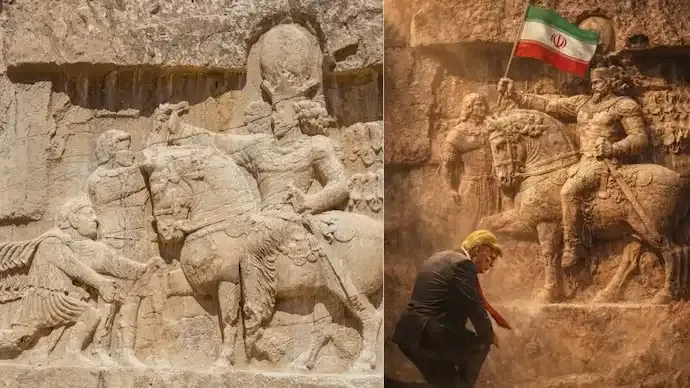

A viral social media post shared by Iran’s embassy in India has sparked widespread attention by combining modern geopolitics with a powerful historical reference. The meme features Donald Trump alongside imagery inspired by ancient Persian history, creating a symbolic narrative that has resonated across digital platforms.
The visual is not merely satire but draws from a significant historical event that reflects shifting power dynamics.
Reference to Shapur I’s Historic Victory
The meme references Shapur I, one of the most prominent rulers of the Sassanian Empire. In 260 CE, Shapur I achieved a remarkable victory by capturing Valerian, marking one of the rare instances when a Roman emperor was taken prisoner in battle.

This event is often depicted in ancient reliefs, including those at Naqsh-e Rostam, where the Persian king is shown triumphant over the defeated Roman ruler.
Symbolism Behind the Meme
By referencing this historical moment, the meme symbolically positions West Asia as a center of strength while portraying Western power in a subdued light. The imagery reflects a reversal of modern geopolitical narratives, highlighting a time when Persian forces held dominance over Rome.
Such symbolism adds depth to the meme, transforming it from a simple online post into a statement rooted in historical context.
Intersection of History and Modern Geopolitics
The timing of the meme is significant, as it comes amid ongoing tensions involving Iran and Western powers. By invoking a historical episode, the message subtly connects past victories with present-day narratives.
Experts note that the use of historical symbolism in modern communication can influence public perception and reinforce national identity.
Ancient Event with Lasting Legacy
The capture of Emperor Valerian remains a defining moment in ancient history. It not only demonstrated the military strength of the Sassanian Empire but also marked a rare humiliation for Rome, one of the most powerful empires of its time.
This historical event continues to be referenced in discussions about power, resilience, and shifting geopolitical dynamics.
Digital Age Amplifies Historical Narratives
The viral spread of the meme highlights how digital platforms can revive and reinterpret historical events for contemporary audiences. Social media has become a powerful tool for blending history with current affairs, making complex narratives more accessible.
A Symbolic Message Beyond Humor
While the meme has elements of humor, its deeper significance lies in its symbolic messaging. By drawing parallels between past and present, it invites viewers to reflect on how power and influence evolve over time.
As the meme continues to circulate, it stands as an example of how history can be repurposed to shape modern narratives and discussions.






Conversation
Be kind and stay on topic. Comments are moderated; abuse, spam and personal attacks are removed. Report a problem