
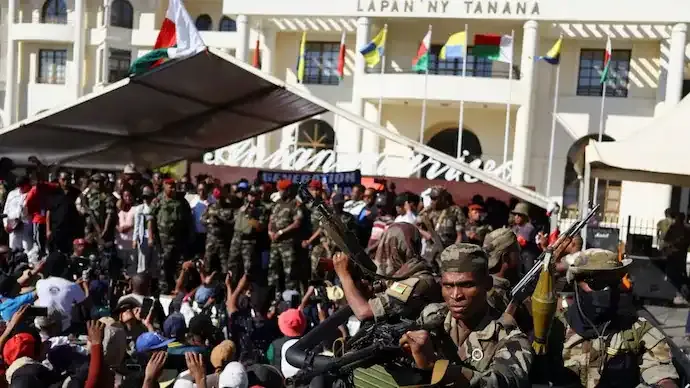
Madagascar is facing a severe political crisis as its military has seized control following massive youth-led protests that forced President Andry Rajoelina to flee abroad. The takeover marks a dramatic turn in the Indian Ocean nation’s politics, reminiscent of the 2009 coup that initially brought Rajoelina to power.
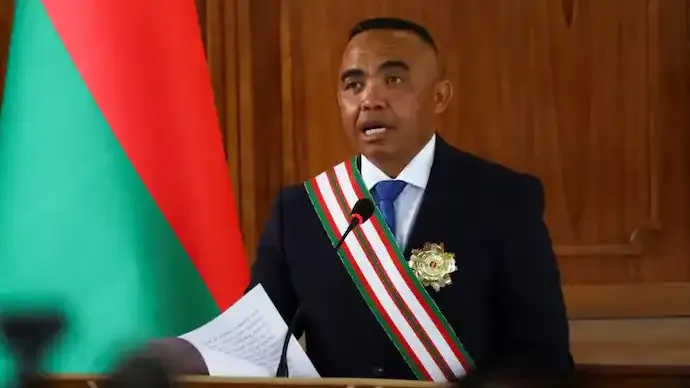
Colonel Michael Randrianirina, a commander in the elite CAPSAT army unit, announced on national radio that the military had assumed authority, dissolving all government institutions except the lower house of parliament, which had earlier voted to impeach the president. A military council has been formed to quickly appoint a prime minister and oversee the transition to civilian governance.
The crisis escalated after Rajoelina attempted to dissolve the National Assembly by decree to block impeachment proceedings. His move backfired as significant segments of the army and security forces refused to follow orders against protesters, siding instead with the demonstrators. Hours later, Rajoelina left Madagascar aboard a French military aircraft, though his office claims he only relocated to a “safe place.”
The protests, led predominantly by Gen Z demonstrators, began on September 25 in response to erratic electricity and water supply but rapidly transformed into nationwide rallies against corruption, mismanagement, and widespread poverty. Protesters waved Malagasy flags alongside symbols from Japanese anime, drawing attention to the youth-driven nature of the movement. Approximately three-quarters of Madagascar’s 30 million people live in poverty, fueling frustration with the government.
A pivotal moment came when CAPSAT soldiers, instrumental in Rajoelina’s 2009 rise to power, joined the protests in Antananarivo’s 13 May Square, escorting demonstrators rather than dispersing them. Police and paramilitary units also defected, leaving Rajoelina increasingly isolated. While no large-scale violence has occurred, armored vehicles have been deployed across the capital, and sections of the crowd welcomed the military.
Internationally, French President Emmanuel Macron urged the preservation of constitutional order, warning against exploiting youth protests for military advantage. Madagascar’s history of coups underscores the volatility of the situation, and the current events have plunged the nation into its worst political crisis in over a decade.
Observers highlight the military’s promise of a quick return to civilian rule, but the nation faces a fragile future as political, economic, and social tensions converge in one of Africa’s poorest countries.


Conversation
Be kind and stay on topic. Comments are moderated; abuse, spam and personal attacks are removed. Report a problem