

The developing 2026 El Nino is raising concerns far beyond weather forecasts, with scientists warning that an unusually strong event could have lasting consequences for the global economy.
Previous major El Nino episodes have been linked to enormous economic losses. A study published in Science estimated that the 1982-83 El Nino caused around $4.1 trillion in global income losses, while the 1997-98 event resulted in losses of approximately $5.7 trillion.
The research also found that economies may not fully recover after the immediate weather shock ends, with the effects of droughts, floods, crop failures, trade disruptions and infrastructure damage potentially lasting for years.
If the developing 2026 event becomes as intense as some forecasts suggest, the economic impact could be even greater.
Could 2026 El Nino become a record event?
Scientists monitoring the tropical Pacific have reported exceptionally warm ocean conditions, with sea surface temperatures approaching levels associated with a Super El Nino.
Large amounts of heat are also stored beneath the surface of the Pacific Ocean, raising concerns that additional warming could occur in the coming months.
Current forecasts suggest the event could reach its peak around December 2026, with its influence potentially continuing into 2027.
The concern is particularly significant because El Nino can alter rainfall and temperature patterns across large parts of the world, affecting agriculture, water supplies, energy demand and global supply chains.
Why El Nino can cause huge economic losses
El Nino begins as a climate phenomenon in the tropical Pacific, but its effects can spread across continents.
Changes in ocean temperatures can disrupt atmospheric circulation and produce unusual weather patterns, including:
- Droughts in some regions
- Heavy rainfall and flooding in others
- Reduced agricultural production
- Water shortages
- Damage to infrastructure
- Disruptions to trade and supply chains
- Higher food and commodity prices
The Science study found that these shocks can have effects that extend well beyond the year in which an El Nino occurs.
Researchers estimate that under an emissions pathway broadly consistent with current global climate pledges, intensified ENSO variability could result in $84 trillion in cumulative global economic losses during the 21st century.
Why India is particularly vulnerable
India has diversified rapidly, but agriculture remains highly dependent on the southwest monsoon.
That makes El Nino particularly important for the Indian economy.
A strong El Nino can alter monsoon patterns and increase the possibility of rainfall deficits or uneven distribution. The consequences can extend well beyond farms.
If rainfall becomes weaker or more erratic, India could face pressure on:
Agriculture: Lower rainfall can reduce yields of crops that depend on the monsoon.
Food prices: Poor harvests can reduce supply and push up prices of essential food commodities.
Water resources: Reservoirs, groundwater and irrigation systems could come under additional pressure.
Energy: Lower water availability can affect hydropower generation, while extreme temperatures can increase electricity demand.
Industry: Water-intensive manufacturing and other businesses can face supply constraints.
India's 2026 monsoon adds another layer of concern
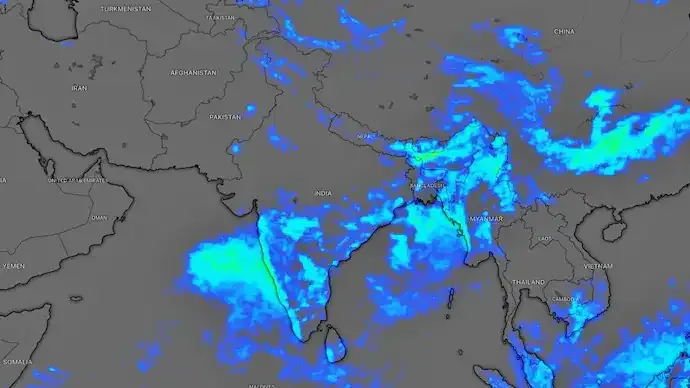
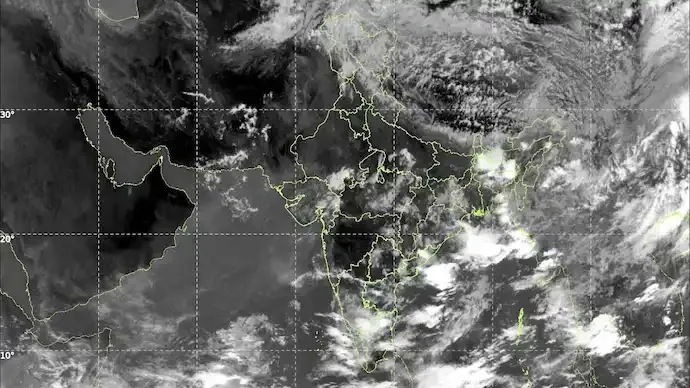
The timing is particularly important because India's 2026 monsoon has already shown signs of uneven behaviour, including shifting rainfall patterns and dry spells in some areas.
A stronger El Nino developing later in the year could increase uncertainty around weather conditions extending into 2027.
However, El Nino does not automatically mean that India will experience a failed monsoon. The Indian monsoon is influenced by several atmospheric and oceanic factors, so the eventual impact will depend on how the different climate systems interact.
Climate change could make the economic impact worse
The latest concerns are also linked to the broader effects of climate change.
The Science research suggests that climate change could amplify the economic consequences associated with extreme ENSO events.
That creates a difficult combination: economies may face more frequent or intense climate-related disruptions while simultaneously becoming more exposed to their economic consequences.
For India, this could make investment in water management, climate-resilient agriculture, weather forecasting, crop insurance and disaster preparedness increasingly important.
The bigger warning for India
The biggest concern is not simply whether 2026 produces a strong El Nino.
It is whether India and other economies are prepared for the economic shocks that can follow major climate events.
A severe El Nino could affect everything from farm incomes and food inflation to water availability and industrial activity. And according to the latest research, some of the economic damage may continue even after the weather pattern itself has faded.
With forecasts pointing towards a potentially powerful El Nino by the end of 2026, India will need to watch both the Pacific Ocean and the monsoon very closely.




Conversation
Be kind and stay on topic. Comments are moderated; abuse, spam and personal attacks are removed. Report a problem